Get Full Government Meeting Transcripts, Videos, & Alerts Forever!
Get email alerts on the Public Notice Proponents topic
No spam. Unsubscribe anytime.
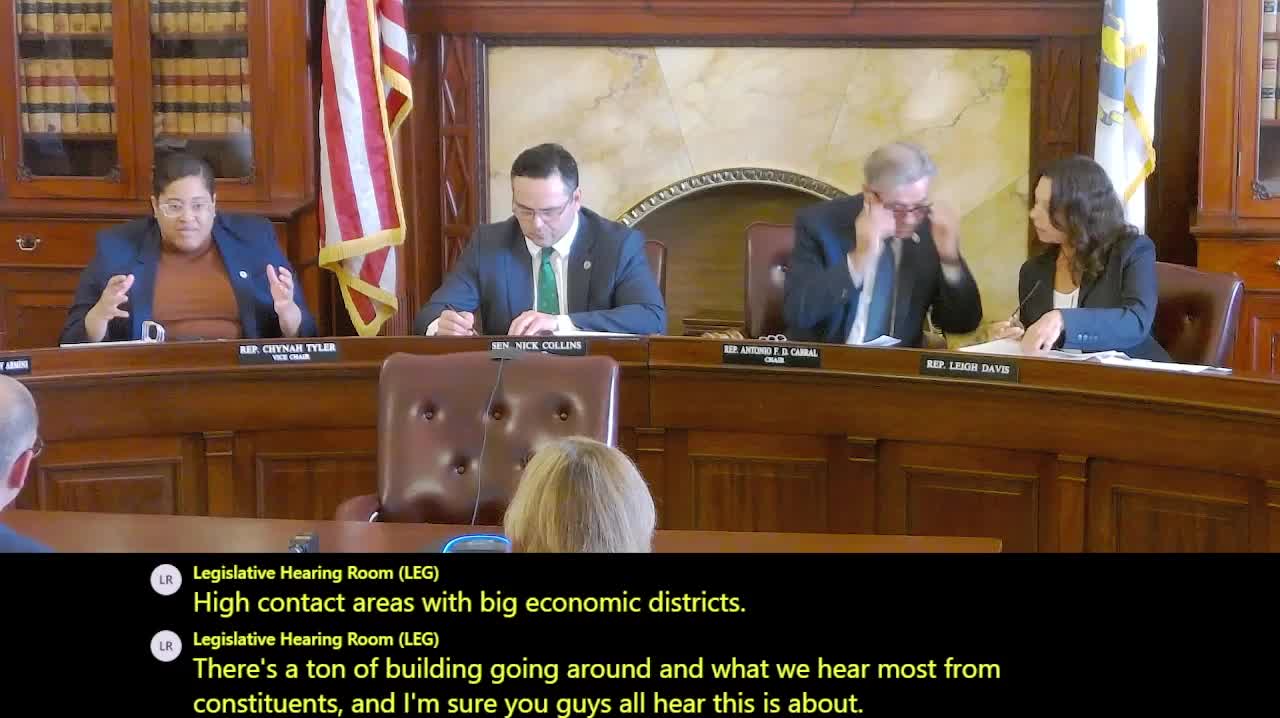
Committee questions 21‑day notice, private proponents and municipal approval rules in Article 97 draft
Summary
Lawmakers pressed EEA on whether the draft rules sufficiently protect local notice and local steward approvals, and raised concerns that private developers could drive Article 97 proposals without clear local safeguards.
Legislators at the oversight hearing pressed the Executive Office of Energy and Environmental Affairs over public‑notice timing, who must be notified and whether private proponents can effectively bypass local scrutiny when proposing changes to Article 97 land.
Representative (unnamed member) told agency staff that constituents in dense urban neighborhoods need earlier notification so residents can raise quality‑of‑life and air‑quality concerns. Representative Davis said the draft’s 21‑day comment period is too short for many small and rural communities and asked EEA to consider extending it to 45 days and to require on‑site signage to improve awareness.
EEA staff acknowledged the large volume of public comments on the notice period and said the office is "actively considering" extending the period in response to those comments. The draft rule currently relies on a 21‑day minimum, which EEA confirmed is measured in calendar days, not business days.
Lawmakers also questioned whether the regulations expand the universe of "proponents" to include private developers and whether that would allow non‑public entities to initiate Article 97 actions. Under the draft, a proponent that is not the public entity holding the Article 97 interest must consult with the public entity and provide written documentation of the public entity’s stated position, including proof of any affirmative vote, the agency said. EEA staff said the statute and proposed regulations do not create a new pathway that allows private proponents to file legislation directly without the municipal processes required under home‑rule petitions.
Several members raised another concern: the draft regulations appear to remove a prior policy requirement that municipal conservation and parks commissions give unanimous approval before a municipality seeks legislative authorization. Assistant Secretary Kirk Turner explained that the Open Space Act and the proposed regulations do not intend to change the Legislature’s role, but the department’s existing policy (1998) will be revised to align with the statute and regulations. Turner said the draft regulations do not themselves prescribe a unanimous‑vote requirement; municipal approval language in the draft is framed as "approval" (a majority) rather than "unanimous approval" currently described in older departmental guidance.
Why it matters: Notification rules, the role of private proponents and the level of local approvals determine how much notice neighbors and local stewards receive before a municipal or state land disposition reaches the Legislature. Committee members said they want clear, standardized steps to avoid proposals that reach the Legislature without adequate local review.
Ending: EEA said it will weigh public comments on notice timing and the proponent process as it finalizes rules; the committee signaled it may recommend clarifyinglanguage to preserve strong local input.