Get Full Government Meeting Transcripts, Videos, & Alerts Forever!
Get email alerts on the Agriculture Farmland Tax topic
No spam. Unsubscribe anytime.
Joint Committee on Revenue hears support for amending Article 99 to remove 5‑acre limit on farmland tax treatment
Summary
At a public hearing of the Joint Committee on Revenue on April 22, 2025, committee members heard testimony in support of S.11 and H.71, legislation to amend Article 99 of the Massachusetts Constitution to remove the current five‑acre minimum that determines eligibility for agricultural and horticultural property tax treatment.
At a public hearing of the Joint Committee on Revenue on April 22, 2025, committee members heard testimony in support of S.11 and H.71, legislation to amend Article 99 of the Massachusetts Constitution to remove the current five‑acre minimum that determines eligibility for agricultural and horticultural property tax treatment.
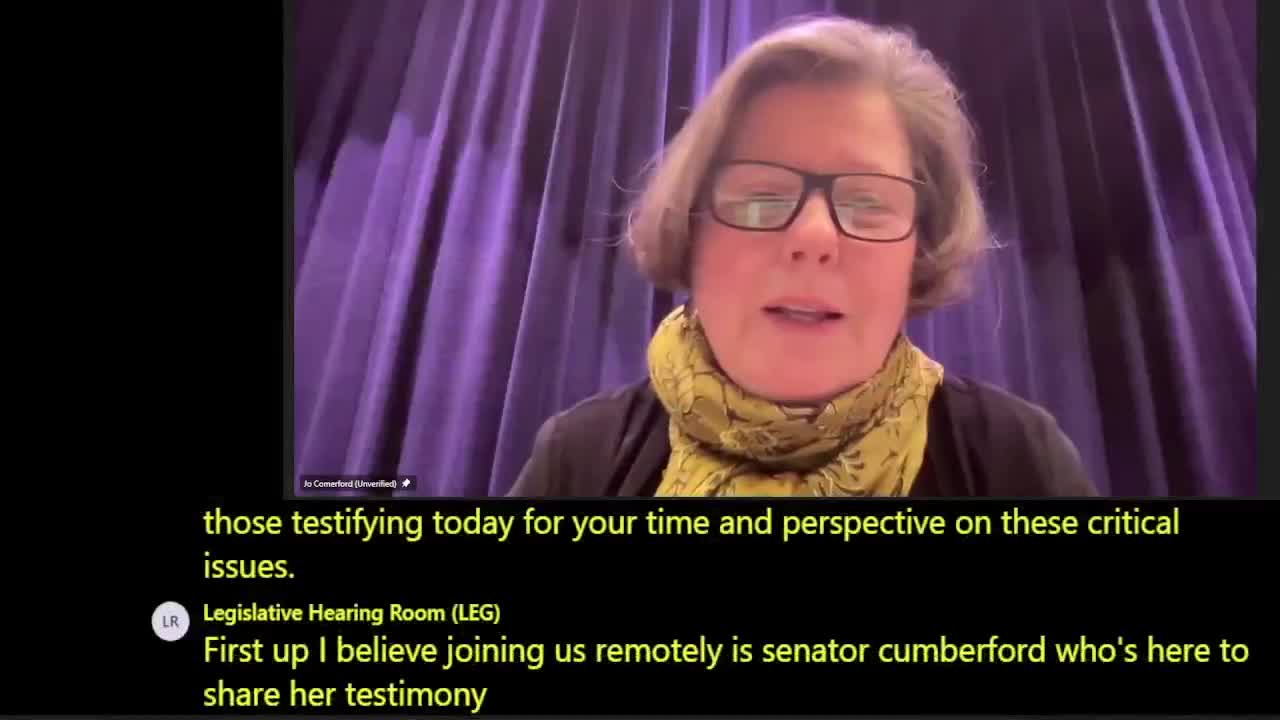
The change would allow parcels of any size that meet the statute’s farming criteria to be taxed at agricultural rates rather than commercial or residential rates. "Protecting and valuing agricultural land is so important that it's written in our state's constitution," said Senator Joseph R. Comerford Jr., who urged a favorable report on S.11/H.71 and described the bills as critical to sustaining farms across urban, suburban and rural Massachusetts.
Supporters told the committee the issue is urgent because farmland is shrinking and land values are high. Senator Comerford said Massachusetts lost 27,000 acres of farmland in the most recent five‑year agricultural census. Rebecca Miller, policy director for the Massachusetts Food System Collaborative, told the committee that USDA recent data put fair market value at about $14,000 per acre and that many farms operate on narrow margins: "they make 95¢ for every $1 they invest," Miller said, arguing the amendment would reduce tax pressure that can push farms out of production.
Representative Natalie Blay, a sponsor of H.71 along with Representative Hannah Kane, described the change as necessary to allow new and urban farmers to participate. "I do not take amending the Constitution of Massachusetts lightly," Blay said, adding that roughly 30% of farms in the commonwealth are under nine acres and that the five‑acre rule limits access for beginning farmers.
Witnesses and lawmakers clarified how eligibility would be verified. Miller pointed to Chapter 61A, the existing municipal enrollment program, saying municipalities already certify farmland annually and that the bills require two years of active production before a parcel would receive the preferential rate. Committee members asked about safeguards to prevent misuse and the Department of Agricultural Resources was cited as having existing verification processes used for other farmland protection programs.
No committee vote was held at the hearing. Committee chairs reminded the public that written testimony is accepted until 5 p.m. on Wednesday, April 23, 2025, and noted that proposed constitutional amendments must be reported by the committee by April 30, 2025, to remain on the constitutional amendment calendar.
The hearing record included testimony from Senator Comerford (remote), Rebecca Miller of the Massachusetts Food System Collaborative, and Representative Natalie Blay (in person). Committee members indicated continued interest and asked for additional information about verification processes and the status of the 21st Century Farm Commission report mentioned by Senator Comerford.