Schools and vendors press lawmakers to allow removable locking devices for active‑shooter scenarios; building code conflicts raised
Loading...
Summary
Vendors and local school officials testified in favor of allowing removable temporary locking devices — known generically as Nightlock — to provide an additional barricade during an active shooter event, but architects and others warned of potential conflicts with fire and accessibility codes.
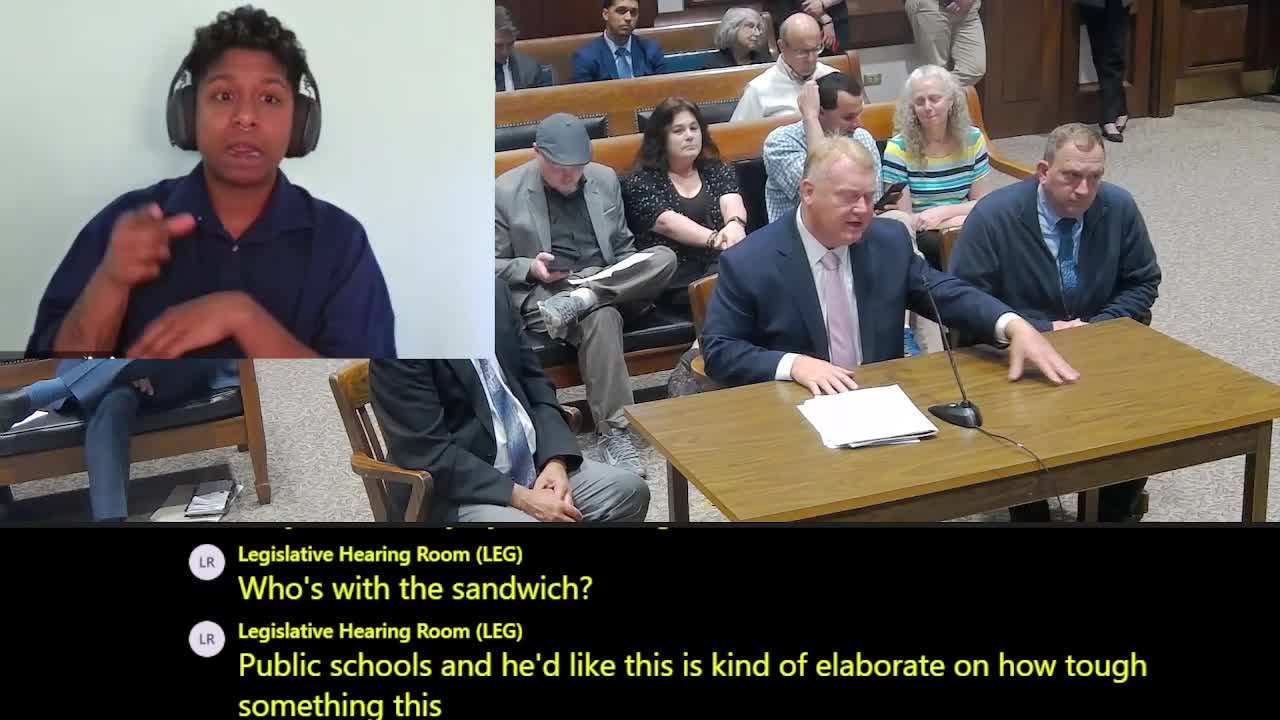
School officials, vendors and a former sheriff told the Joint Committee on Public Safety and Homeland Security that removable temporary door locking devices can strengthen classroom lockdown measures during an active shooter event — while architects and the American Institute of Architects warned the committee that the devices must be reconciled with building and fire codes.
Chris George, facilities director for Sandwich Public Schools, described his district’s effort to install a removable wall‑mounted locking device and said he was blocked by a building inspector who deemed it a code violation. "It's attached to the wall on the side of the door and will only be used in a finite period of that 1 second or that 5 second period when you need it the most," George said.
A manufacturer representative described a wall‑mounted box that holds the device; during an active shooter alert staff would open the box and insert the device into a slot to secure the door. Supporters said the device is never permanently attached to the door and can be removed for egress.
Opponents and technical witnesses cautioned that an array of issues must be addressed before broad adoption. The American Institute of Architects told the committee that such devices could create a false sense of security, might violate ADA requirements for one‑handed operation, and could conflict with state fire and building codes. The association asked the committee to send the bill to study to refine language on compliance, testing, and oversight.
Committee members asked whether the devices can be unlocked by first responders and whether they are compliant with evacuation requirements; vendors and school officials said the devices can include an external key or override for first responders, but that state code language has been interpreted differently by local inspectors. Witnesses urged the Legislature to clarify the fire code and allow devices that meet performance and comms standards.
No vote was taken. The hearing showed a split between safety advocates seeking an additional, low‑cost tool for lockdowns and code experts urging careful revision to avoid ADA and fire‑safety conflicts.