Get Full Government Meeting Transcripts, Videos, & Alerts Forever!
Get email alerts on the End Of Life Options topic
No spam. Unsubscribe anytime.
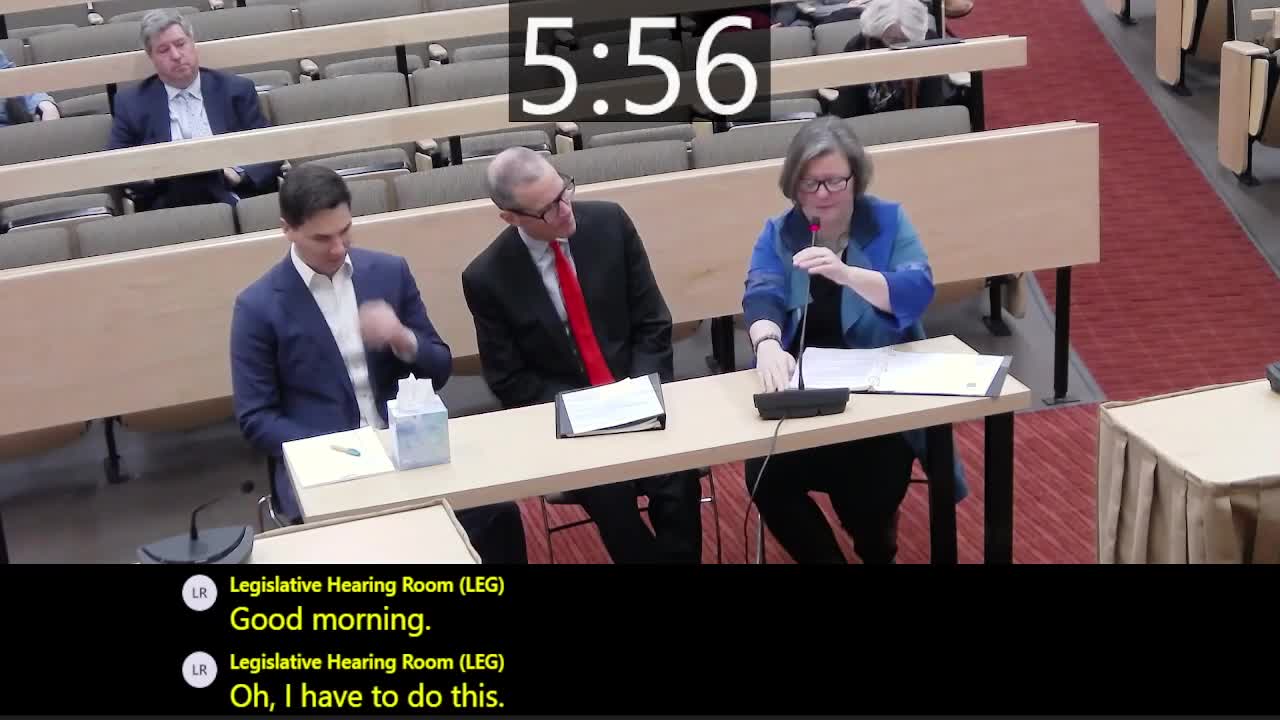
Joint committee hears hours of testimony for and against end‑of‑life options bill
Summary
The Joint Committee on Public Health heard more than three hours of testimony on House Bill 2505 and Senate Bill 1486, an act that would allow mentally capable adults diagnosed with a terminal illness to receive a physician‑prescribed medication to self‑administer in order to hasten death.
The Joint Committee on Public Health heard more than three hours of testimony on House Bill 2505 and Senate Bill 1486, an act that would allow mentally capable adults diagnosed with a terminal illness to receive a physician-prescribed medication to self-administer in order to hasten death.
Supporters, including members of the Legislature who filed the bill and several patients and family members, told the committee the measure would give a small group of terminally ill residents a final option to avoid protracted suffering. Opponents — including disability-rights groups, some physicians, and faith organizations — warned that legal safeguards can erode over time, that the laws create pressure on vulnerable people, and that insurance or providers might shift incentives away from life‑prolonging care.
The bill’s sponsors told the committee the proposal includes multiple written and oral safeguards. Representative Jim O’Day and Representative Sean Phillips, who co-sponsor the House bill, described the measure as narrowly drawn: patients must be Massachusetts residents, at least 18, diagnosed with a terminal illness with a prognosis of six months or less, judged mentally capable, and physically able to self‑ingest the medication. Representative Phillips noted the bill’s repeated revisions over years and said its sponsors intend it to be “one of the most restrictive bills in the country.”
Supporters gave first‑hand accounts of why they back the measure. Paul Goldberg described moving his wife to New Mexico so she could use that state’s law to “peacefully end her suffering” after metastatic cancer had progressed; he told the committee the move was “the most painful, emotionally and physically traumatic experience of our lives.” Rabbi Elias Lieberman, a retired congregational rabbi, urged passage on religious and pastoral grounds, saying Judaism “rejects the notion that there is anything inherently redemptive about suffering.” Several hospice volunteers, family members and longtime advocates told the committee they had watched loved ones suffer despite hospice and palliative care.
Providers and organizations supporting the bill said the law requires multiple steps designed to prevent coercion: a written request, waiting periods, confirmation by a second prescribing clinician, a mental‑health evaluation if capacity is in doubt, and a requirement that medication be self‑administered. Melissa Stacy of Compassion & Choices described the eligibility requirements in detail and said states with similar laws report low use and no evidence of the kinds of widespread abuses critics foresee.
Opponents raised a range of concerns. Sam Whiting of the Massachusetts Family Institute and physicians including Dr. Chris Carrera and Dr. Richard Florentine said the practice is physician‑assisted suicide and argued it is incompatible with the physician’s role as healer. Disability‑rights advocates, including speakers from Not Dead Yet and the Massachusetts Developmental Disabilities Council, said people with disabilities already face biased medical assumptions about their quality of life and unequal access to care; they warned those pressures could translate into structural coercion if assisted‑death options become available. Several speakers cited examples from other jurisdictions where eligibility rules have been expanded over time and where families report complications or prolonged deaths after ingestion of prescribed drugs.
Committee members asked detailed questions about protections for clinicians, how prognoses are established, and whether insurance companies could create perverse incentives. Senator Dooney asked whether insurers have used or might use coverage decisions to influence patient choices; multiple witnesses said they were unaware of systemic instances in which insurers had pushed patients toward assisted death but that the risk ought to be examined. Several legislators and witnesses told the committee there is a substantial body of written testimony that members should and will read before any vote.
The hearing drew a broad cross‑section of testimony: state senators and representatives who cosponsored or championed the bills; clergy, patients and family members who described seeking or obtaining options in other states; physicians and pharmacists who described clinical and procedural concerns; disability advocates who warned of ableist assumptions; and representatives of national advocacy groups on both sides.
The chairs signaled no immediate committee action and encouraged additional written testimony. Members said they would weigh the written record, the comparative data from the 11 U.S. jurisdictions that have enacted medical‑aid‑in‑dying laws, and the concerns offered by disability, medical and faith groups before deciding a path forward.
Ending: The committee did not vote and indicated it will accept and review additional written testimony and data before any recommended action. Public comment remains open and the chairs encouraged witnesses to supply follow‑up materials for the committee’s record.