Get Full Government Meeting Transcripts, Videos, & Alerts Forever!
Get email alerts on the 911 Disability Indicator Forms topic
No spam. Unsubscribe anytime.
Advocates press committee to improve accessibility of 9-1-1 disability indicator forms
Summary
A testifier with lived experience urged the Joint Committee to pass H.B. 2,633 to make 9-1-1 disability indicator forms more accessible, adding mental health and language needs and setting a fifth-grade reading level to improve outcomes for people with disabilities and for first responders.
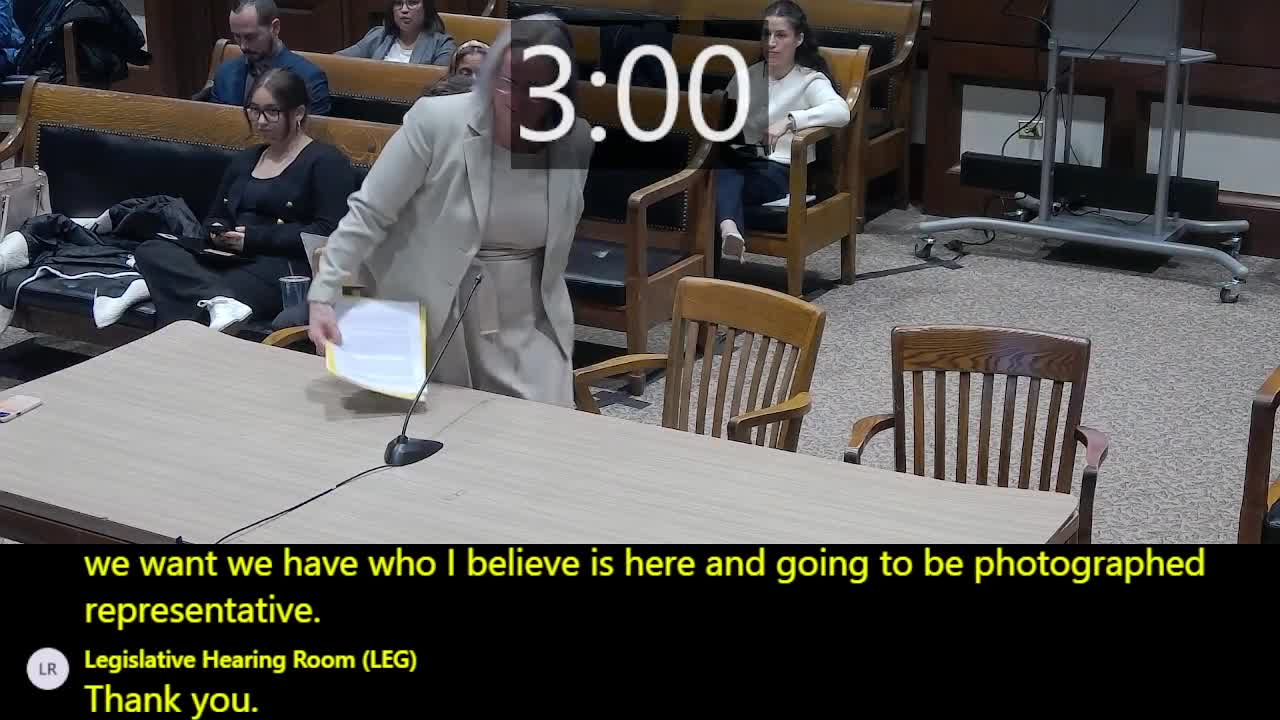
A witness with family and lived experience told the Joint Committee on Public Safety and Homeland Security that H.B. 2,633 would make 9-1-1 disability indicator forms more accessible and improve outcomes for people with disabilities and first responders.
The testifier described personal experience with family members affected by substance use, incarceration, mental-health crises and developmental disabilities and said those experiences guided advocacy for changes to the existing 9-1-1 indicator form.
The bill would add mental-health indicators to the form, incorporate accessibility and language considerations, and require the form to be written at a fifth-grade reading level, the witness said. The goal is to provide first responders with clear, concise information on how to interact with a person in crisis and to reduce cumulative trauma among emergency personnel.
“Families don't always know what to do, but they typically know what not to do. And this knowledge has the ability to save lives and improve outcomes,” the testifier said, asking the committee to pass the bill and allow stakeholder input on the form’s content if the bill advances.
Why it matters: Witnesses argued that accurate, accessible pre-arrival information can change how responders interact with people experiencing mental-health, developmental or medical crises and reduce escalation. The speaker also linked the proposal to efforts to protect first responders’ wellbeing by reducing repeated exposure to high-stress calls.
Committee members did not record a vote. The testifier asked the committee to report the bill favorably and to consult stakeholders before implementation.