Get Full Government Meeting Transcripts, Videos, & Alerts Forever!
Get email alerts on the Smart Plan Auto Enrollment topic
No spam. Unsubscribe anytime.
Lawmakers and educators push SMART Plan auto-enrollment and expanded access to deferred savings
Summary
Supporters told the Joint Committee on Public Service that bills to automatically enroll state employees in the SMART Plan and to expand the Core 401(k)-style option would broaden low-cost retirement options for state, municipal, and nonprofit workers.
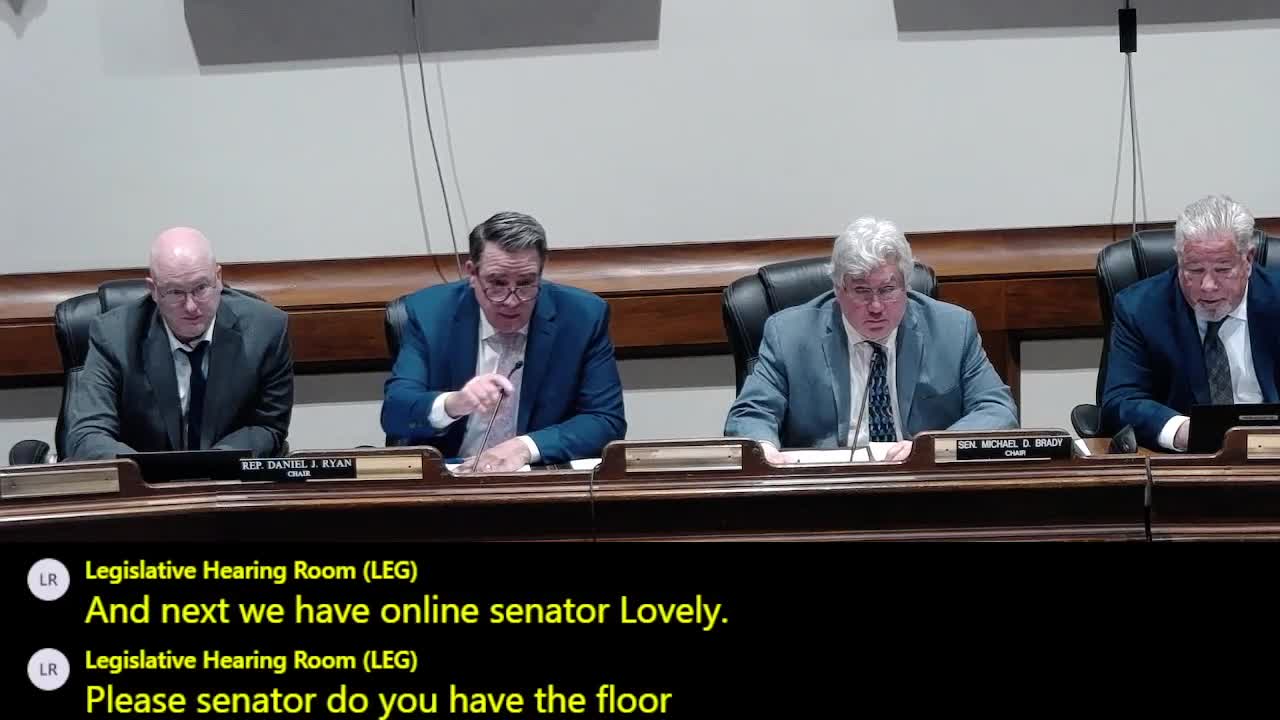
Senator Brendan C. Lovely (testifying remotely) and educators urged the Joint Committee on Public Service to back legislation that would expand access to low-cost retirement savings through automatic enrollment and by broadening the Core plan.
Senator Lovely said the SMART Plan (Save Money and Retire Tomorrow) and related bills would offer “high quality low cost retirement savings” to state and municipal workers and argued the programs are increasingly necessary because many workers lack adequate retirement savings. “We really do believe that this plan would be very advantageous for our state municipal workers,” he said.
The senator identified the bills by number during testimony: Senate bill 1878 and related House numbers 2825 and 41, and Senate bill 1879, which would remove the current employer-size limit from the Core plan and permit the state treasurer to seek private donations or grants to reduce operating costs.
Edward Boynton, a 13-year middle-school teacher in Braintree and representative of the Braintree Education Association (MTA), told the committee he strongly supports House bill 39 to automatically enroll new state employees in the SMART Plan. “It levels the playing field for early career workers who might otherwise delay or avoid enrolling,” Boynton said, recounting his own experience with high-fee retirement products and warning that such fees can erode lifetime savings.
Proponents argued auto-enrollment removes behavioral barriers to participation, raises enrollment and retention, and provides oversight and lower fees compared with some supplemental plans sold to educators. No committee action was recorded in the provided transcript.