Get Full Government Meeting Transcripts, Videos, & Alerts Forever!
Get email alerts on the Christians Law Pools topic
No spam. Unsubscribe anytime.
Parks professionals urge pause on extending Christian’s Law to swimming pools
Summary
The Massachusetts Park and Recreation Association and local recreation directors asked the committee to delay H.B. 2,731, which would change Christian’s Law to include swimming pools, saying pools differ from open water and the change could reduce pool access for low-income camp programs.
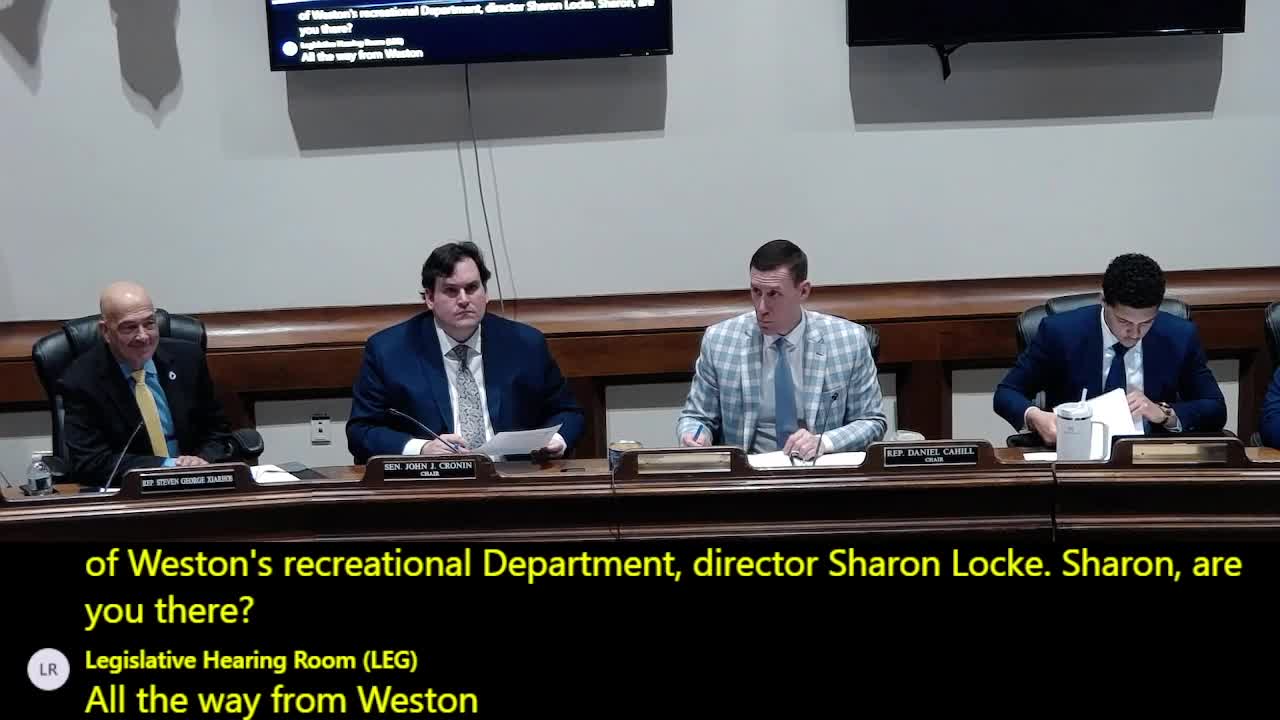
At a Joint Committee on Public Safety and Homeland Security hearing, Sharon Loch, director of recreation for the Town of Weston, urged lawmakers to pause H.B. 2,731, which would alter Christian’s Law to remove the current exclusion for swimming pools and require personal flotation devices in more settings.
Loch said pools and open bodies of water are different in ways that matter for regulation and safety: pools have defined depths, clarity, signage and are governed by the state board of health and lifeguarding standards. She asked the committee to study pool-specific consequences before expanding the statute.
“Pools are very different than open bodies of water,” Loch said. She noted pool operators have visible depth markers, roped-off areas and different staffing and clarity conditions than ponds, lakes, or oceans.
Why it matters: Loch and witnesses warned that extending Christian’s Law to pools could create unintended consequences for municipal and day-camp programs, particularly in underserved communities. Loch testified that some camps already stopped visiting open water after the original Christian’s Law restrictions were enacted because of the cost and logistics of providing fitted life jackets. She said expanding the law to pools risks eliminating affordable pool access and the swim-lesson opportunities that reduce drowning risk for children.
Loch recommended the committee pause H.B. 2,731 and convene further study with aquatic safety professionals representing diverse viewpoints. The Massachusetts Park and Recreation Association had not taken a final position, she said, but recalled opposing the original version because it was inequitable for underserved communities.
Committee members asked about cost estimates; Loch answered she had no numbers on hand and requested more study and consultation on potential liability and expense. No vote was taken during the hearing.