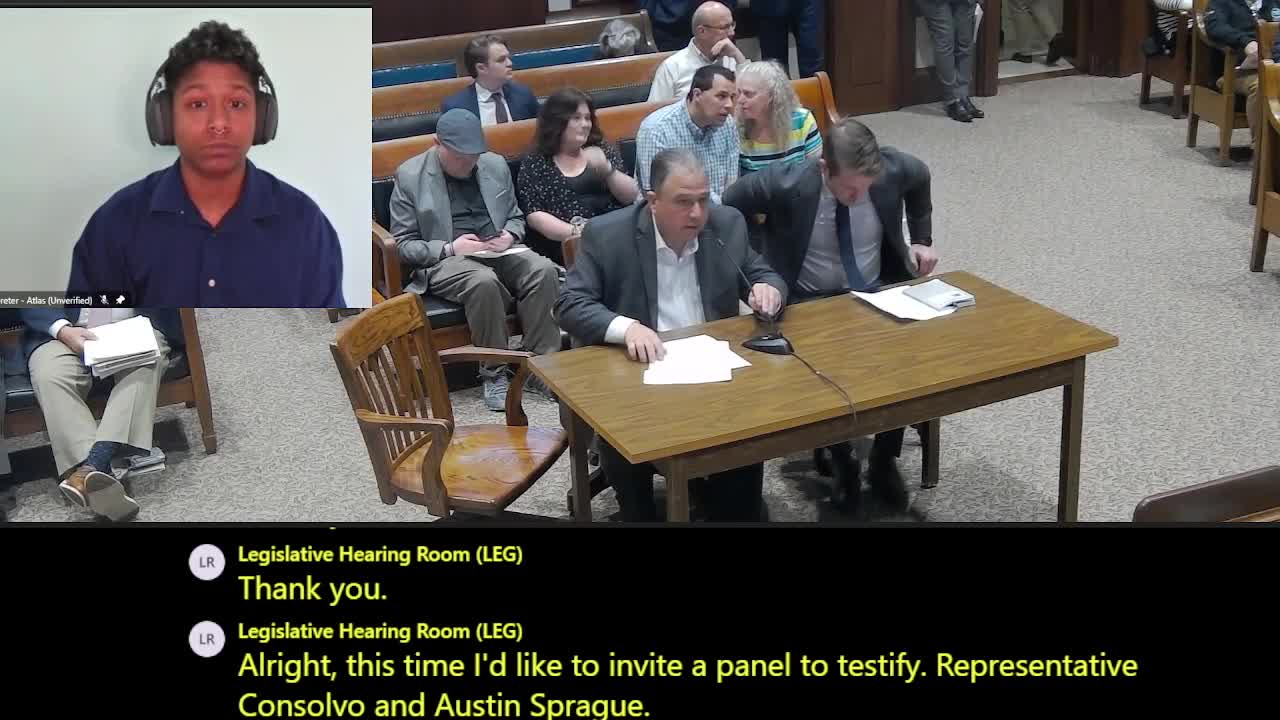
Committee hears plan to fund standardized school maps for first responders; experts recommend state GIS coordination
Loading...
Summary
Supporters urged lawmakers to fund a School Safety Data Grant Program to create standardized, verified school maps for first responders. Vendors and advocates urged the state to use existing MassGIS and 911 standards and suggested grant funding for upfront costs.
Supporters of the School Safety Data Grant Program told the Joint Committee on Public Safety and Homeland Security that standardized, verified school maps would help first responders find the correct entrance, room and parking spot during critical incidents.
Representative Consalvo and Austin Sprague of Critical Response Group described how standardized, grid‑referenced maps reduce confusion in high‑stress, multi‑agency responses. "It's the only way we can communicate effectively," Sprague said, explaining military mapping principles adapted for schools.
The bill would authorize a grant program through the Executive Office of Public Safety and Security (EOPSS) to fund the upfront work of producing accurate emergency response maps and making them available across the technology tools used by first responders. Testimony estimated the average upfront cost per school at about $4,000 and annual maintenance at roughly $500–$600.
Kevin O'Connell of Geocom, a GIS vendor, recommended that the committee require compatibility with state public‑safety data standards and coordinate with the Executive Office of Technology Services and Security (MassGIS) and the State 911 department. "There's no reason to outsource these requirements when you have the expertise in state," he told the committee.
Speakers said the program should be platform‑agnostic: data must be deliverable as a paper printout, in a lockbox, or streamed into 911 and responder tools. Austin Sprague said the bill requires vendors to make data available in many tools and to watermark or timestamp maps so responders know the last verified date.
Committee members asked whether maintenance responsibility would rest with districts or municipalities. Testimony from vendors and practitioners said grant money typically covers initial mapping and districts pick up maintenance costs in later years; maintenance was estimated at about $500–$600 per school per year.
No formal committee action was taken. Supporters asked for the committee’s favorable report so the program can be funded and rolled out to school districts statewide.