Get Full Government Meeting Transcripts, Videos, & Alerts Forever!
Get email alerts on the Workplace Violence Healthcare topic
No spam. Unsubscribe anytime.
Lawmakers hear broad support for bill to require hospital workplace-violence prevention programs
Summary
A bipartisan hearing on S.1718 drew hospital, nursing and union leaders who described rising assaults on health-care workers and urged the Joint Committee on Public Safety and Homeland Security to advance the bill requiring facility-specific risk assessments, workforce engagement, training, reporting and enforcement tied to licensing.
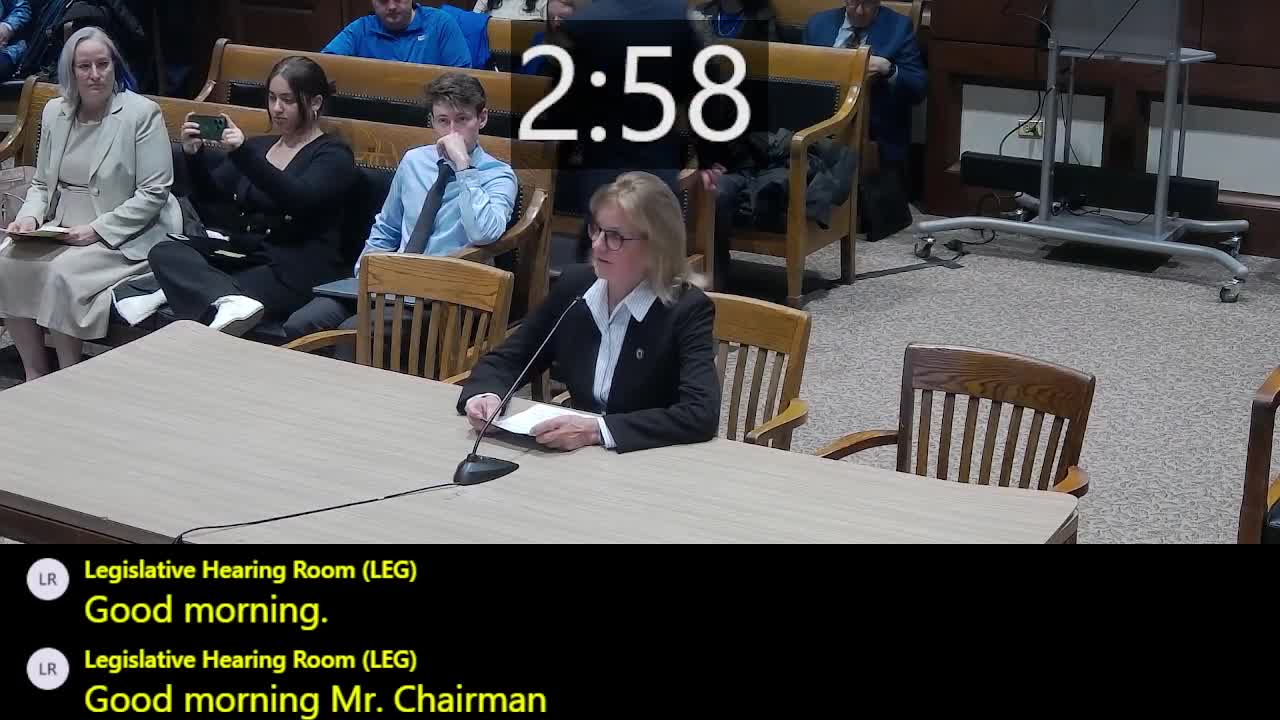
Senators and representatives at the Joint Committee on Public Safety and Homeland Security convened testimony on S.1718, an act that would require health-care employers to develop and implement facility-specific workplace-violence prevention programs.
Supporters told the committee the measure reflects extensive compromise among hospitals, nurses and unions and is designed to prevent assaults on staff, strengthen enforcement and provide job protections for workers who are assaulted.
The bill “requires all Massachusetts hospitals to develop a facility specific risk assessment, and then use that assessment to implement a comprehensive program to reduce the risk of workplace violence,” Senator Lovely said in opening remarks. She asked the committee to give the bill a favorable recommendation.
Why it matters: Witnesses described a sustained rise in assaults on frontline staff and said the proposal combines prevention, transparency and accountability. Steve Walsh, president of the Massachusetts Health & Hospital Association, told the committee, “What happens every 36 minutes in a Massachusetts hospital? … it’s the assault of one of our workers every 36 minutes,” and called the legislation “an opportunity to pass a reform that was crafted in partnership.”
Union and nursing leaders said the bill requires workforce input and shared implementation responsibilities. Julie Pinkham, executive director of the Massachusetts Nurses Association, said the bill “assures a collaborative effort recognizing variations in types of facilities” and that annual assessments keep programs responsive to changing conditions. Carrie Medina, vice president of SEIU 1199’s community care team, highlighted the bill’s requirement that employers include worker input when developing risk assessments and violence-prevention plans.
Medical witnesses described frontline incidents and supported stronger penalties for assaults. Dr. Melissa Lyebecker, chief of emergency medicine for a seven-hospital system, urged action and said section 3 of the bill “would strengthen the penalties for assault and battery against health-care workers from a misdemeanor to a felony.” Dr. Joseph Kopp, an emergency physician and chair of the Massachusetts chapter of the American College of Emergency Physicians’ government advocacy committee, asked legislators to carry the story beyond committee and “be our champions” in later stages of the process.
Committee members asked about limits and unintended consequences. Senators and representatives pressed witnesses on balancing worker protections with the risk of criminalizing patients who lack intent because of behavioral health crises. Witnesses said the bill attempts to “bifurcate the two” — protect patients in crisis from criminal punishment while ensuring harmed workers receive leave, reporting and other supports.
No formal vote was recorded at the hearing. Witnesses urged the committee to advance the bill so it may be considered by the full Legislature.
The hearing included repeated statements that the measure was the product of multi-session stakeholder negotiations and is supported by the Massachusetts Nurses Association, the Massachusetts Health & Hospital Association and SEIU 1199.
Looking ahead: Advocates asked committee members to move the bill out of committee with a favorable recommendation and to press for passage once it reaches the floor.