Get Full Government Meeting Transcripts, Videos, & Alerts Forever!
Get email alerts on the Medical Panels Probate Family Court topic
No spam. Unsubscribe anytime.
Committee hears testimony for bill to create medical panels in probate and family court
Summary
Supporters told the Joint Committee on the Judiciary that Senate Bill 1102 would give judges neutral medical expertise in contested guardianship and custody proceedings; multiple parents, clinicians and advocates urged a favorable report, describing cases where disputed medical decisions harmed children and vulnerable adults.
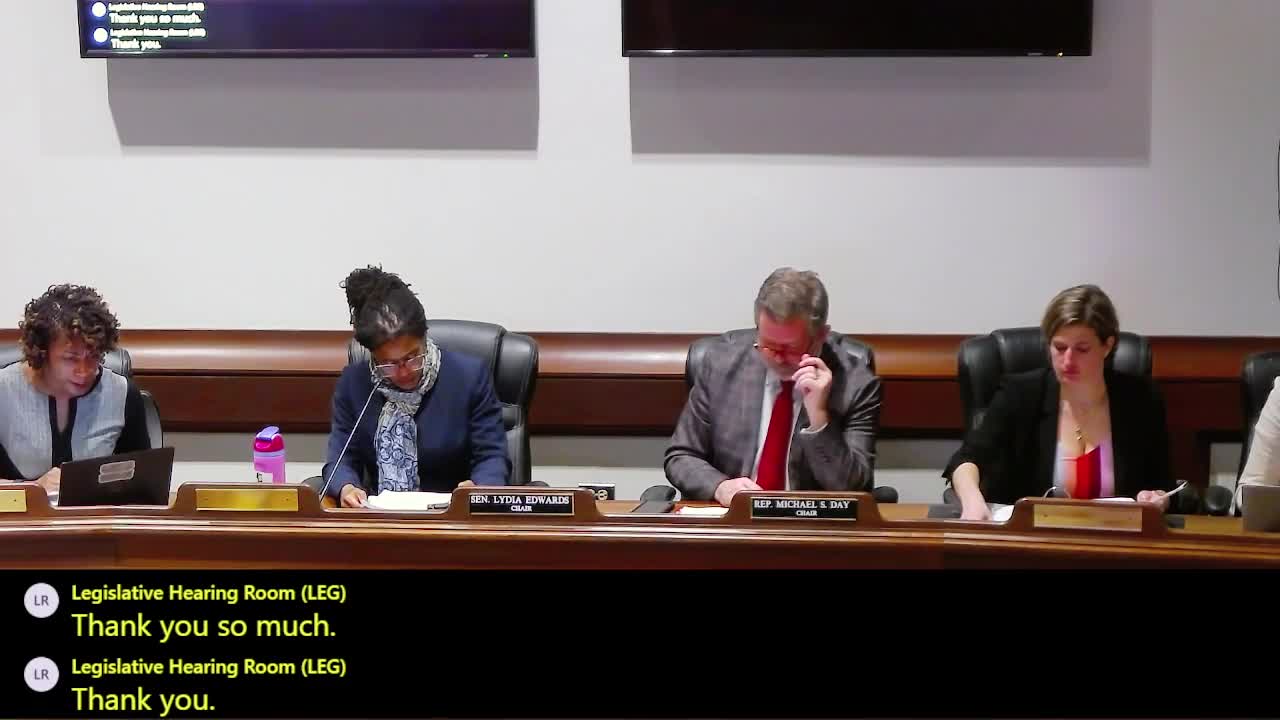
Chair Lydia Edwards and House Chair Michael Day convened testimony on Senate Bill 1102, an act to establish three-physician medical panels to advise judges in contested probate and family court proceedings.
Proponents told the committee the panels would fill a gap in cases where medical questions are central to custody or guardianship decisions. "This bill gives probate and family court judges a vital tool, the ability to convene impartial medical panels to answer medical questions in contested guardianship and custody cases," said Paola Rosetti, a Boston resident, during her testimony. Rosetti said judges currently "often [are] left to decide medical questions of fact" without neutral expertise.
The panel model was presented as similar to an existing system used in Massachusetts for public employee disability and retirement claims. Leslie Vogel, a physician, said the panels would provide "medical fact finding and diagnostic clarity" in contested petitions and could prevent unnecessary harm when medical diagnoses or treatment plans are disputed.
Several parents and family members described personal cases as rationale for the bill. Brandy Dean recounted her son's experience with PANS and how, after a divorce, a co‑parent denied the diagnosis and blocked access to the physicians who had treated him. "With fifty‑fifty legal custody, no physician would see him without both parents' consent," Dean said, adding that neutral medical review could have “confirmed my son's diagnosis, protected his treatment, and prevented unnecessary harm.” Kelsey Forrest (read by April Bradshaw) and other speakers described instances where parents alleged that court processes were used to block or delay appropriate care.
Advocates emphasized that the panels would be used only when courts identify unresolved medical disputes. Kayla Knight, a domestic‑violence and disability advocate and parent of a child with complex needs, said the panels would "help judges make more informed life‑saving decisions" and could reduce bias by providing neutral expert input. Vogel and others described how panels could be petitioned by a party to a case and would be composed of independent specialists.
Supporters also told the committee the panels could protect children and vulnerable adults from erroneous diagnoses or inappropriate treatment plans. Vogel provided an example in which disputed pediatric asthma treatment led to parental conflict and argued the panel would allow judges to focus on medical facts rather than confrontational allegations.
No member of the committee moved or reported the bill during the recorded testimony; the session recorded public testimony and invited committee questions after each speaker.
If enacted, S.1102 would establish a process for the Probate and Family Court to convene three‑physician panels to advise judges on medical issues in contested matters. Advocates urged a favorable recommendation to give judges an extra, neutral fact‑finding tool in medically complex cases.