Get Full Government Meeting Transcripts, Videos, & Alerts Forever!
Get email alerts on the Charitable Immunity topic
No spam. Unsubscribe anytime.
Supporters urge repeal of charitable immunity cap, calling $20,000 limit unfair
Summary
Lawyers and advocates told the Joint Committee on the Judiciary that Massachusetts’ charitable immunity cap (GL c.231, §85K) leaves seriously injured plaintiffs undercompensated and shifts costs to taxpayers; they urged repeal of the $20,000 non‑malpractice cap under H.1723 / S.1193.
The Joint Committee on the Judiciary received testimony in support of H.1723 / S.1193 to eliminate Massachusetts’ charitable immunity cap, a statutory limit that petitioners described as anachronistic and unfair to seriously injured victims.
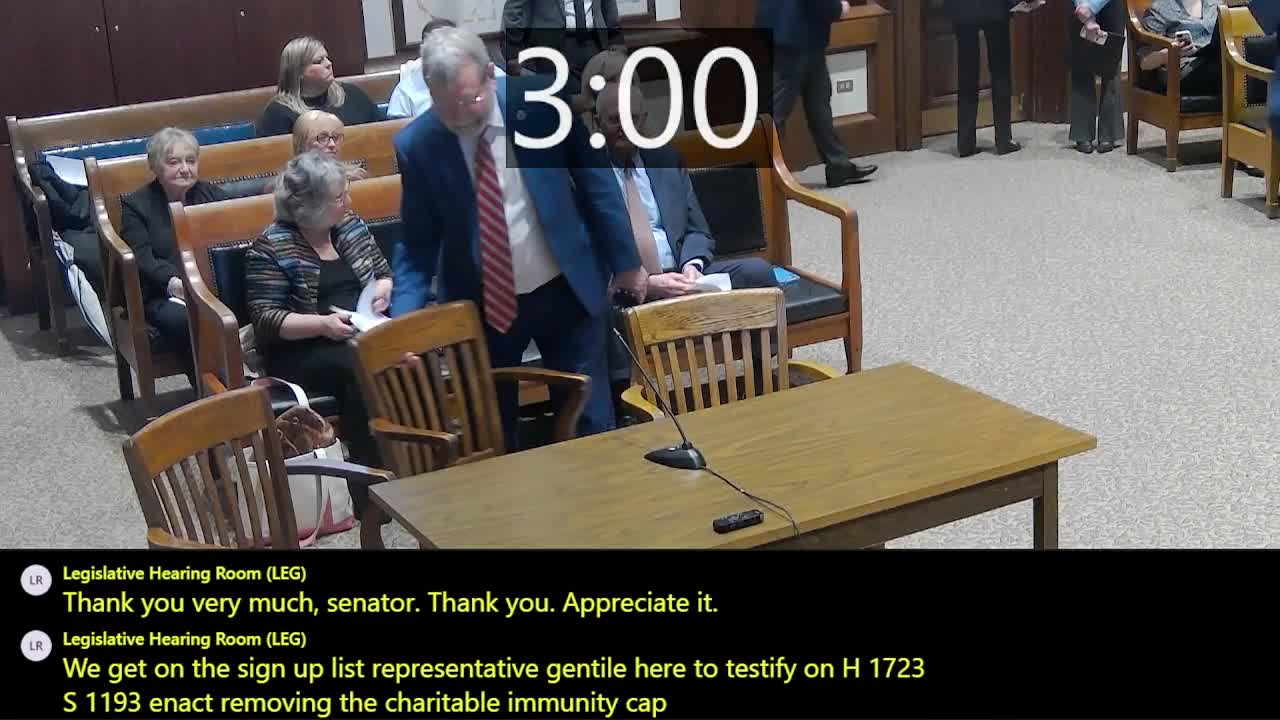
Representative (speaker) framed the problem with an example contrasting compensation available from a private company to that afforded following injury by a charitable institution. He said wealthy nonprofits (for example, hospitals or universities) carry substantial liability insurance while injured victims may only collect capped amounts under the current charitable immunity rules. "If they get hit by an Amazon truck and become a quadriplegic, be assured that Amazon will be paying many millions of dollars... If they get hit by a ... Harvard University truck ... they're not going to get squat," the representative said, urging the Legislature to move Massachusetts off the list of a small number of states that retain caps.
Attorney Jeffrey Beeler urged the committee to eliminate the cap found in G.L. c.231, §85K and argued the policy is archaic and shifts costs to MassHealth (the state’s Medicaid program) and taxpayers when injured people cannot collect adequate compensation. Beeler said the cap dates to the 1960s and that other states have abandoned such immunity, describing the change as both a fairness and fiscal-policy issue.
Speakers urged lawmakers to align Massachusetts with most other states and asked the committee to move the bill forward. The hearing record shows no committee vote or formal action on H.1723 during this session.
Why it matters: Eliminating the cap would increase potential recoveries available to plaintiffs injured by nonprofit institutions, with implications for insurance markets, nonprofit operations and potential state fiscal impacts if insurers and institutions adjust coverage.