Get Full Government Meeting Transcripts, Videos, & Alerts Forever!
Get email alerts on the Reproductive Health Abortion Access topic
No spam. Unsubscribe anytime.
Providers warn of rising demand and federal threats to reproductive care; urge state action on funding and legal protections
Summary
Planned Parenthood and reproductive‑rights groups told the Joint Committee on Public Health that surging out‑of‑state demand for care and federal moves on Title X and other programs threaten access in Massachusetts; groups urged legislative steps to protect funding and strengthen shield laws and access for young people.
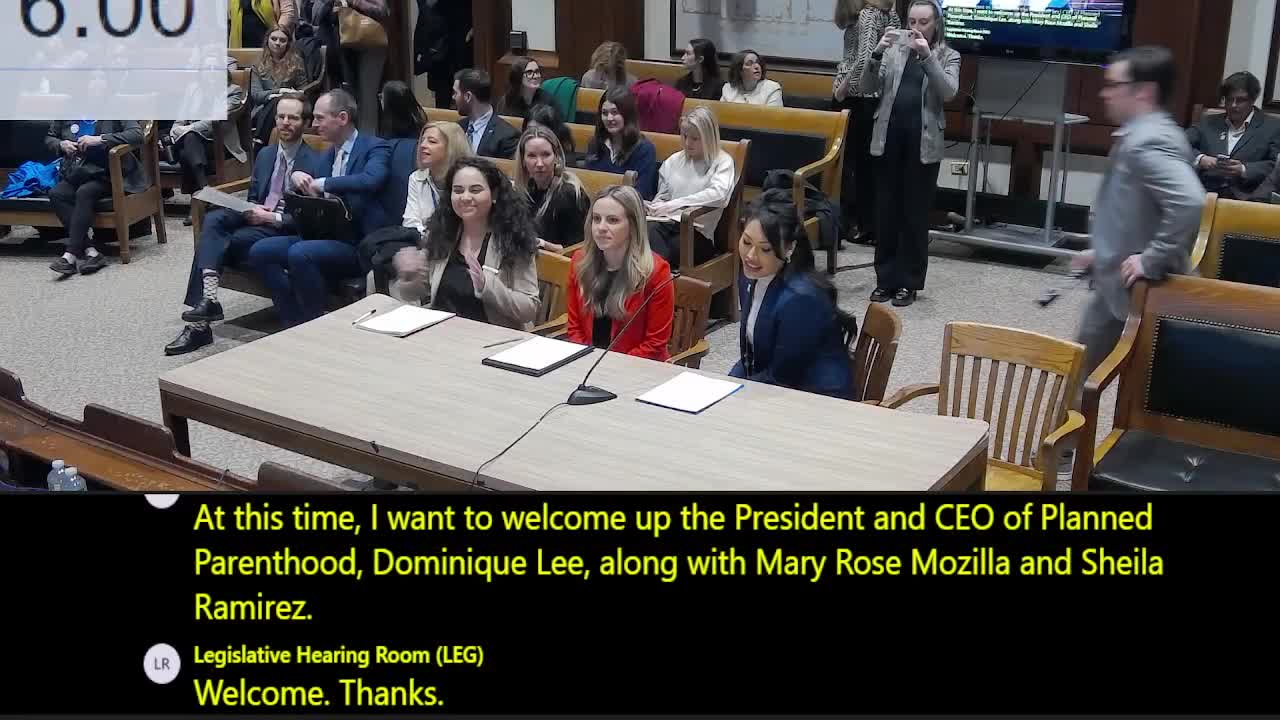
Dominique Lee, president and CEO of Planned Parenthood League of Massachusetts, told the Joint Committee on Public Health that the organization is the state’s largest reproductive‑health provider and that it served about 45,000 patients in 2024 across four health centers and telehealth services. Lee said Planned Parenthood delivered abortion care to about 9,000 patients in 2024 and that out‑of‑state patients seeking care in Massachusetts increased by 37 percent from 2023 to 2024.
Lee and Planned Parenthood colleagues told the committee they face dual pressures: rising demand driven by restrictions elsewhere and the Trump administration’s recent moves to “freeze” or review Title X funding and other federal supports. Mary Rose Mazzola, Planned Parenthood’s chief external affairs officer, said Title X changes and a freeze of the program threaten funding streams and that the 340B drug discount program and other federal mechanisms yield about $2.8 million in annual savings that Planned Parenthood relies on. Mazzola asked the legislature to consider state steps similar to emergency funds used in 2019 to protect family‑planning access.
Reproductive Equity Now emphasized two threats during its testimony: criminalization efforts in other states and barriers to later abortion care. The group noted the high volume of out‑of‑state patients and highlighted a national prosecution — the indictment of a clinician in Louisiana — as a test of shield laws that protect clinicians and patients. Reproductive Equity Now asked the Commonwealth to strengthen shield‑law protections (including telehealth protections used by medication‑abortion telehealth programs such as the Massachusetts Medication Abortion Access Project) and to clarify prescription‑label anonymity and data protections so clinicians and patients are not exposed to investigations from hostile jurisdictions.
Planned Parenthood and other witnesses also asked the committee to act on bills affecting young people’s access, including a referenced Senate bill (S.1579) that would remove parental‑consent and judicial‑bypass requirements for minors seeking abortion — testimony argued the change would reduce delays that currently average nine to 15 days for youth seeking judicial bypass, a delay that can make care more expensive and harder to access.
Witnesses urged the committee to plan state contingencies because federal rule changes and enforcement priorities are uncertain and to consider funding to replace or replicate critical federal programs if federal funding is curtailed.