Get Full Government Meeting Transcripts, Videos, & Alerts Forever!
Get email alerts on the Apprenticeship Public Works topic
No spam. Unsubscribe anytime.
Builders, unions clash over apprenticeship mandates, ratios and OSHA disclosure
Summary
Contractors supported apprenticeship training but opposed mandatory apprenticeship requirements tied to outdated apprentice-to-journeyperson ratios; building-trades witnesses supported apprenticeship mandates and OSHA training while opposing public disclosure of historical OSHA citations.
Representatives of Associated Builders and Contractors of Massachusetts, the Building Trades Employers Association and union trustees testified on competing bills addressing apprenticeships, public-construction requirements and OSHA matters.
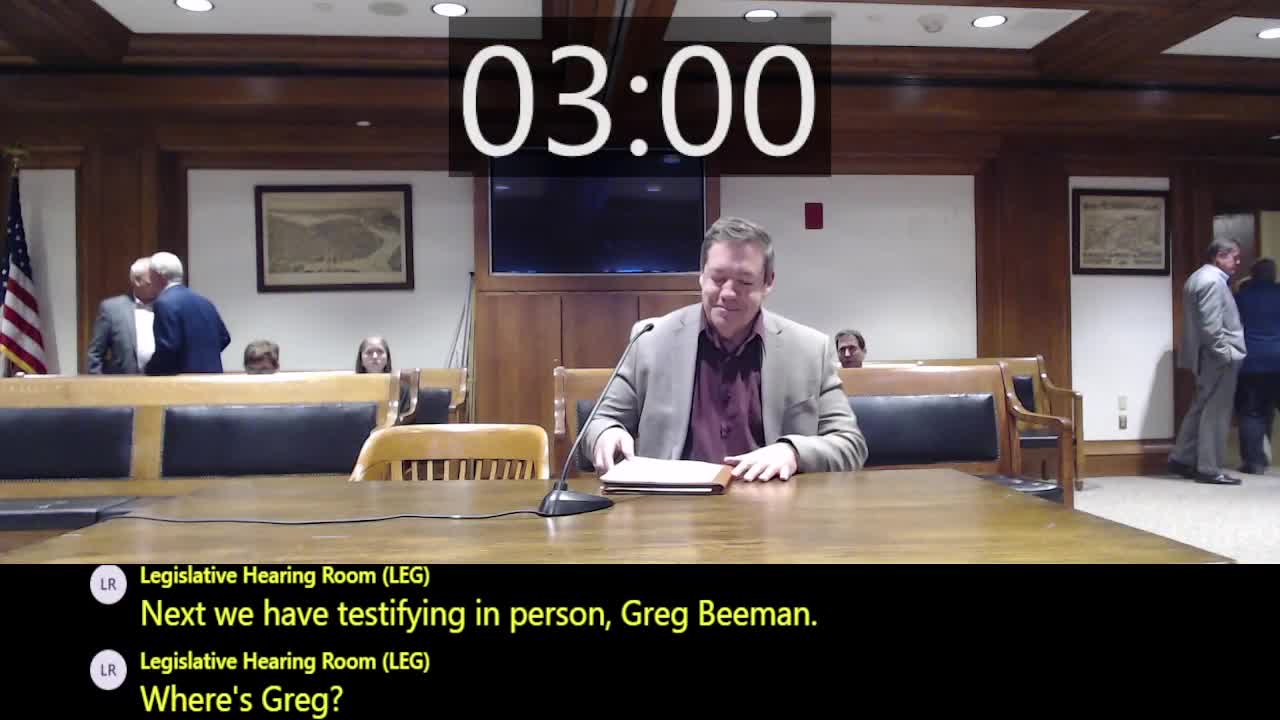
Greg Beeman of Associated Builders and Contractors said his organization supports apprenticeship training but opposed legislation that would mandate registered-apprenticeship participation on all public-works projects without addressing existing state apprentice-to-journeyperson ratio limits. He told the committee that some trades require up to five journeypersons per apprentice under current law, and that these ratio rules date back decades and hamper smaller contractors’ ability to hire apprentices.
By contrast, Rich Marlin of the Massachusetts Building Trades Unions and Warren Kramer of the Building Trades Employers Association said expanding apprenticeship opportunities on public construction is vital. Kramer said his association supports H 1265’s apprenticeship provisions and H 207 (OSHA training requirement) as written, because joint apprenticeship training committees already meet rigorous standards and OSHA training would set a safety threshold.
Kramer also opposed a proposed requirement that contractors bidding on projects over $50,000 disclose OSHA citations from the past four years, arguing citations are already publicly reported and that awarding authorities “are not equipped to interpret this data” and could punish contractors for long-resolved minor infractions.
Witnesses agreed the state should expand the construction talent pipeline but disagreed on whether proposed mandates would work without corresponding updates to statutory ratios and program rules. Committee members asked follow-up questions about how ratios are set and how smaller firms would be affected; no legislative votes were taken at the hearing.