Get Full Government Meeting Transcripts, Videos, & Alerts Forever!
Get email alerts on the Mental Health Centers topic
No spam. Unsubscribe anytime.
Mental‑health providers plead for higher rates, arguing centers are underpaid and losing clinicians
Summary
Community mental‑health providers, advocacy groups and behavioral‑health associations urged the committee to raise outpatient behavioral‑health rates, require higher reimbursements to licensed mental‑health centers and institute regular rate reviews to stop clinic closures and long wait lists.
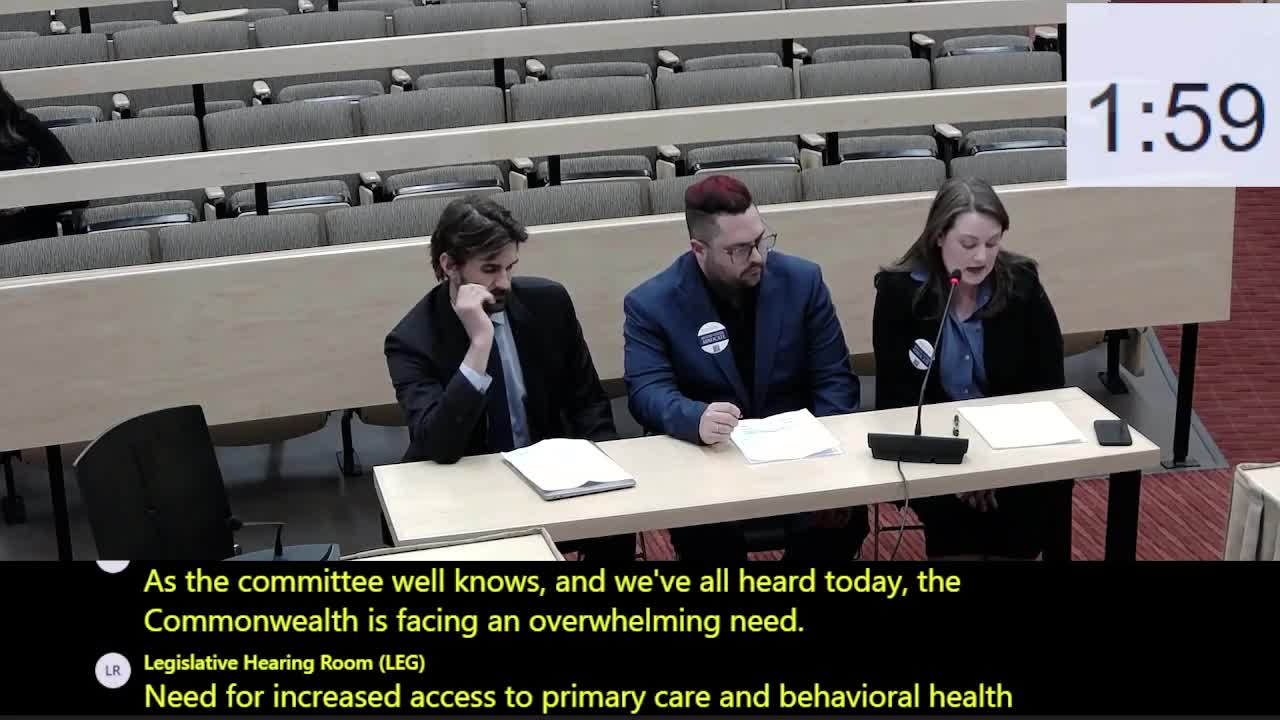
Boston — Dozens of community behavioral‑health providers and advocacy organizations testified that licensed mental‑health centers are chronically underfunded and urged the Joint Committee on Health Care Financing to support bills that increase outpatient behavioral‑health reimbursement and establish a higher minimum rate for licensed mental‑health centers.
Lydia Conley, president and CEO of the Association for Behavioral Health (ABH), described S 8 74 / H 13 96 as an effort to address decades of underfunding by requiring a 5% increase in minimum payment rates for outpatient behavioral‑health services and a rule that rates for services delivered by licensed mental‑health centers be at least 20% above comparable independent‑practitioner rates. “Mental health centers have statutory and regulatory staffing and access obligations that private practitioners do not. Those obligations have costs,” Conley said.
Why providers say this matters: Testimony from agencies across the state documented staffing shortages, high turnover and large losses at outpatient clinics. Victor Gravio of Riverside Community Care said his organization faces multimillion‑dollar losses in outpatient services and must reduce access without rate relief. Clinical and Support Options reported more than 25 open clinician positions at its clinics; the Home for Little Wanderers reported more than 300 children waiting for outpatient therapy. Witnesses said these gaps worsen inequities because the majority of mental‑health‑center patients rely on MassHealth.
Evidence and expected effects: Advocates pointed to state and national analyses showing behavioral‑health workforce shortages and cited evidence that integrated and timely outpatient care can reduce hospitalizations and suicidality. Several witnesses pointed to the reimbursement differential (an RTI analysis cited in testimony showed clinician behavioral‑health visit rates lag medical office visit rates in commercial datasets) and argued the legislative change would reduce turnover, shorten wait lists and preserve training sites that feed schools, hospitals and community health centers.
Committee questions focused on rate methodology, how the 20% differential would be calculated, and whether increased payments would be paired with periodic rate reviews and audits. Several witnesses requested regular biannual rate reviews, service‑classification updates and an inflation index to keep rates aligned with wage growth and operating costs.
Ending note: Providers asked the committee for targeted relief now and a multi‑year plan for sustainable funding; committee staff requested fiscal analyses and sample rate methodologies to inform next steps.