Get Full Government Meeting Transcripts, Videos, & Alerts Forever!
Get email alerts on the Bereavement Leave topic
No spam. Unsubscribe anytime.
Victim advocates, legislators and bereavement groups press for 10-day leave right
Summary
Survivors’ groups, legislators and nonprofits urged the committee to pass bills (H2189 / S1354 and related measures) guaranteeing up to 10 days of bereavement leave and broader protections, citing harms to low-wage and bereaved families.
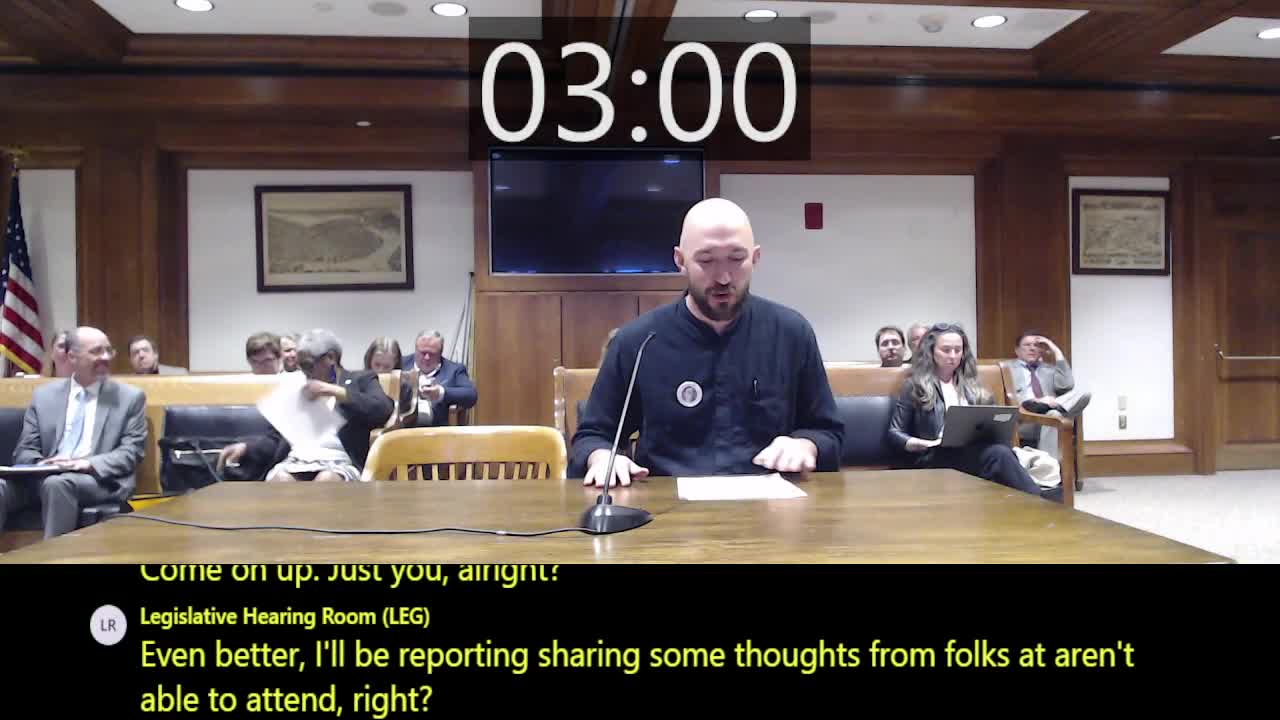
Speakers including Pace McConkie Jr., policy manager for the Louis D. Brown Peace Institute, Representative Chris Worrell, and Chaplain Clementina Sherry, president and CEO of the Louis D. Brown Peace Institute, urged the Joint Committee on Labor and Workforce Development to report H 21-89 / S 13-54 favorably.
Representative Chris Worrell described the bill as “a right to bereavement leave time up to 10 days, used, consecutively and nonconsecutively within 12 months of the death of a family member.” He said employers would retain discretion over whether leave is paid or unpaid and that businesses with fewer than 25 employees would be exempt.
Pace McConkie Jr., speaking for the Peace Institute and as a Somerville resident, related the case of a single mother who, after losing a child to homicide, lost her job because of lack of bereavement protection and then lost custody of her remaining child. “We know how supporting families in the aftermath of a loss can place them on a positive trajectory towards peace and healing,” McConkie said, and argued that the bills on the docket “collectively express the profound need for ensuring the rights of bereaving people in Massachusetts.”
Chaplain Clementina Sherry recounted founding the institute after her own son, Louis D. Brown, was killed in 1993, and said bereavement currently is “left up to employer[s], which leads to inequities, especially for low wage and hourly workers, many of whom are women, immigrants, people of color, and single mothers.” She said the flexibility in the bill allows survivors to take leave when they need it.
Susan Shaw, executive director of Williams Be Yourself Challenge and founder of a planned healing retreat called the Greenhouse, described her personal loss and said the bill’s 10-day period would provide “time, albeit just 10 days” that is “compassionate.” Liam Lowney, executive director of the Massachusetts Office for Victim Assistance, told the committee that MOVA-funded programs supported over 5,400 family members of homicide victims in fiscal 2024 and that the expanded definition of family in the bill reflects “the broad ripple effect that homicide has.”
Testimony emphasized disparate impacts for communities experiencing violence and for workers with limited paid leave: Representative Worrell argued that communities such as Dorchester and Roxbury continue to bear a disproportionate burden of violent death and chronic health disparities. Several witnesses asked the committee to ensure the right applies broadly and to report the bills favorably.
No committee action or vote on the bills occurred during the hearing.