Get Full Government Meeting Transcripts, Videos, & Alerts Forever!
Get email alerts on the Service Animals topic
No spam. Unsubscribe anytime.
Committee hears push for commission to study intentional misrepresentation of service animals
Summary
The Joint Committee on the Judiciary heard testimony supporting H.1686 / S.1254, a resolve to create a commission to study intentional misrepresentation of service animals, with disability-service groups and lawmakers saying fake service dogs endanger legitimate teams and disrupt businesses.
Chair Michael Day and co-chair Senator Lydia Edwards presided over an inaugural Joint Committee on the Judiciary hearing where Representative Kimberly Ferguson and disability service organizations urged a favorable report on H.1686 / S.1254, a resolve to create a commission to study the intentional misrepresentation of service animals.
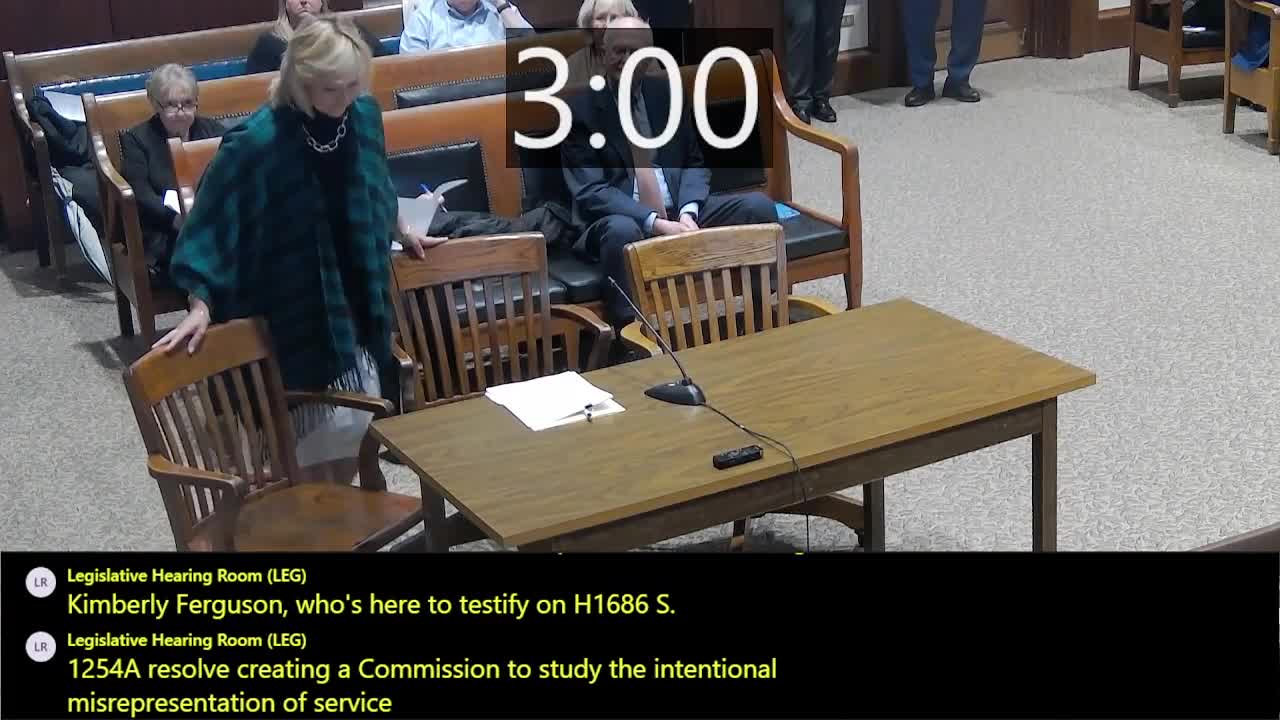
Rep. Kimberly Ferguson (Representative Kimberly Ferguson) told the committee the bill “passed unanimously in the House last session” and said the commission would be a first step toward a state law to address people presenting pets as service animals. She described recent incidents in which a small dog in a public establishment displayed repeatedly aggressive behavior while wearing a poorly marked vest, saying the dog “was very stressed” and that staff told her there was “nothing they could do” for fear of social-media backlash.
The nonprofit NEADS (National Education for Assistance Dog Services) told the committee fake service animals are increasingly common and that the harms include distraction, danger to legitimate service teams and stress on people with disabilities who rely on service dogs. Kathy Zemaitis, chief development and programs officer at NEADS, described a statewide training initiative, the “Red Vest Accessible Initiative,” that provides free training for businesses about appropriate access, and said the organization has trained hundreds of staff across Boston-area venues.
Cara Smolot, manager of client services at NEADS and a licensed independent clinical social worker, said service dog teams report being frightened, retraumatized or forced to alter travel routes after encounters with poorly trained or misrepresented animals. “People are becoming more brazen about passing off poorly behaved pets as legitimate service dogs,” Smolot told the committee, and urged lawmakers to create legal consequences as part of a strategy that pairs enforcement with education.
Committee members asked about training and program costs and were told NEADS’ training is provided at no cost to participating businesses and that the organization supports handlers through the working life of the dog.
The hearing record shows broad support from advocates and constituent groups for a study commission; there was no formal committee action recorded during the session.
Why it matters: Advocates say fake service animals reduce safety and access for people with disabilities and make it harder for legitimate teams to operate in public. A study commission would be designed to clarify the scope of the problem and recommend statutory changes, enforcement mechanisms and education efforts.