Get Full Government Meeting Transcripts, Videos, & Alerts Forever!
Get email alerts on the Workforce Development topic
No spam. Unsubscribe anytime.
Lawmakers and community health centers press for NP residencies, loan repayment and Medicaid GME to shore up workforce
Summary
Senators, representatives and health‑center leaders told the committee the state should expand nurse practitioner residency slots, broaden loan‑repayment eligibility and restore Medicaid graduate medical education payments to drive recruitment and retention at community health centers.
Boston — Community health centers and elected officials urged the Joint Committee on Health Care Financing to advance a package of workforce bills that would expand nurse‑practitioner residency programs, broaden loan‑repayment eligibility and restore Medicaid graduate medical‑education support to community‑based residencies.
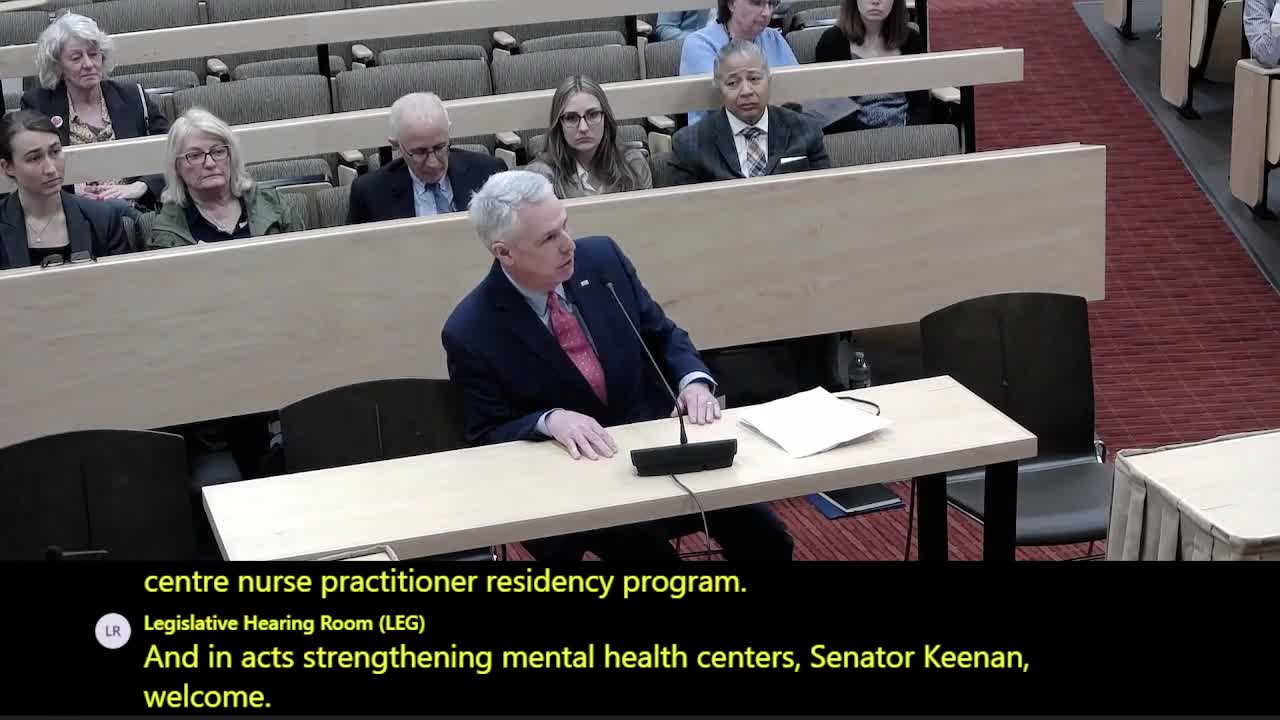
Senator John Keenan, speaking for the Senate bill and its house counterpart, described a community health‑center nurse practitioner residency that has existed in Worcester since 2009 and said the legislation (House 1377 / Senate 72 references in testimony) would create a two‑year residency plus a service obligation aimed at retention. “This is a pipeline,” Keenan said, adding that existing programs have raised retention at the sponsoring centers.
Program design and costs: Brenda Tsuchiya, medical director of primary care at Family Health Center of Worcester, testified that her center’s NP residency began in February 2009 and that it has produced many clinicians who stay in community practice; she indicated a budget of about $620,000 for three residents (the figure covered resident salaries, preceptor time and administrative costs for a one‑year residency with an additional obligated year of service). Witnesses clarified that residency lengths and repayment/service obligations vary across programs.
Loan repayment and GME: The Mass League of Community Health Centers requested expansion of loan‑repayment programs to include non‑clinical support staff and community health workers, and urged restoration of Medicaid GME funding to support residency training at FQHC‑based programs. Nicholas Whyda of Greater Lawrence Family Health Center described a training program where almost all graduates remain in community health settings and said federal matching Medicaid GME dollars are available in other states and could be leveraged in Massachusetts.
Why it matters: Testifiers said recruitment and retention remain the critical constraint on maintaining access to primary care and behavioral health in underserved communities. Michael McDonald, a behavioral‑health clinician at Brockton Neighborhood Health Center, and others said loan repayment enabled them to afford careers in community health that they otherwise could not maintain.
Committee follow‑up: Committee members asked for program‑cost estimates and clarification about the proposed residency slots, service obligations and whether federal match dollars could be accessed for Medicaid GME. Witnesses committed to supplying details; no formal action was taken at the hearing.
Ending note: Advocates emphasized scaling programs that have demonstrably placed clinicians in community health settings and urged the legislature to provide sustainable funding streams for residency training and loan support.