Get Full Government Meeting Transcripts, Videos, & Alerts Forever!
Get email alerts on the Healthcare Costs Benchmark topic
No spam. Unsubscribe anytime.
CHIA: Massachusetts health spending rose 8.6% in 2023; HPC and legislature weigh 2026 benchmark
Summary
Officials reported Massachusetts' total health care spending rose 8.6% in 2023 to $78.1 billion, driven by hospital outpatient services and prescription drugs, as the Health Policy Commission and the legislature debated whether to change the state's 3.6% health care cost growth benchmark.
Boston — Officials from the Health Policy Commission and the Center for Health Information and Analysis told a joint public hearing that Massachusetts’ total health care expenditures rose to $78.1 billion in 2023, an 8.6% per‑resident increase that exceeded the state’s cost‑growth benchmark of 3.6%.
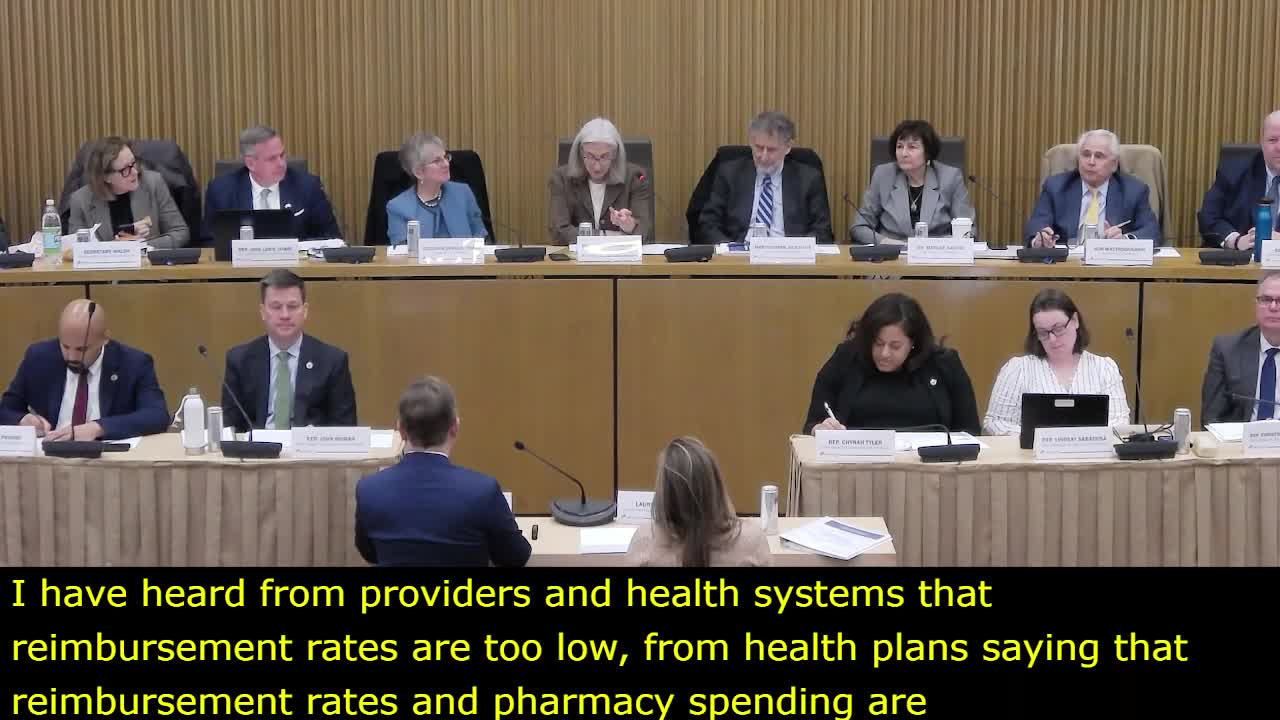
The annual hearing — convened by the Health Policy Commission in partnership with the Joint Committee on Health Care Financing — brought CHIA, HPC researchers, chairs of the legislative committee and public witnesses together to review spending drivers and whether the benchmark should be modified for the 2026 measurement year. The HPC’s board will vote to set the 2026 benchmark at a public meeting scheduled for April 17, the commission said.
CHIA’s executive director Lauren Peters summarized the agency’s annual report, saying total health care expenditures equated to $11,153 per resident and that the 8.6% growth rate in 2023 was “more than double the cost growth benchmark.” Peters told the hearing that commercial spending rose 7.2% overall and that pharmacy spending (net of rebates) accelerated by 10% in 2023, accounting for more than $11 billion of statewide spending.
HPC Executive Director David Seltz described the benchmark’s legal and procedural background and the commission’s next steps. He noted the benchmark is indexed to a projection of the Commonwealth’s long‑term economic growth and that, under current law, the HPC has the discretion to modify the benchmark after year 10. Seltz emphasized the commission reviews a broad set of inputs — pricing, patient acuity, capacity, and affordability measures — before deciding whether to adjust the benchmark and explained the board must refer any decision to modify the benchmark to the Joint Committee on Health Care Financing for legislative oversight.
HPC Senior Director of Research and Cost Trends Dr. David Auerbach and HPC staff presented category‑level drivers. Auerbach highlighted hospital outpatient department (HOPD) services and pharmacy as the largest contributors to spending growth, noting that HOPD spending is driven by three dynamics: (1) site‑of‑care shifts (for example, more joint replacements being performed outside inpatient settings), (2) rising prices for infused and oncology drugs delivered in outpatient settings, and (3) a relatively higher share of services delivered in hospital outpatient settings in Massachusetts than in many other states. He showed that some infused oncology medicines have large price variation across hospitals, which contributes to overall outpatient spending growth.
Peters and Auerbach also said MassHealth spending rose sharply in 2023 — a 14.8% increase driven in part by $1.5 billion in new supplemental payments to hospitals, financed by an updated hospital assessment and federal matching funds. CHIA reported that excluding those supplemental payments, MassHealth growth was 7.2% total (2.7% on a per‑member‑per‑month basis).
Presentations underscored affordability concerns: CHIA’s household survey found that more than 40% of residents reported at least one health‑care affordability problem in the prior 12 months and more than one‑quarter reported an unmet need for care because of cost. HPC staff showed that premium and out‑of‑pocket cost growth has outpaced wages and that families in lower income percentiles face a larger share of income devoted to health care.
Policy discussion at the hearing included site‑neutral payment, enhanced transparency for pharmacy benefit managers, and the establishment of a state office focused on pharmaceutical policy and analysis. Seltz said the recently passed legislation (including the PACT Act and hospital oversight measures) created new tools — for example, PBM licensure and requirements for the HPC to develop pharmacy policy capacity — that will shape future work on drug pricing and affordability.
Legislators and public witnesses expressed differing views on the benchmark. Senator Cindy Friedman (cochair, Joint Committee on Health Care Financing) described the health system as “beyond crisis” for many residents and urged “bold steps” to rein in costs. Representative John Lawn (cochair) and other legislators pressed staff on multi‑year versus annual benchmarks and whether the benchmark should be applied differently for sub‑sectors such as high‑priced hospitals. Public testimony reflected mixed positions: Eileen McEnany of the Employer Coalition on Health urged lowering the benchmark to force faster cost reductions; Alex Sheff of Health Care for All supported keeping the benchmark at 3.6% and emphasized targeted investments in primary care; and Laura Pellegrini of the Massachusetts Association of Health Plans urged a “strong cost growth benchmark set at 3.6% or below” while also seeking new tools and regulatory authority to control provider and drug prices.
No formal vote was taken at the hearing. Seltz and others reminded the public that the HPC board will meet on April 17 to set the 2026 benchmark and that any board decision to modify the benchmark will trigger additional oversight steps by the Joint Committee on Health Care Financing.
The hearing included a detailed explanation of the HPC’s accountability process for entities that exceed the benchmark. Seltz described how CHIA confidentially refers providers and payers with spending growth above the benchmark to the Health Policy Commission, which may then undertake a comprehensive review and, if warranted, vote to require a performance improvement plan. He cited a prior performance improvement plan with Mass General Brigham that aimed to generate $170 million in savings over 18 months and described care‑management strategies used in that plan.
HPC and CHIA officials said they will continue to analyze 2024 and early 2025 data (including the effects of post‑pandemic Medicaid redeterminations and state supplemental payments) before the board vote. Lawmakers and stakeholders signaled interest in additional transparency, tighter accountability for providers and pharmaceutical manufacturers, and consideration of sector‑specific targets (for example, for primary care) as complements to the statewide benchmark.
The Health Policy Commission will take public questions and vote on a 2026 benchmark at its April 17 board meeting; the Joint Committee on Health Care Financing expected to review any modification as part of its legislative oversight role.