Get Full Government Meeting Transcripts, Videos, & Alerts Forever!
Get email alerts on the Organ Donor Insurance Protections topic
No spam. Unsubscribe anytime.
Advocates back bill to bar insurers from discriminating against living organ donors
Summary
Advocates and transplant recipients urged the Joint Committee on Financial Services to pass bills that would prohibit insurers from taking an individual’s status as a living organ donor into account for life, long-term and disability insurance.
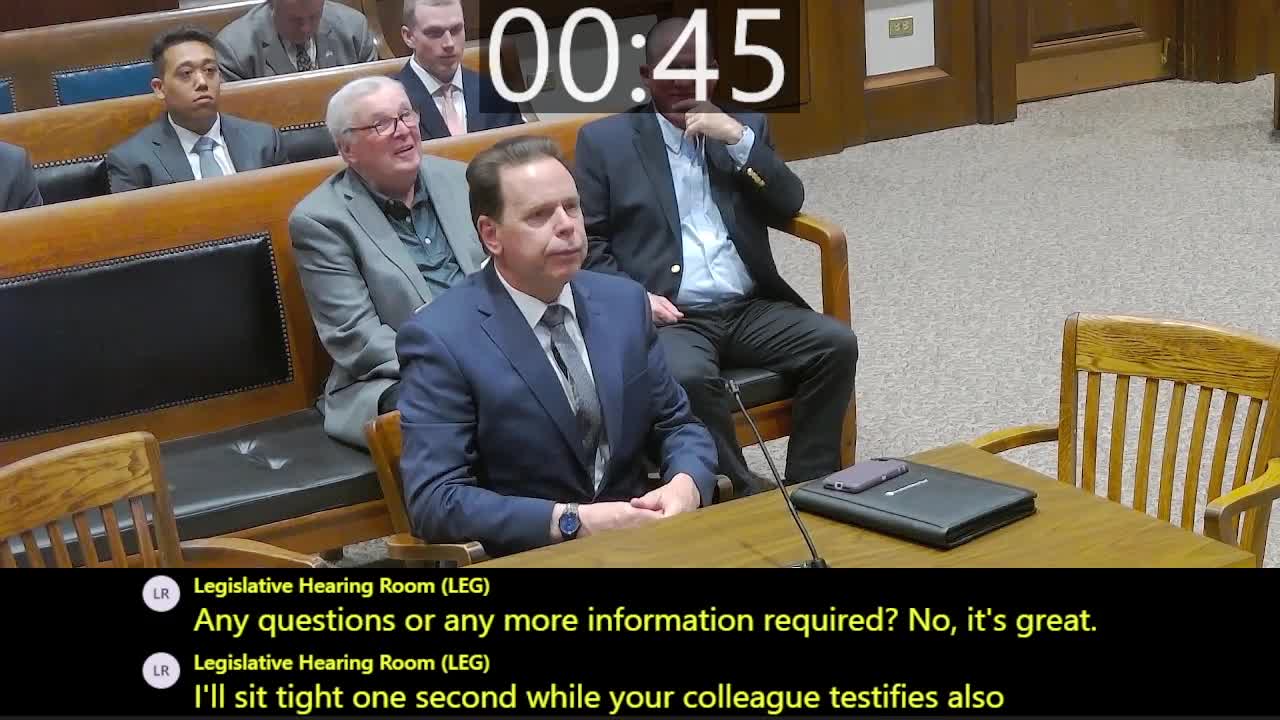
The Joint Committee on Financial Services heard testimony supporting House Bill 1248 and Senate Bill 727, bills that would prohibit life, long-term disability and disability insurers from discriminating against people solely on the basis that they are living organ donors.
John Hoffman, senior director of state policy and advocacy for the American Kidney Fund, told the committee that the bills would remove barriers for living donors and could increase donations. Hoffman said there are 12,907 Massachusetts residents living with end-stage renal disease and that, nationwide, about 103,000 people are on the transplant waiting list. "Over 5,800 living donor transplants were performed last year in the United States, including 206 here in Massachusetts," he said, and added that "13 people die every day while waiting." He said similar laws have passed in 35 other states and that model language is available from the National Council of Insurance Legislators; the American Council of Life Insurers has endorsed versions of the bill.
A transplant recipient, David Walsh, described his own kidney transplant in February 2020 and urged members to support legislation that would protect donors from insurance discrimination. Supporters told the committee that removing insurance barriers is cost-effective for public programs because transplants typically reduce long-term dialysis costs and enable more recipients to return to work.
The committee took testimony and asked for written materials; there was no vote during the hearing.