Get Full Government Meeting Transcripts, Videos, & Alerts Forever!
Get email alerts on the Early College topic
No spam. Unsubscribe anytime.
Lawmakers, educators push to scale ‘early college’ programs to cut costs, boost degree completion
Summary
Representative Ronald Roy and a coalition of education and business groups urged the Joint Committee on Higher Education to approve legislation that would scale early college programs enabling high school students to earn college credit and, in some cases, an associate degree before graduation.
Representative Ronald Roy and a panel of education and business advocates urged the Joint Committee on Higher Education to adopt H1455, legislation that would expand “college and high school” programs — commonly called early college — across Massachusetts.
The bill would create administrative, funding and accountability structures to scale designated early college partnerships between high schools and colleges so more high school students can earn college credits, and in some cases complete an associate degree before high school graduation.
"72% of the jobs in Massachusetts require a credential beyond a high school diploma," Representative Roy told the committee, saying the bill is a "road map for success" that would expand access to college-level courses in high school and reduce costs for families. He asked the committee for a favorable report.
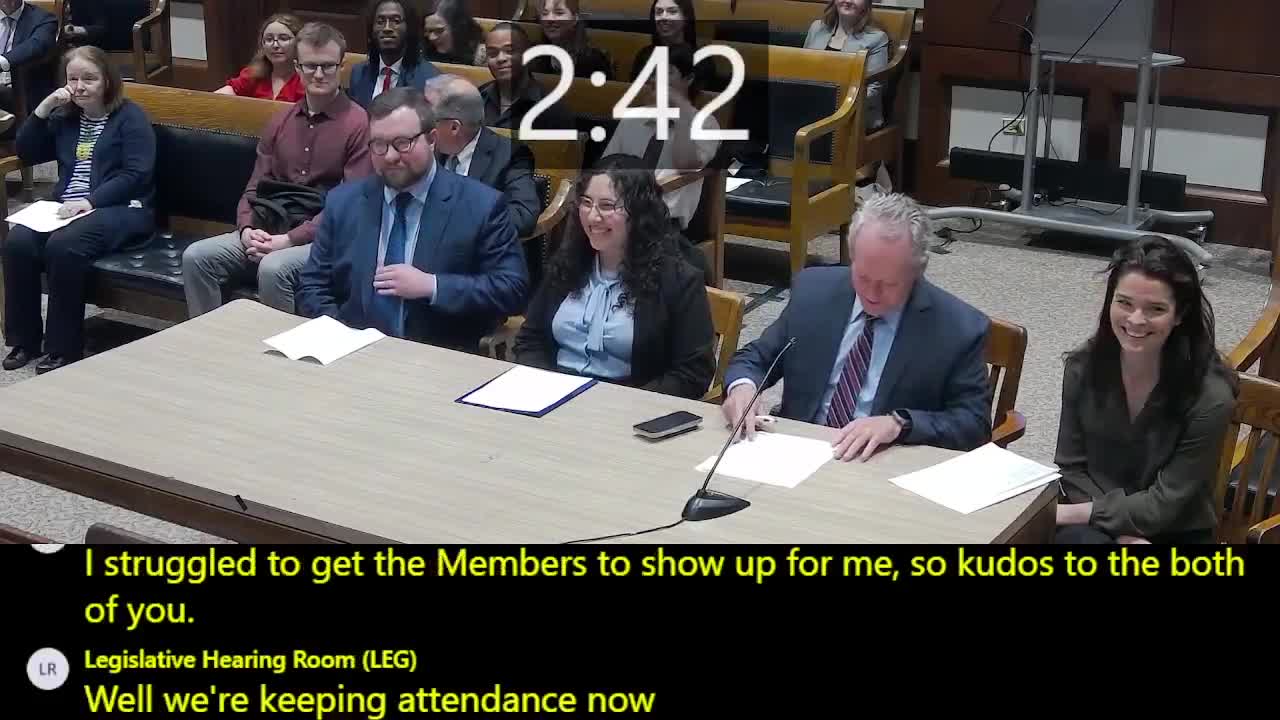
Supporters included Chesky Mosley, deputy director of the Massachusetts Alliance for Early College; Melanie Serene Aldana, an early college graduate; James Michalowski of the Massachusetts Business Alliance for Education; and Tripp Jones, an advisor to the Alliance. Mosley told the committee that early college enrollment in the Commonwealth currently reaches nearly 9,000 students across 55 partnerships and that designated programs double graduates’ chances of earning a college degree.
"One program gave me a shot. One opportunity changed the way I saw my future," Melanie Serene Aldana said. She described earning college credit while in high school and how those credits shaped her decisions and confidence.
Business and workforce representatives said expansion should prioritize career-themed programs aligned with regional labor markets — for example, life sciences and health care — to strengthen the talent pipeline. James Michalowski said employers want more high school students to access work‑based learning embedded in early college programs.
Committee members pressed witnesses on scale, funding and how expansion would affect existing institutions. Witnesses described a five‑year goal discussed by state education departments to reach roughly 22,000–25,000 students by 2030 by adding about 40 partnerships and deepening participation in existing ones. Tripp Jones and others said other states have reached much higher enrollments over time and that Massachusetts could aim higher with sustained policy and funding.
Speakers acknowledged fiscal and operational questions. Alliance representatives estimated that scaling into the tens of thousands of students would require tens of millions of dollars — witnesses cited a projection "somewhere around $60,000,000" for mid-range scaling — and recommended building longer‑term funding mechanisms rather than relying solely on short-term grants. Committee members suggested building data collection and accountability into any statutory framework so policymakers could track transfer, cost and capacity impacts.
No formal votes or committee actions occurred in the hearing; the panel concluded with committee members thanking witnesses and indicating follow‑up conversations. The testimony stressed that early college is intended to be one tool among many to increase degree attainment, reduce debt, and align education with employer needs.