Get Full Government Meeting Transcripts, Videos, & Alerts Forever!
Get email alerts on the Disability Insurance Mental Health topic
No spam. Unsubscribe anytime.
Industry group warns mental-health parity bill for disability coverage could raise premiums; advocates press for parity
Summary
The Joint Committee on Financial Services heard competing views on Senate Bill 780, which would prohibit time limitations on disability benefits for behavioral-health disorders when those limits do not apply to physical disorders. Insurance advisers warned of higher costs and loss of consumer choice; advocates said parity improves access to care.
Senate Bill 780, which would prohibit short- and long-term disability plans from imposing shorter benefit periods for behavioral-health disorders than for physical disorders, drew sharply different testimony before the Joint Committee on Financial Services.
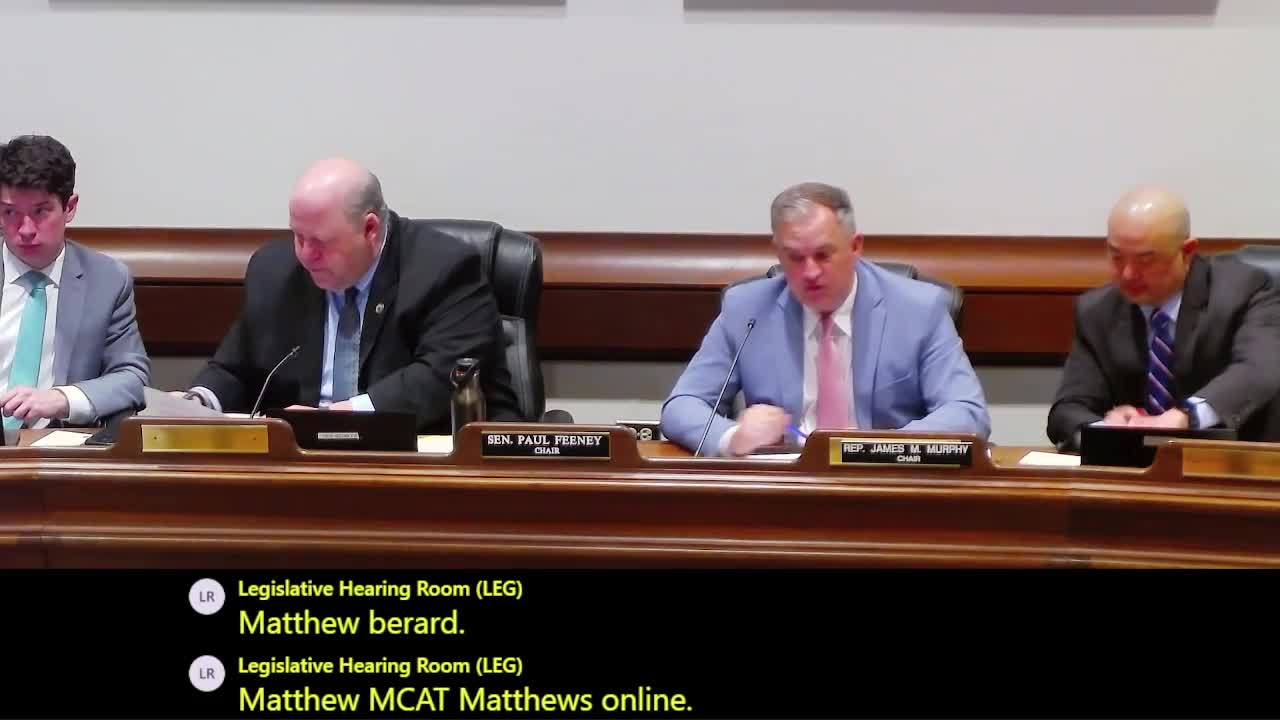
Matthew Berard, a volunteer with NAIFA Massachusetts and an insurance brokerage director, told the committee that while the bill’s intention is "well meaning," a statutory mandate would eliminate consumer choice and increase premiums. "Actuarially, the cost ... to eliminate the choice for mental and nervous limitations equates to a potential increase of approximately 12 to 20%," Berard said, adding that many individual policies and group plans currently offer a 24-month limitation on mental-health claims as a lower-cost option.
Supporters of parity argued the bill would correct unequal treatment and that some plans currently discriminate against claimants with behavioral-health diagnoses. Senator testimony and witnesses stressed parity’s role in removing barriers to care; proponents also pointed to model language from the National Council of Insurance Legislators and said similar protections have been adopted in other states.
The committee took testimony; no vote was recorded. The record includes written materials for further analysis of actuarial impacts and contract enforceability for existing, noncancellable individual disability policies.