Get Full Government Meeting Transcripts, Videos, & Alerts Forever!
Get email alerts on the Public Adjusters topic
No spam. Unsubscribe anytime.
Committee hears testimony on bill to bar insurer clauses that bar hiring public adjusters
Summary
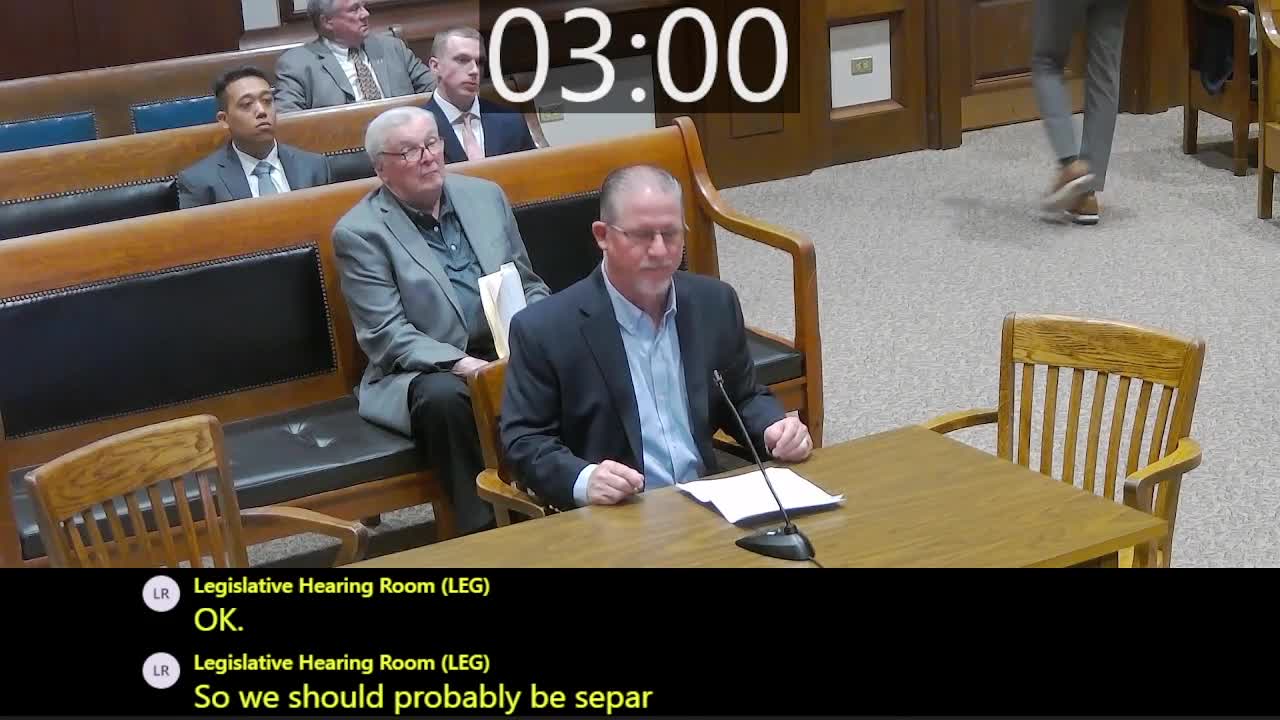
The Joint Committee on Financial Services heard testimony on House Bill 1100 and Senate Bill 785, bills that would make unlawful endorsements in insurance policies that bar policyholders from hiring licensed public insurance adjusters, at a committee hearing.
The Joint Committee on Financial Services heard testimony on House Bill 1100 and Senate Bill 785, bills that would make unlawful endorsements in insurance policies that bar policyholders from hiring licensed public insurance adjusters, at a committee hearing. Supporters — including public adjusters, trade groups and several homeowners — urged the committee to protect consumer access to adjusters; surplus-lines practices that include so-called anti-public-adjuster endorsements were described as the primary problem.
Supporters said the bills matter because a public adjuster can uncover omitted damages, negotiate supplemental payments and guide homeowners through appraisal/reference procedures that many policyholders do not know exist. "A public adjuster represents the interest of the insured in the negotiation of insurance claims," Tim Ball, president of the Mass. Association of Public Insurance Adjusters, told the committee. "This language means exactly what it says," he added, referring to anti-PA endorsements that he said strip insureds of the right to retain a public adjuster.
Testimony and examples: several witnesses detailed their claims and outcomes to illustrate the difference a public adjuster can make. Lila Warner said her insurer’s initial offer was $3,600; after hiring a public adjuster the insurer made a second offer of $10,800 and, following a reference process, "the panel of 3 disinterested experts awarded $88,500 for our claim," she said. Mary Ann Alvarez described two similar water-loss claims: the insurer paid $27,000 on the first claim (when she did not use a public adjuster) and ultimately settled the second claim at $181,000 after she engaged an adjuster. Tyler Lewis described a house fire claim where an insurer’s initial property estimate was about $64,000; his public adjuster uncovered more than $35,000 in omitted personal-property items and reminded him of a depreciation-election deadline that, he said, "I would have lost over $90,000" if not claimed.
Industry perspectives: advocates for public adjusters and their trade group lawyers said public adjusting is a regulated profession in most states and that surplus-lines carriers — which are not licensed the same way as domestic carriers — have added endorsements to policies to prevent insureds from hiring public adjusters. "Public adjusters are licensed in 46 of the 50 states," Brian Goodman, general counsel to the National Association of Public Insurance Adjusters, said. He and other witnesses said Texas and some other states have enacted laws to prohibit anti-PA endorsements. Representatives of insurance-agent and insurer trade groups also testified to the committee. Nick Contralakis of the Mass. Association of Insurance Agents described public adjusters as an important option, saying the bill would "preserve that option" for consumers; other insurer witnesses addressed different bills on the agenda and raised regulatory concerns unrelated to the anti-PA endorsement issue.
What the legislation would do and next steps: supporters asked the committee to report House Bill 1100 and Senate Bill 785 favorably; the committee took testimony and did not vote. Witnesses asked the committee to clarify that any prohibition on anti-PA endorsements would apply to surplus-lines policies that currently include such language. The hearing record remains open for submitted written testimony and the committee may schedule follow-up consideration.