Get Full Government Meeting Transcripts, Videos, & Alerts Forever!
Get email alerts on the Nutrient Management topic
No spam. Unsubscribe anytime.
Split testimony in committee over Orleans home-rule bill restricting fertilizer use
Summary
Representative Luddy’s home-rule petition for Orleans (House 994) prompted split testimony, with town supporters urging local authority to control fertilizer runoff and industry groups warning that statewide rules already preempt local ordinances.
Representative Luddy’s home-rule petition concerning municipal authority over plant-nutrient regulation in Orleans (heard as House 994) drew testimony both for and against the town’s requested authority.
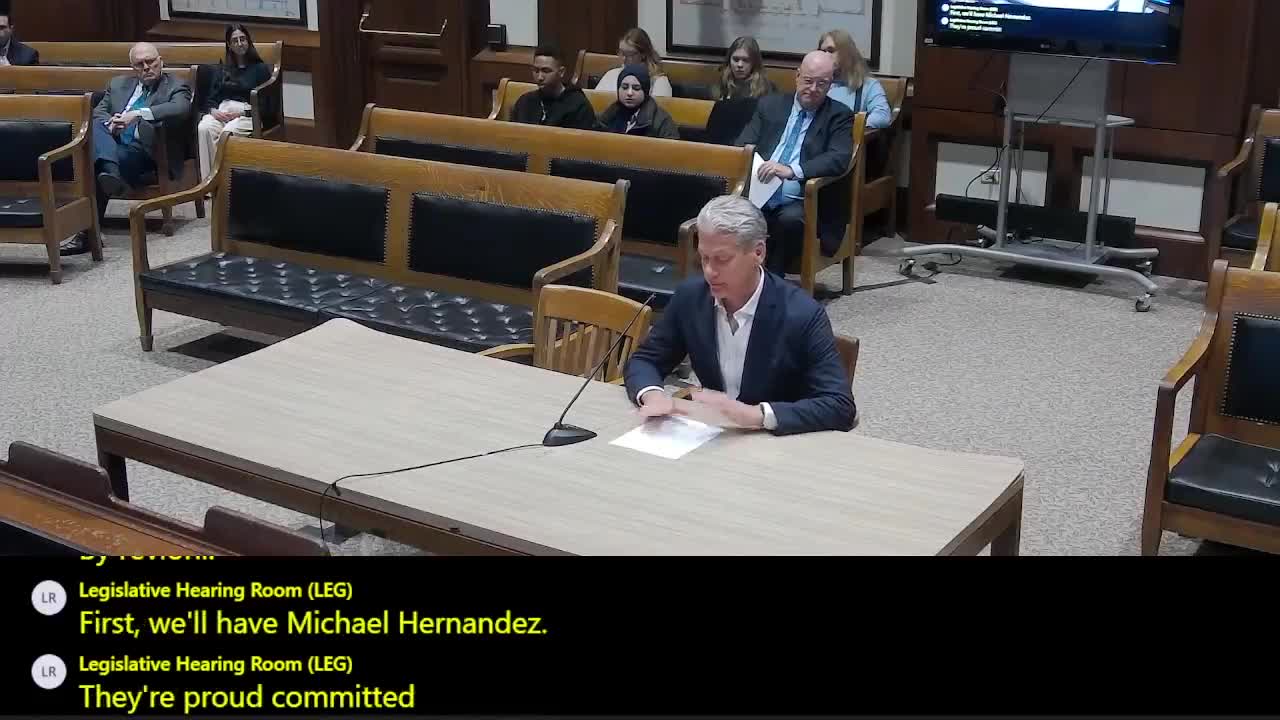
Michael Herman, appearing for Orleans, told the committee Orleans faces recurring pond and coastal closures because of excess nitrogen and phosphorus and said fertilizer runoff is a leading, evidenced contributor. “Water is our most valuable environmental resource and economic asset,” Herman said, noting Orleans has “63 ponds and lakes and 50 plus miles of coastline.” He urged the committee to support local tools to protect water quality.
Opposing testimony came from Bob Mann, senior director for technical and regulatory affairs at the National Association of Landscape Professionals and a board member of the Massachusetts Association of Lawn Care Professionals. Mann said the Legislature adopted statewide plant-nutrient management changes in 2012 (chapter 262) and that Massachusetts now requires adherence to best-management practices published by the UMass Cooperative Extension; allowing cities and towns to create divergent local rules, he argued, would produce a “patchwork of confusing and contradictory regulations” that could undermine science-based statewide regulation.
Karen Connolly, representing industry groups including the Massachusetts Association of Lawn Care Professionals and the Green Industry Alliance, reiterated that the state regulatory scheme was developed in coordination with MDAR and land-grant research and that properly applied fertilizer does not necessarily reach water bodies.
Committee members did not record any vote. Several witnesses said they would submit written testimony and supporting studies for the committee record.