Get Full Government Meeting Transcripts, Videos, & Alerts Forever!
Get email alerts on the Water Management topic
No spam. Unsubscribe anytime.
Panel urges state oversight of Brockton water diversions from Silver Lake to protect Jones River
Summary
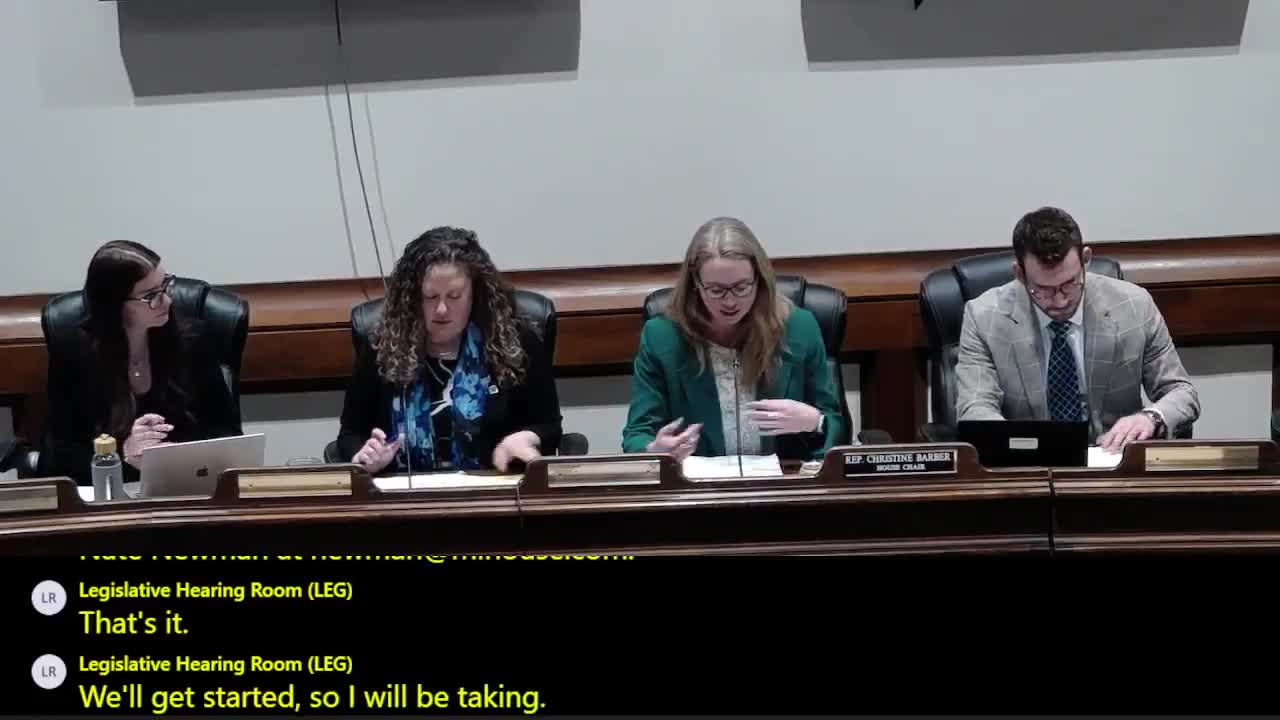
Chair Christine E. Barber convened the Joint Committee on Environment and Natural Resources hearing on House 984, a bill to update oversight of Brockton’s diversions from Silver Lake, as the panel heard testimony from local conservation officials and watershed advocates about ecological harm and low flows.
Chair Christine E. Barber convened the Joint Committee on Environment and Natural Resources hearing on House 984, a bill to update oversight of Brockton’s diversions from Silver Lake, as the panel heard testimony from local conservation officials and watershed advocates about ecological harm and low flows.
Supporters told the committee the bill would not remove Brockton’s authority to use Silver Lake for water supplies but would require ecological impacts and regional balance to be considered before diversions occur.
Matt Fenella, conservation agent for the town of Kingston, told the committee, “The safe yield of Silver Lake was established in 1900 as 4,300,000 gallons per day.” He said Brockton currently takes “an average of 10,000,000 gallons per day” and that those withdrawals, together with periodic droughts, have driven water levels down and worsened water-quality problems, including cyanobacteria in upstream Monponsett Pond that affect Silver Lake.
Howard Randall, a newly appointed commissioner of the Central Plymouth County Water District, described infrastructure he inspected around Furnace Pond and Mount Pleasant (downstream conduits) and read Section 9 of the 1964 act aloud to the committee. Randall said the statute sets minimum flows, including “a minimum daily flow of 300,000 gallons from Furnace Pond and a minimum daily flow of 900,000 gallons” and that, as he observed, current flows were well below those levels in practice.
Pine DuBois, executive director of the Jones River Watershed Association, described species and habitat impacts. DuBois said conservation work and dam removals led to roughly 20,000 alewife returning to Silver Lake last year, and that “a low estimate of last year’s reproduction indicates juvenile alewife in Silver Lake in the hundreds of millions.” She warned those juveniles have been stranded and that millions of freshwater mussels died in 2016–17 when lake levels dropped.
Panelists asked the committee to require contemporary environmental review of diversions authorized by the 1964 law, to clarify minimum-release requirements in statute, and to restore regular oversight by state agencies. Committee chairs accepted offers of written testimony and did not take final action during the hearing.
Questions and follow-up: committee members asked no substantive questions on the record during the panel and staff invited written testimony for the committee’s consideration before any committee action.