Get Full Government Meeting Transcripts, Videos, & Alerts Forever!
Get email alerts on the Youth Voting topic
No spam. Unsubscribe anytime.
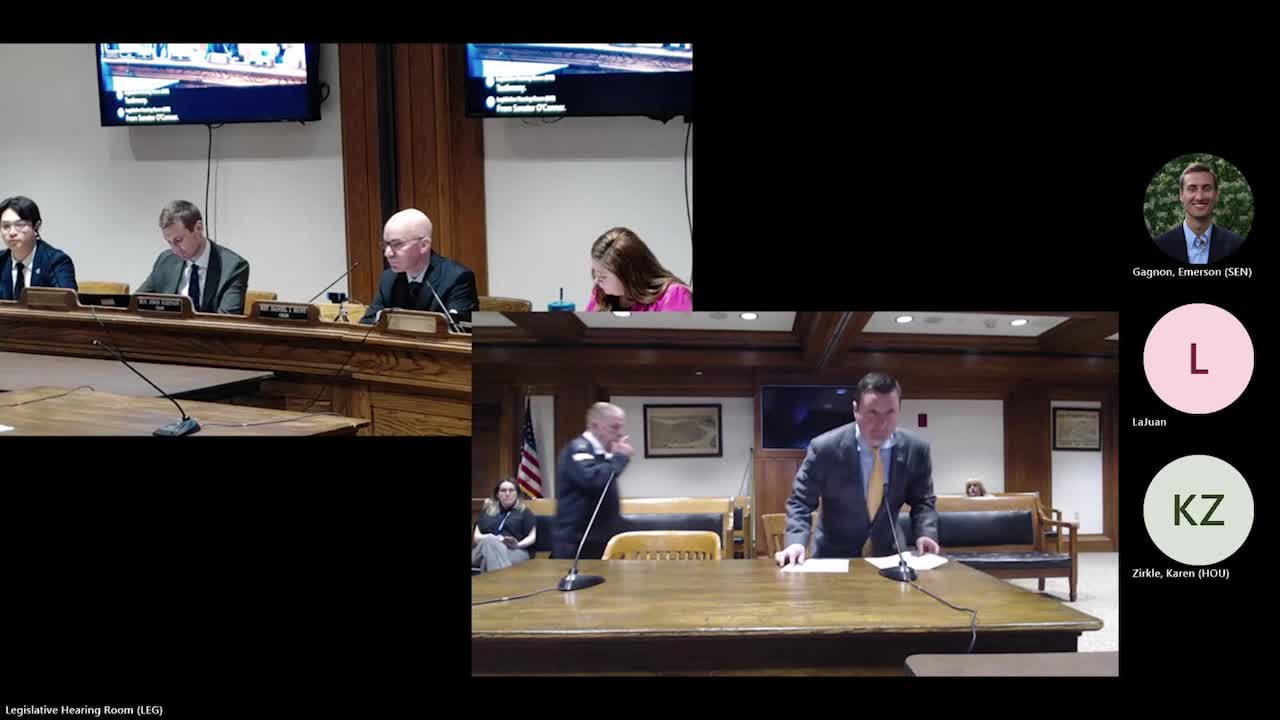
Committee hears multiple bills to expand youth voting in primaries and lower voting age
Summary
The Joint Committee on Election Laws heard testimony on several bills that would let 17-year-olds vote in primaries if they will be 18 by the general election and on proposals to lower the voting age to 16 in some jurisdictions.
The Joint Committee on Election Laws heard testimony on bills Monday that would allow some 17-year-olds to vote in primary elections and advance other proposals to lower the voting age.
Senator O'Connor testified she supports "Senate Bill, 5 26 and House Bill 8 54, which is an act relative to youth voter engagement," saying the measures "would allow for 17 year olds to vote in a primary election if their birthday is before the general election." She told the committee the change is intended to "give youth a much more incentive to really vote."
The measure's supporters said the change aims to make voting habitual among young people and to give first-time voters a meaningful choice in competitive primaries. "Voting is habitual," said LaWon Allen, executive director of Vote 16 USA, who urged the committee to consider House Bill 8 13, Senate Bill 5 29 and House Bill 8 14 as part of broader youth enfranchisement efforts. "Lowering the voting age to 16 presents us with the ability to empower young people to be lifelong voters," Allen said.
Robin Chen, who identified herself as lead petitioner for S508H814, described long-term advocacy on the issue and cited survey research she said shows young people are disengaged from current systems. She said lowering the age would treat young constituents as full participants: "When we vote, it is both a means of accountability and furthering interests, but it's also an opportunity for self expression. Your vote is your voice."
Supporters pointed to other jurisdictions as examples: Senator O'Connor said "21 states including Washington DC have enacted this legislation" allowing 17-year-olds in primaries and that Rhode Island passed a similar change in 2023. Allen said about 14 U.S. cities have lowered the voting age in local elections, listing nine cities in Maryland, three in California, one in Vermont and one in New Jersey as examples.
Committee members did not take action on the bills during the hearing. Chair Dan Hunt reminded the panel that the committee will accept written testimony "going forward until action is taken on the bills." No motions or votes on the measures were recorded at the meeting.
Supporters and some committee members said the proposals are intended to increase long-term civic participation; others raised concerns about information and influence on younger voters, which petitioners and witnesses addressed by pointing to research and case studies from jurisdictions that have enacted changes.
The committee recorded 27 bills on its docket for the day and nine registrants for testimony; written testimony will remain open until the committee takes action.