Get Full Government Meeting Transcripts, Videos, & Alerts Forever!
Get email alerts on the Federal Grants And Risks topic
No spam. Unsubscribe anytime.
State federal‑funds director lists $9 billion won, $6.4 billion for transportation and flags evolving federal risks
Summary
Quentin Palfrey, the governor’s director of federal funds and infrastructure, told the committee Massachusetts has secured about $9 billion from recent federal laws, including roughly $6.4 billion for transportation, but that grant terminations, delays and changing federal priorities create uncertainty for some municipal projects.
The governor’s federal funds director told the Joint Committee on Transportation that Massachusetts has captured significant federal funding but faces uncertainty as programs and federal priorities shift.
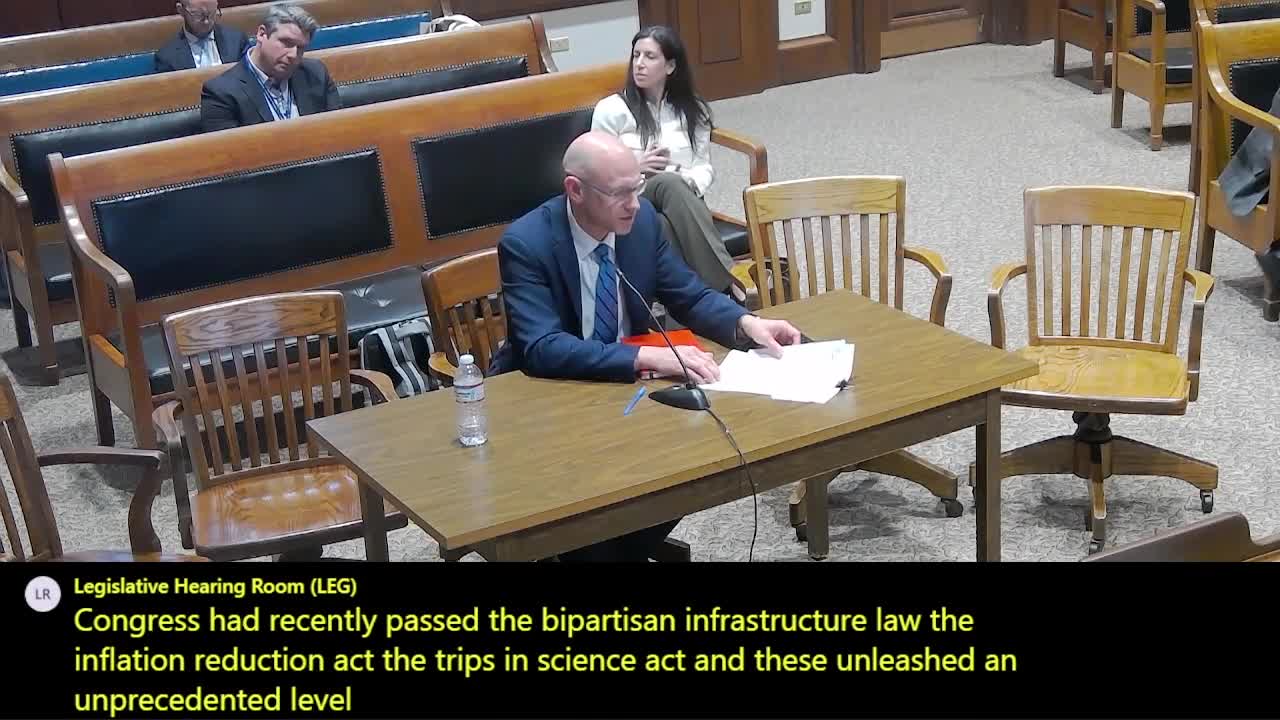
Quentin Palfrey said his office, created to coordinate a whole‑of‑government federal‑funding strategy, has helped the administration secure “about $9,000,000,000 from the Bipartisan Infrastructure Law, Inflation Reduction Act, and CHIPS and Science Law,” and that approximately $6,400,000,000 of that total was for transportation projects. He listed major awards that the administration has helped obtain, including more than $1,700,000,000 toward Cape Cod Bridge replacement, $335,000,000 for the Allston multimodal project, $143,000,000 for West‑East Rail groundwork, $472,000,000 for the North Station drawbridge, $77,000,000 for roadway safety improvements across multiple communities and $75,000,000 for clean‑energy school buses in 21 communities.
Palfrey credited an interagency coordination process, outreach roadshows, regular meetings with local governments and the legislature’s 2024 enactment of Chapter 214, which made $750,000,000 available for match and technical assistance, with improving the state’s competitive position. A Better City analysis, he said, showed Massachusetts rose from 34th to seventh in the nation for federal funding in a recent period.
He warned, however, that the federal funding landscape is changing. Palfrey said the administration is seeing grant terminations and delays in some programs and that his office is providing technical assistance to municipalities. He also said the state cannot backfill all federal cuts and that some outcomes will depend on congressional decisions, agency actions and creative financing approaches that combine state, local and private resources.
Less critical details: Palfrey said the office convenes a biweekly interagency advisory council, meets frequently with the congressional delegation and runs a monthly federal‑funds partnership meeting for local government leaders.