Get Full Government Meeting Transcripts, Videos, & Alerts Forever!
Get email alerts on the Assisted Living Waiver topic
No spam. Unsubscribe anytime.
Assisted‑living providers press for frail‑elder Medicaid waiver to expand affordable options
Summary
Assisted‑living providers urged the Joint Committee on Elder Affairs to authorize a frail‑elder Medicaid waiver so MassHealth can reimburse assisted‑living services and expand affordable community alternatives to nursing homes.
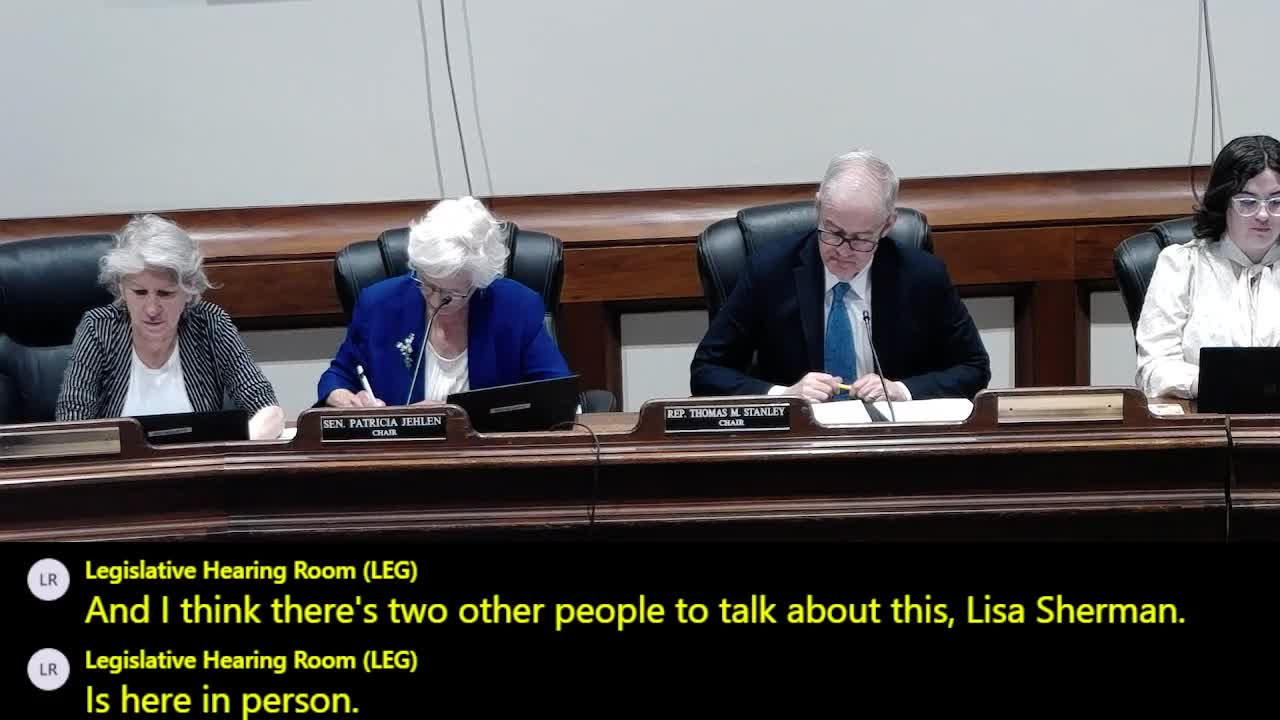
Representatives of assisted‑living providers, affordable assisted‑living operators and policy consultants urged the Joint Committee on Elder Affairs to advance legislation (S474 / H791) that would allow MassHealth to reimburse assisted‑living services through a frail‑elder waiver and otherwise expand access to assisted living as an alternative to nursing homes.
Provider witnesses described how current MassHealth rules and the Group Adult Foster Care (GAFC) reimbursement model were not designed for modern assisted‑living communities with 24‑hour staff, nursing oversight, food services and on‑site programming. They said GAFC rates have not kept pace with costs and that many assisted‑living providers lose money when serving MassHealth residents under the current structure.
Walter Rohanian (Grantham Group) and others told the committee the proposed waiver would enable appropriate rate setting to reflect assisted‑living costs and allow more affordable assisted‑living communities to open or remain in operation. They cited an example of an assisted‑living closure where 85 percent of residents were on MassHealth; the closure required many residents to be relocated, with long placement times and a large share ending up in nursing homes.
Policy witnesses described the proposal’s fiscal design features and emphasized targeting residents for whom housing barriers, not clinical complexity alone, prevent community placement from a nursing facility. They argued the waiver could be structured so average assisted‑living costs remain below a nursing‑home benchmark and preserve the Commonwealth’s commitment to the Olmstead principle of the least‑restrictive setting.
The committee did not vote during the hearing; witnesses urged the legislature to authorize the waiver pathway so the Executive Office of Health and Human Services can design and implement an appropriate Medicaid reimbursement model.
Ending: Advocates asked lawmakers to enable a frail‑elder waiver for assisted living to expand affordable options and avoid unnecessary institutionalization.