Lifetime Citizen Portal Access — AI Briefings, Alerts & Unlimited Follows
Committee considers bill allowing COA directors to hire staff when council is advisory
Loading...
Summary
Lawmakers and council representatives discussed H.765 / S.487, a technical update to chapter 40, section 8B that would clarify hiring authority where municipal councils on aging function as advisory bodies. Sponsors and witnesses said the change responds to Attorney General office findings and modern practice; no committee vote was taken.
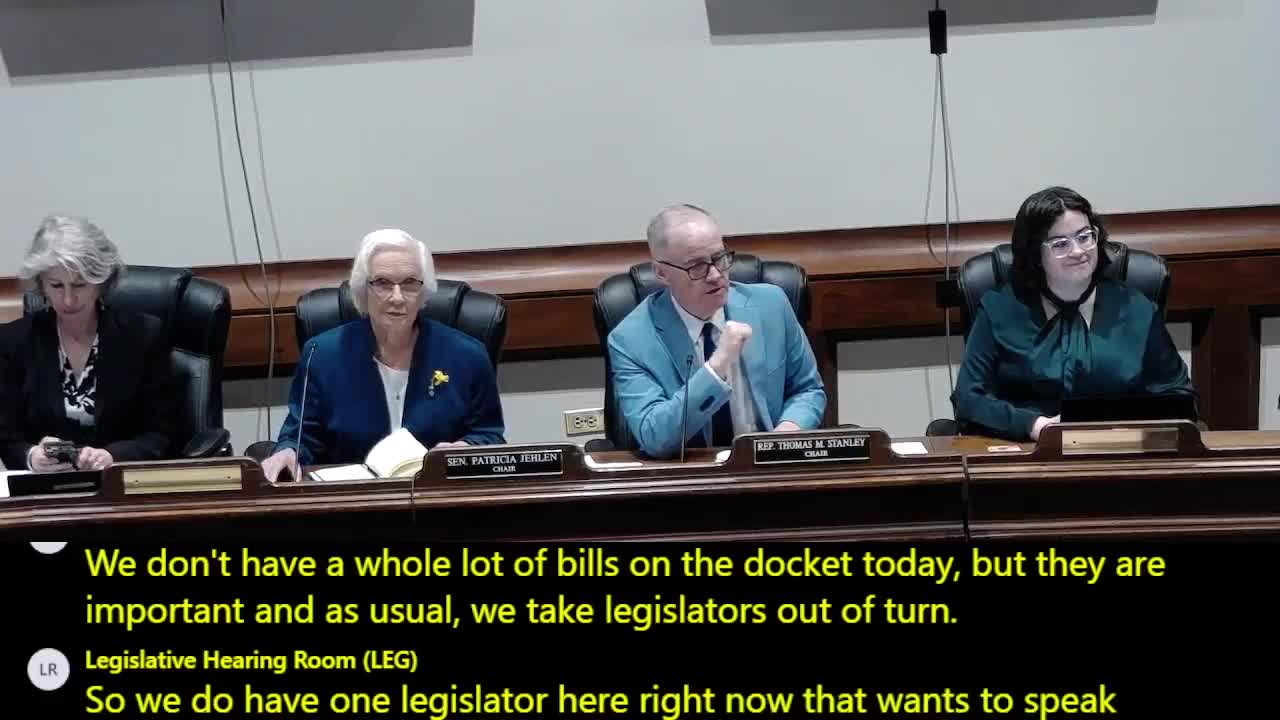
Representatives and municipal council advocates told the Joint Committee on Aging and Independence that H.765 / S.487 would modernize a 1956 statute by clarifying hiring authority for municipal councils on aging (COAs) that function as advisory boards.
"I'm here in support of H.765 S.487, an act relative to councils on aging," said Representative Donahue, the bill sponsor. He said the bill "would allow directors to make staffing decisions if the municipal council on aging is an advisory council," enabling COA directors to run their departments without requiring a formal vote by a volunteer board in communities where the council has only advisory powers.
Betsy Connell, executive director of the Massachusetts Association of Councils on Aging, told the committee the bill would amend section 8B of chapter 40 of the General Laws and remove "outdated and ageist terminology." She said the change responds to a practical conflict revealed when the town of Sherborn amended a council bylaw and the Attorney General disapproved the local warrant article as inconsistent with chapter 40, section 8B. "Since the statute was established and passed in 1956, councils have grown to fall into two categories, supervisory and advisory," Connell said, and the proposed language would reflect both structures.
Representative Gentile asked whether the bill would allow a town manager to make hiring decisions; sponsors and witnesses clarified the bill would authorize a municipal COA director to hire staff where the council is advisory and would not automatically transfer authority to a town manager. "No. It allows the director of the COA," Representative Donahue responded to the question.
Why it matters: advocates said the statutory update resolves a mismatch between a 1956 law and current municipal practice in which most COAs operate as advisory bodies with professional senior center directors employed by the municipality. Proponents argued the change is largely technical and intended to prevent town charters or local bylaw changes from being invalidated by state law.
The Massachusetts Municipal Association supported the bill, according to Connell, and witnesses reported no organized opposition in prior sessions. Committee members asked clarifying questions about the statute’s reach and whether any unintended consequences had emerged during outreach to councils across the state; Connell said she had not heard negative feedback.
What the record shows: testimony documented a specific Attorney General action (Sherborn warrant article disapproved) that prompted the filing and noted prior favorable reporting of a similar filing. The committee heard testimony but did not take a recorded vote during this session.
Next steps: advocates asked the committee to report H.765 / S.487 favorably so municipal COAs’ staffing practices align with local governance structures and modern senior‑center operations.