Get Full Government Meeting Transcripts, Videos, & Alerts Forever!
Get email alerts on the Health Veterinary Licensing topic
No spam. Unsubscribe anytime.
Veterinary technicians and associations press for state licensure to standardize training
Summary
Members of the Massachusetts Veterinary Technician Association and allied groups told the committee that House Bill 407 and Senate Bill 277 would establish minimum training and a licensure pathway for veterinary technicians to reduce errors and improve patient care.
Multiple representatives of veterinary-technology programs and the Massachusetts Veterinary Technician Association urged the Joint Committee on Consumer Protection and Professional Licensure to support House Bill 407 and Senate Bill 277, which would create a licensure framework and minimum training standards for veterinary technicians.
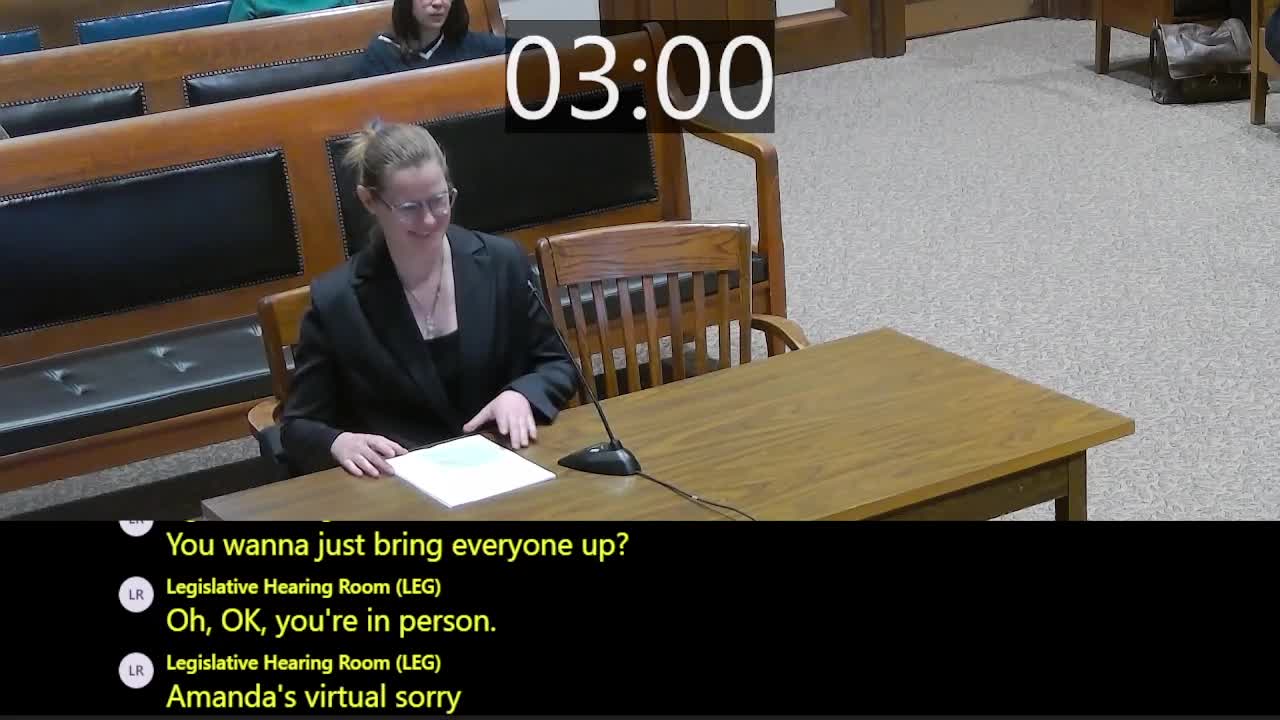
Amanda Cloutier, a credentialed veterinary technologist and president of the Massachusetts Veterinary Technician Association, said current practice allows people with little or no formal training to be called veterinary technicians and perform advanced clinical tasks such as placing IV catheters, monitoring anesthesia and administering medications. “Allowing the system to continue not only puts pets at risk and misleads the public and devolves the professional role of veterinary technicians,” Cloutier said.
Anne Marie Moraviak, a certified veterinary technologist and educator, said states that regulate and license veterinary technicians number more than 40, and that her students complete extensive hands-on hours, pass a national exam and complete continuing education. She said vocational and community-college programs can provide pathways but that the absence of state standards leaves employers able to hire high-school graduates into roles that require advanced skills.
Committee members asked about program pathways, costs to students and whether the proposed licensure would permit additional delegated tasks; witnesses said many community-college programs exist in Massachusetts and that licensure details would be developed with stakeholder input.
Ending: The committee took testimony for the record; additional proponents from the sector were present to answer questions in subsequent panels.