Get Full Government Meeting Transcripts, Videos, & Alerts Forever!
Get email alerts on the Hemp Beverage Regulation topic
No spam. Unsubscribe anytime.
Supporters urge regulation of hemp‑derived THC beverages; industry and health advocates highlight testing, age limits
Summary
Industry groups and health advocates urged the Joint Committee to create a regulated framework for hemp‑derived intoxicating beverages to protect consumers and reclaim tax revenue.
Industry groups and public‑health advocates urged the Joint Committee on Consumer Protection and Professional Licensure to create a regulatory framework for hemp‑derived intoxicating beverages, arguing that regulation would close a market populated by untested, untaxed products.
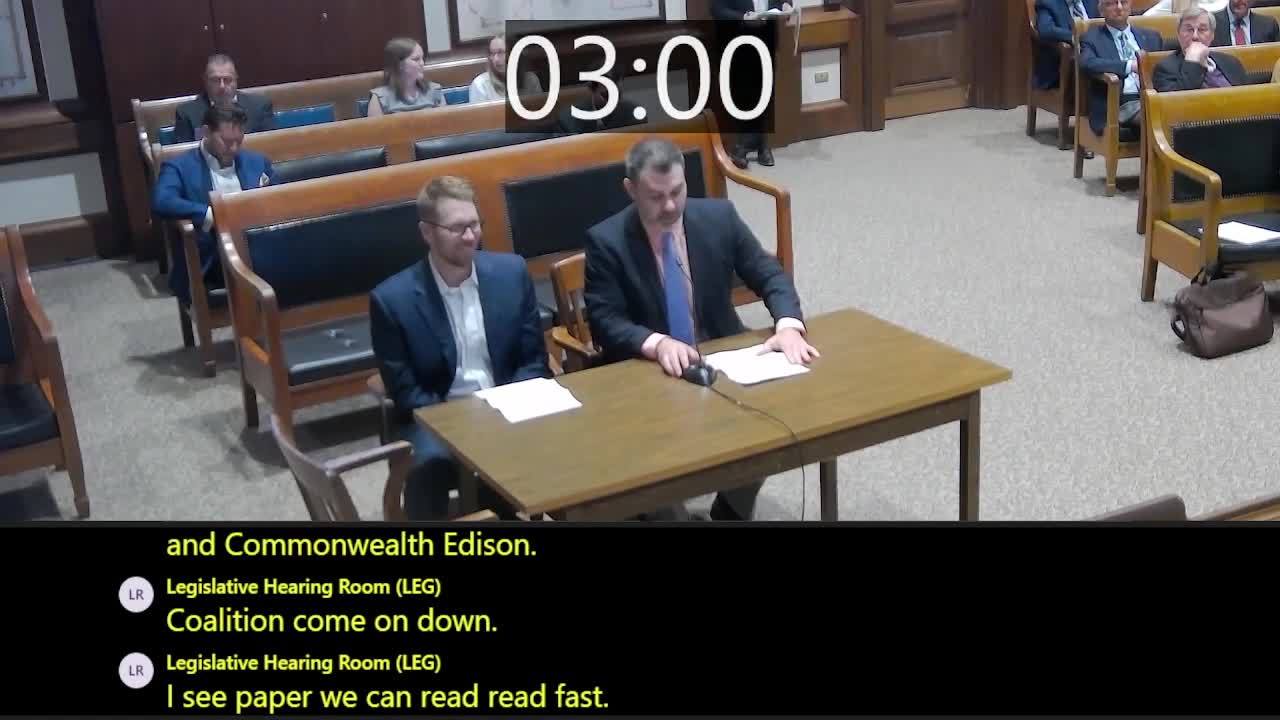
"Massachusetts consumers, including minors, can access unregulated intoxicating hemp beverage products and other hemp derived products in gas stations, smoke shops online and across municipal borders," Adam Oliveri, co‑founder and CEO of Craft Collective Homegrown, told the committee while speaking for the Commonwealth Beverage Coalition. He said regulation should "prioritize consumer protection and product safety." Brandon Pollock, CEO of Theory Wellness, a licensed cannabis business, said the bills would also provide funding for local health departments to police unregulated products.
Advocates pointed to models in other states. Panelists said Minnesota generated an estimated $180 million industry with 26 million cans sold annually and that Rhode Island's regulated sales there now account for more than 25% of some licensees' total beverage sales. The Commonwealth Beverage Coalition projected $25 million to $40 million in new annual tax revenue for Massachusetts in the first 12 to 18 months after implementation.
Speakers proposed a phased, conservative approach that would start with low‑potency beverages and robust safeguards: age restrictions of 21 and older, comprehensive product testing, clear labeling, and modest potency limits (panelists suggested 5 milligrams of THC as a starting point for low‑dose beverages). "Rather than prohibition, we support implementing age restrictions of 21, comprehensive testing requirements, clear labeling standards, and reasonable potency limits," a coalition representative said.
Craft brewers told the committee they want a role in any regulatory design. Liz Littwall, co‑owner of 4 Star Farms and treasurer of the Massachusetts Brewers Guild, said the draft bills should not force small breweries into redundant distribution steps: under the bills as written, a brewery that made an infused beverage might be required to sell it to a wholesaler and then repurchase it for taproom sales. "Craft brewers are already subject to stringent quality, safety, and traceability standards. We have the expertise and infrastructure to produce and distribute these products responsibly," Littwall said.
Retail liquor‑store witnesses said they want access to regulated hemp beverages if the products return to the market. "We carried the hemp beverages before they were banned. We saw that as one additional stream of revenue," Megan Jones of Yankee Spirits said, adding that products are still entering the state via online orders.
Opponents raised concerns about enforcement, market competition and oversaturation, and many said the committee should ensure revenue flows back to local enforcement and public‑health efforts. No final votes were taken; the hearing closed after a committee motion to adjourn. Committee staff said written testimony will remain part of the public record.
Why it matters: Without regulation, advocates said, consumers face untested products of unknown potency and safety; regulation could protect youth and reclaim tax revenue. Opponents warned of new competition for already stressed retailers and urged careful implementation.
Details from the hearing: Panelists cited other states' regulatory blueprints, suggested a 21+ age limit and low initial potency (5 mg THC) as guardrails, and proposed ABCC (Alcoholic Beverages Control Commission) involvement for oversight. Projections of tax revenue ranged from $25 million to $40 million in the first 12–18 months; witnesses said exact figures were estimates based on other states' experience.
Next steps: Committee review and potential amendments; parties invited to provide further technical comments and written testimony.