Get Full Government Meeting Transcripts, Videos, & Alerts Forever!
Get email alerts on the Wheelchair Repair topic
No spam. Unsubscribe anytime.
Advocates, clinicians and users press committee to fix long wheelchair repair waits; two bills advance debate
Summary
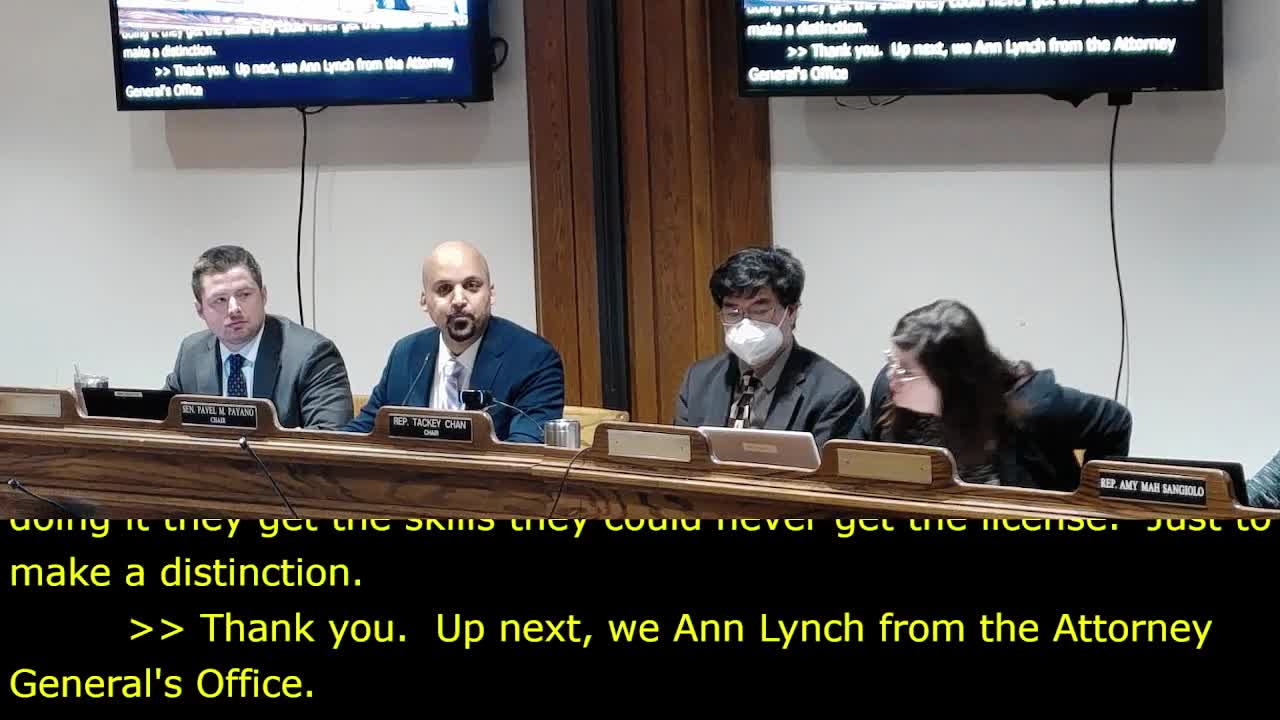
The Joint Committee on Consumer Protection and Professional Licensure heard extended testimony urging lawmakers to act on two measures—Senate bill S.210 and House bill H.1278—to set enforceable timelines and consumer protections for repairs and warranties of complex wheelchairs.
The Joint Committee on Consumer Protection and Professional Licensure heard extended testimony urging lawmakers to act on two measures—Senate bill S.210 and House bill H.1278—to set enforceable timelines and consumer protections for repairs and warranties of complex wheelchairs.
Advocates, clinicians and wheelchair users described widespread delays that leave people bedbound or hospitalized and stressed that fixes in the bills would reduce preventable injury and isolation. The hearing drew more than two dozen in-person and remote witnesses who spoke in favor, as well as industry representatives who urged negotiation on technical and warranty provisions.
Why it matters: Hundreds of Massachusetts residents rely on customized power and complex rehab technology to eat, bathe, sleep and work. Witnesses testified that current repair timelines—ranging from weeks to many months for parts and service—cause hospitalizations, pressure injuries and job loss. The bills discussed would: extend certain warranties, require dealers/manufacturers to maintain inventories or use expedited shipping, mandate maximum windows for diagnostics and repairs (the bills use different timelines), and create accessible enforcement pathways for consumers.
What supporters told the committee: Anne Lynch, an Assistant Attorney General and disability rights coordinator, said her office receives repeated complaints of long wait times and supports expanding warranty and repair rules. Disability Policy Consortium community organizer Destiny Maxim recounted being hospitalized after a nine‑week repair delay. Laura Sousa Wagner of the Disability Law Center, James McKenzie of MassAbility and other users detailed months-long waits, missed appointments and lost independence. Clinicians and home health professionals described downstream costs to MassHealth when users land in nursing care during delays.
Industry and technical testimony: Wayne Grau, executive director of the National Coalition for Assistive and Rehab Technology (NCART), testified in opposition to aspects of the bills as written. He acknowledged the repair problem and said industry is willing to collaborate, but warned that some requirements—such as a universal two‑year component warranty—raise practical concerns because manufacturers source parts from third parties (for example, batteries) and some warranties are component‑specific. Diana Rasikott, representing a CRT provider, described ongoing coordination with MassHealth and a forthcoming loaner program paid by ARPA funds and asked the committee to clarify timelines and definitions so the statutes reflect repair logistics and payer systems.
Points of agreement and friction: Supporters and many vendors agreed elimination of burdensome prior authorization for small repairs would speed service. Stakeholders diverged over warranty length, what qualifies as a safe loaner chair, and how to define stop‑the‑clock events (for example, awaiting a manufacturer part). Advocates pushed for clear loaner standards and rapid parts ordering; some providers asked for realistic windows tied to part availability and clarified MassHealth changes already underway.
No formal action recorded: The committee took testimony but did not record a vote during the hearing. Multiple witnesses said they would submit written follow‑up materials and data.
Follow up: Witnesses asked the committee to request data from MassHealth and from retail/service firms about average repair turnaround, loaner inventory levels and component failure rates. Advocates urged enacting either S.210 or H.1278 (the bills use different approaches to timelines and enforcement) or negotiating a hybrid that includes guaranteed loaners, stop‑the‑clock rules and accessible enforcement mechanisms.
Ending: The hearing made clear the human consequences of repair delays and framed the bills as consumer protections with implications for public health and state health costs. Committee staff invited additional written testimony and data to refine statutory language before future action.