Get Full Government Meeting Transcripts, Videos, & Alerts Forever!
Get email alerts on the Behavioral Health Licensure topic
No spam. Unsubscribe anytime.
Behavior-analyst groups push for independent licensure board to speed approvals and oversight
Summary
Behavior-analytic providers asked the committee to create a dedicated, self-sustaining board for licensure of applied behavior analysts to reduce licensing delays and strengthen oversight as state investments and demand rise.
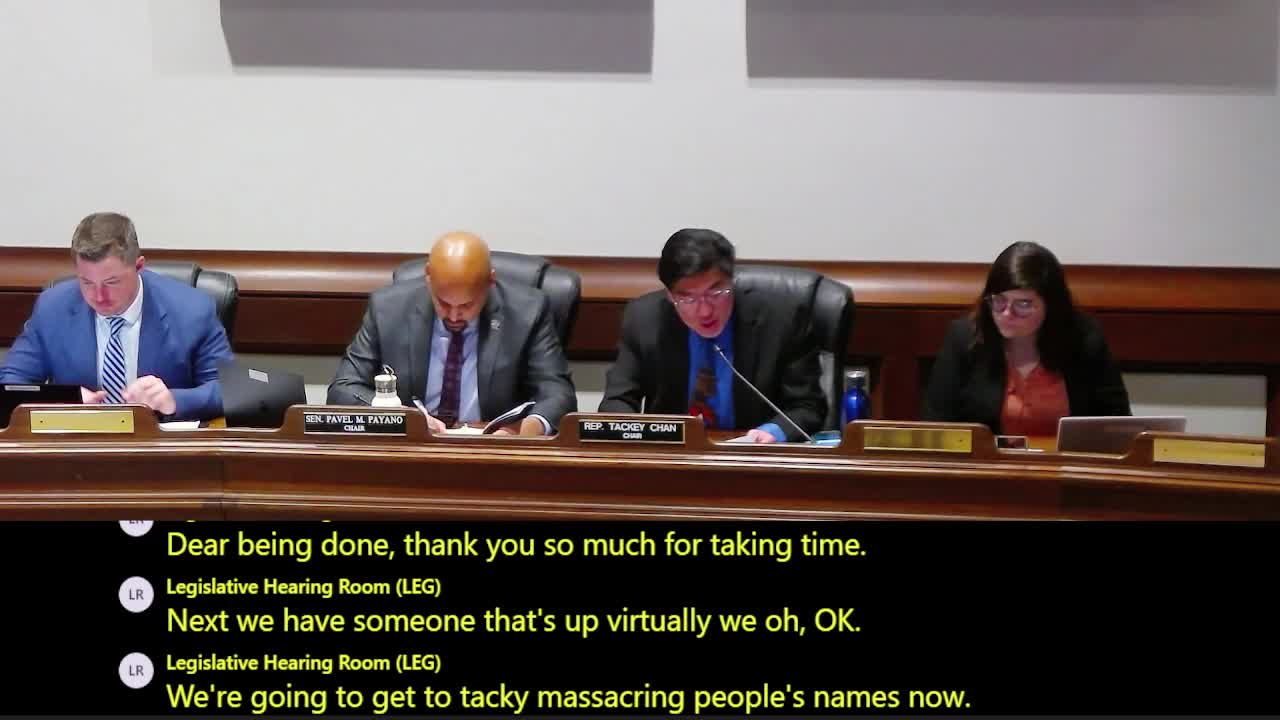
Representatives of the Massachusetts Association for Behavior Analysis and large provider Beacon ABA Services urged the Joint Committee on Consumer Protection and Professional Licensure to advance House Bill 348 and Senate Bill 220 to create a dedicated licensure board for applied behavior analysts.
Dr. Paul Girardi, president of the Massachusetts Association for Behavior Analysis, said Massachusetts leads the nation in BCBAs per capita but that oversight remains thin. “The growing demand for ABA services and increases state investments underscores the need to strengthen oversight,” Girardi said, citing a recent Office of Inspector General report he said highlighted gaps in consumer protection.
Dr. Charlie Newfield, chief operating officer at Beacon ABA Services, told the committee that application processing still faces delays and that applicants often wait one to three months for a license, with credentialing by insurance panels adding another four to six months in many cases. “The better we can get them out there to begin providing these services and supervising, the quicker we can get children into service,” Newfield said, describing long wait lists for services that providers say are time-sensitive.
Witnesses said the bills would establish an independent, self-sustaining board to oversee licensure and processing and create field-specific oversight for publicly funded services. Testimony included workforce figures: witnesses said there are about 4,400 licensed applied behavior analysts in Massachusetts now and projected ongoing growth.
Ending: Committee members acknowledged the workforce and oversight concerns; no formal committee action was taken at the hearing.