Get Full Government Meeting Transcripts, Videos, & Alerts Forever!
Get email alerts on the Education Access topic
No spam. Unsubscribe anytime.
Education committee hears broad support to codify protections for immigrant students, English learners and students with disabilities
Summary
At a Joint Committee on Education hearing, advocates, legal groups and the attorney general's office urged lawmakers to pass H'650/S'436 to codify federal protections — including Plyler v. Doe, parts of IDEA and Section 504 guidance — at the state level, and to require qualified interpreters and safeguards for English learners with disabilities.
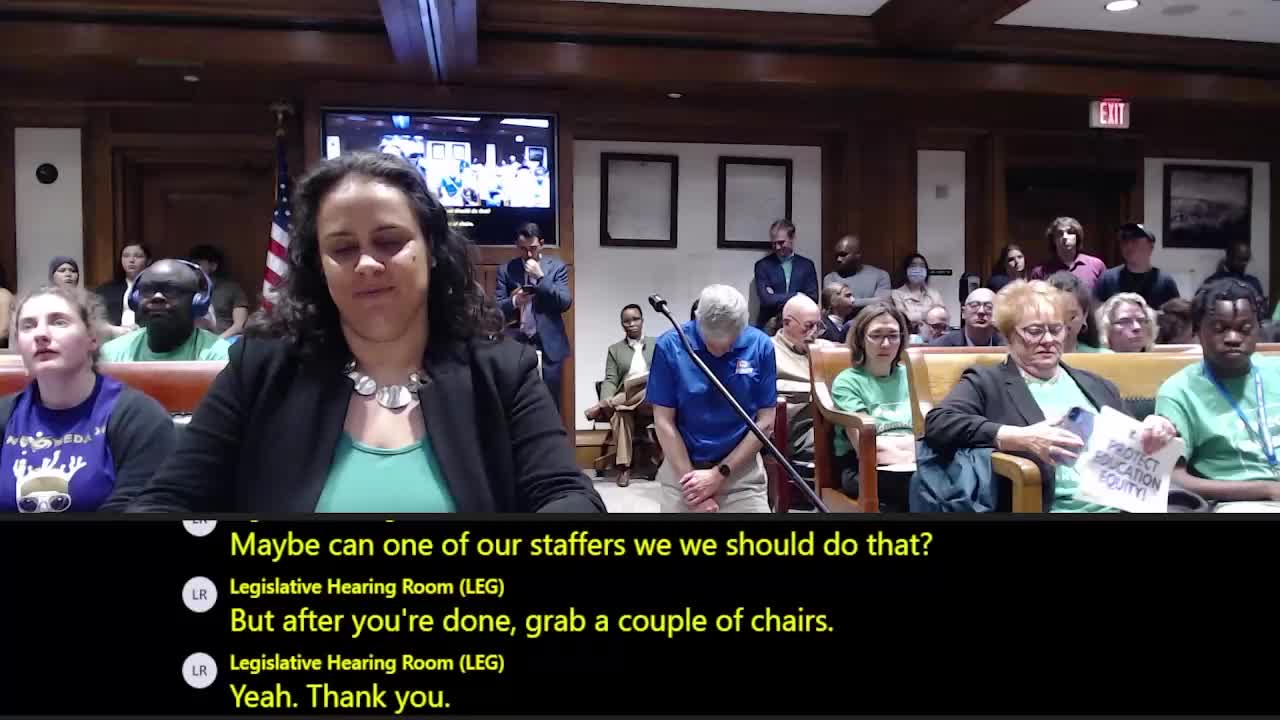
The Joint Committee on Education on Monday heard hours of testimony urging lawmakers to report favorably on H 650/S 436, legislation that would codify in Massachusetts law existing federal protections for immigrant students, English learners and students with disabilities.
Advocates and lawyers said the measure does not create new rights but instead would enshrine rights currently enforced at the federal level so they remain in place if federal enforcement or precedent changes.
"This bill does not add new legal protections. Rather, it codifies four important areas established by the Supreme Court, federal statute, and federal guidance," said Diana Santiago, legal director at Mass Advocates for Children. She told the committee the bill affirms the state's commitment to educate children regardless of immigration status, protects students with disabilities from disproportionate exclusion, and requires appropriate services for English learners with disabilities.
Nut graf: Supporters said the bills respond to a national political climate in which federal civil-rights enforcement offices and personnel have been cut back and where courts and legislatures in other states have moved to limit education access for immigrant and disabled students. Testimony called for clear state-level rules to ensure families can participate in IEP meetings in a language they understand and that schools perform appropriate, culturally and linguistically competent evaluations.
Several advocates detailed individual experiences. Emily Romero Gonzalez, an education advocate who arrived undocumented as a child, described school as "the lifeline I needed" and urged Massachusetts to make that promise explicit in state law. Diana Santiago and others asked that the state require interpreters who are trained in educational terminology and confidentiality rather than relying on ad hoc bilingual staff or family members. Shruti Perry of the Children's Law Center described cases in which students with disabilities were removed from school without adequate procedural protections.
The attorney general's office said the state's reliance on federal protections is now a liability. "Enforcement of students' federal civil rights in schools has been decimated," said Abby Taylor, chief deputy attorney general, describing recent federal staffing cuts and office closures; she urged the committee to codify protections at the state level so enforcement does not depend on federal agencies.
Supporters included immigrant-rights groups, disability-rights lawyers, school advocates and municipal educators. Several said the bill would restore protections Massachusetts had in regulation before 2002 and urged the committee to act promptly to preserve access to public education, interpreter standards, and procedural safeguards in discipline and special-education decisions.
Ending: Committee chairs and member legislators listened and asked clarifying questions; no vote was taken at the hearing. Supporters left written testimony and asked the committee to report the bill out favorably so the Legislature can act this session.