Get Full Government Meeting Transcripts, Videos, & Alerts Forever!
Get email alerts on the Blind Services Vocational Rehab topic
No spam. Unsubscribe anytime.
Commission for the Blind details independent living, vocational rehab and staff recruitment plans
Summary
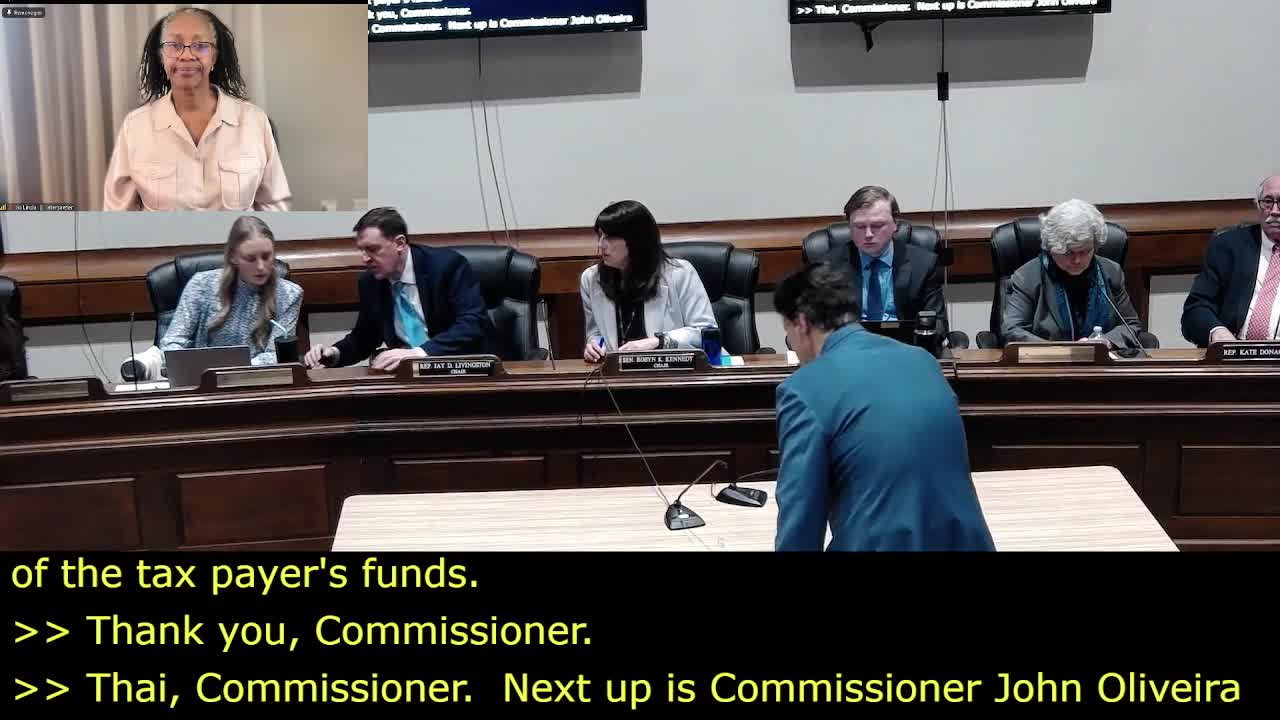
Commissioner John Olivero said the Commission for the Blind serves about 28,000 legally blind residents, emphasized independent‑living and vocational programs and described a UMass Boston partnership to build a pipeline for vision‑services staff.
John Olivero, commissioner of the Massachusetts Commission for the Blind (MCB), described the agency's independent living, vocational and children's services and raised concerns about federal staffing at Rehabilitation Services Administration while outlining a workforce development partnership with UMass Boston.
Olivero said MCB maintains a register of approximately 28,000 legally blind residents (doctors are mandated to report legal blindness) and that two‑thirds of clients are over age 60; the agency's social rehabilitation program provides independent living skills, orientation and mobility (white cane training), occupational supports and camperships for children. He noted assistive‑technology training and expanded vision rehab therapist capacity to support consumer use of iPads and smartphones for accessibility.
The nut graf: MCB's services span independent‑living skills, assistive technology and vocational rehabilitation supported by federal Rehabilitation Services Administration (RSA) funding. Olivero urged attention to RSA staffing churn in Washington because it affects state vocational programs and noted a federally funded curriculum and video series being developed with UMass Boston to recruit new vision services professionals.
Olivero said the agency has not yet experienced federal funding cuts but was watching RSA staff retirements and reassignments. He described a curriculum and video course to be ready by August for use by other institutions, including community colleges, and said federal funding allows sharing the curriculum with other states.
Ending: Olivero emphasized the role of vocational rehabilitation in returning people to work, said MCB continues to expand services such as Turning‑22 transition supports and deaf‑blind access networks, and asked the committee to monitor federal developments affecting RSA.