Get Full Government Meeting Transcripts, Videos, & Alerts Forever!
Get email alerts on the Surveillance Pricing topic
No spam. Unsubscribe anytime.
Bill to ban biometric surveillance pricing in grocery stores draws consumer and civil‑rights support
Summary
Representative Lindsey Sabadosa and consumer and civil‑liberties witnesses warned that electronic price tags and in‑store surveillance could enable individual price discrimination; sponsors asked the committee to advance a ban on biometric‑based pricing and surveillance advertising in grocery stores.
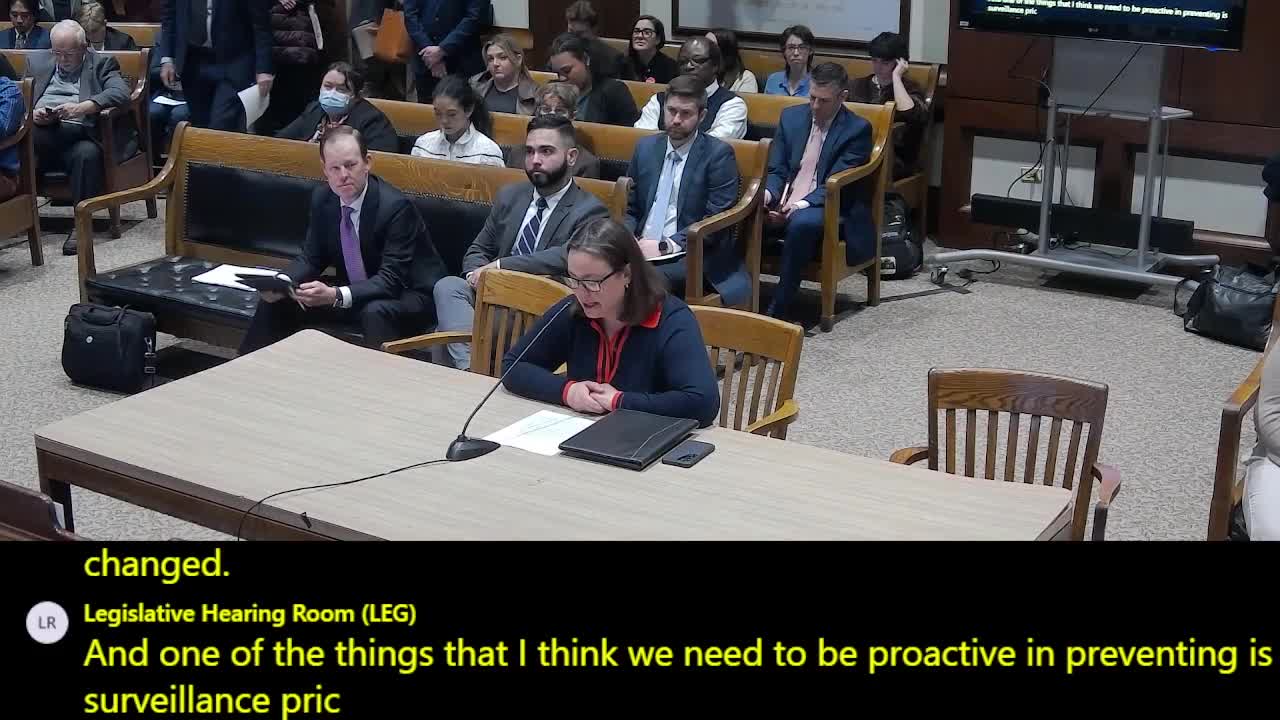
Representative Lindsey Sabadosa told the Joint Committee that H.99 and its Senate companion would prohibit surveillance pricing tactics being piloted by some retailers and technology vendors that pair electronic shelf labels and facial recognition to vary prices or push targeted advertisements.
What witnesses said: Sabadosa described surveillance pricing as “the store adjusting the price because they think based on the information they know about me, I could perhaps pay more,” and said the practice would be particularly pernicious when applied to grocery stores selling essential goods. Consumer advocates demonstrated how real‑time profiling and targeted in‑aisle advertising can lead to higher costs for already vulnerable shoppers.
Industry and technical views: Civil‑liberties and consumer groups urged a prohibition on the use of biometric identifiers and other sensitive data to set individualized prices. Some technology and retail witnesses urged caution; they discussed possible benefits of digital pricing and targeted offers but acknowledged the risk of predatory uses.
Policy implications: Testimony recommended a narrow bill to ban biometric‑based pricing and surveillance advertising in grocery stores while preserving legitimate consumer choice and competition. Witnesses also urged the committee to consider broader rules to limit price discrimination based on sensitive attributes.
Next steps: Committee members asked for further technical information, including pilots and vendor practices, and suggested follow‑up with retailers, food‑security groups and privacy researchers.