Get Full Government Meeting Transcripts, Videos, & Alerts Forever!
Get email alerts on the Developmental Services topic
No spam. Unsubscribe anytime.
Department of Developmental Services outlines growth, workforce steps and self-direction gains
Summary
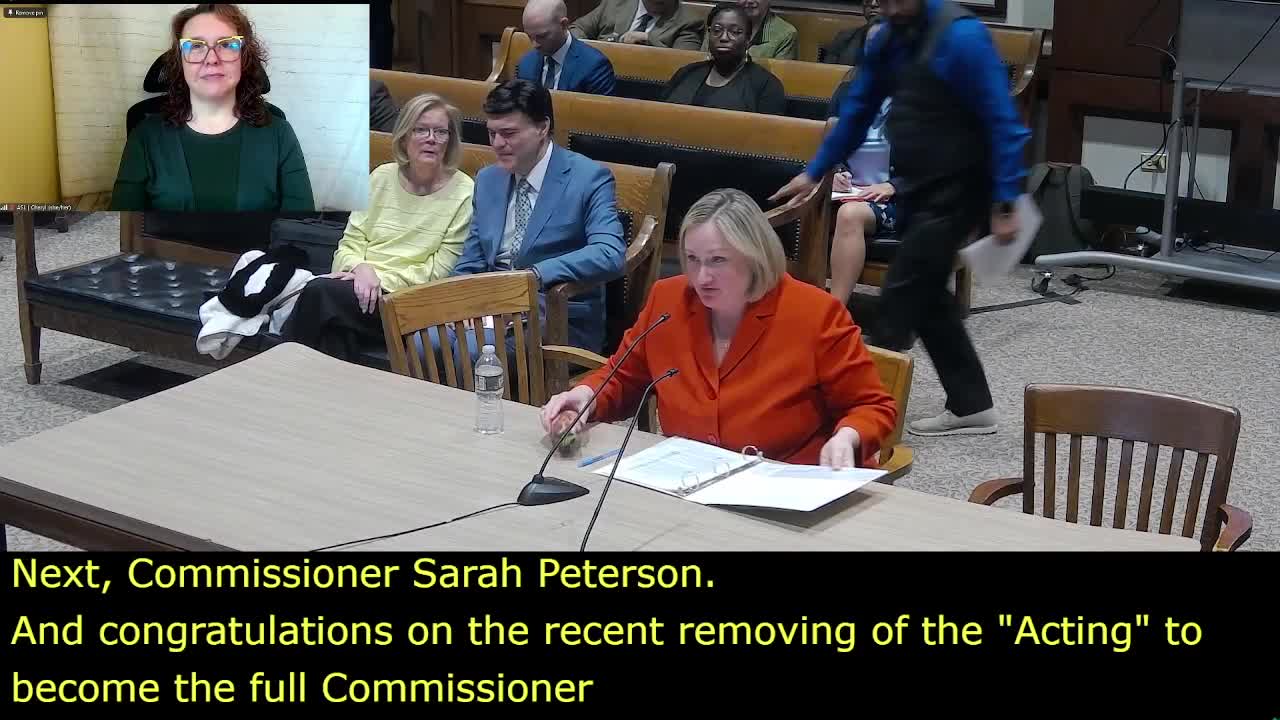
Commissioner Sarah Peterson (recently confirmed from acting status) told the committee DDS serves about 49,000 people, is seeing growing numbers of adults with autism, and highlighted workforce investments, residential waivers and efforts to expand self-direction and specialized residential rates for high‑acuity clients.
Sarah Peterson, newly confirmed commissioner of the Department of Developmental Services, said DDS serves more than 49,000 individuals with intellectual and developmental disabilities and described program expansions, workforce initiatives and efforts to meet rising complexity in needs.
Peterson told the committee DDS serves over 8,000 people in community‑based day services, over 6,000 in supported employment and over 8,000 in residential models; the agency also supports more than 52 family support centers that served 21,000 individuals and families last year. She said 1,475 people entered the adult system this fiscal year (a 5.5% increase from FY24), about half require residential placements and many are autistic: “Half of these individuals are on the autism spectrum, and one third have autism only without an accompanying diagnosis of intellectual disability.”
The nut graf: DDS is expanding clinical capacity, launching specialized rates and programs for people with the highest behavior support needs, growing ABI/MFP waiver slots by 75 per year under a five‑year renewal, and pursuing workforce strategies including chapter 257 rate increases and an employer‑assisted DSW‑to‑LPN certificate program.
Peterson said the administration’s rate changes aim to support minimum salaries of $20 per hour for direct care professionals and to benchmark pay to competitive labor market percentiles; cumulatively rates have risen roughly 40% since FY21. She described a pilot residential model (RFR issued earlier this year) with “the highest rate that we've ever paid” intended to create capacity for individuals with very high clinical supports and reduce emergency department boarding.
On self‑direction Peterson said enrollment has grown about 22% last year and that the option can reduce reliance on residential services when families can recruit natural supports or use assistive technology, but some families hesitate because of employer responsibilities. On federal exposure she said DDS has limited direct dependence on federal grants but generates over $1,000,000,000 annually in Medicaid revenue through waivers; cuts to Medicaid or SNAP would “severely impact providers' ability to continue delivering quality services and supports.”
Ending: Peterson asked for continued multi‑agency collaboration and funding stability as DDS scales services for an increasing and more clinically complex population.