Get Full Government Meeting Transcripts, Videos, & Alerts Forever!
Get email alerts on the Location Privacy topic
No spam. Unsubscribe anytime.
Mass. hearing spotlights push to ban sale of cell‑phone location data
Summary
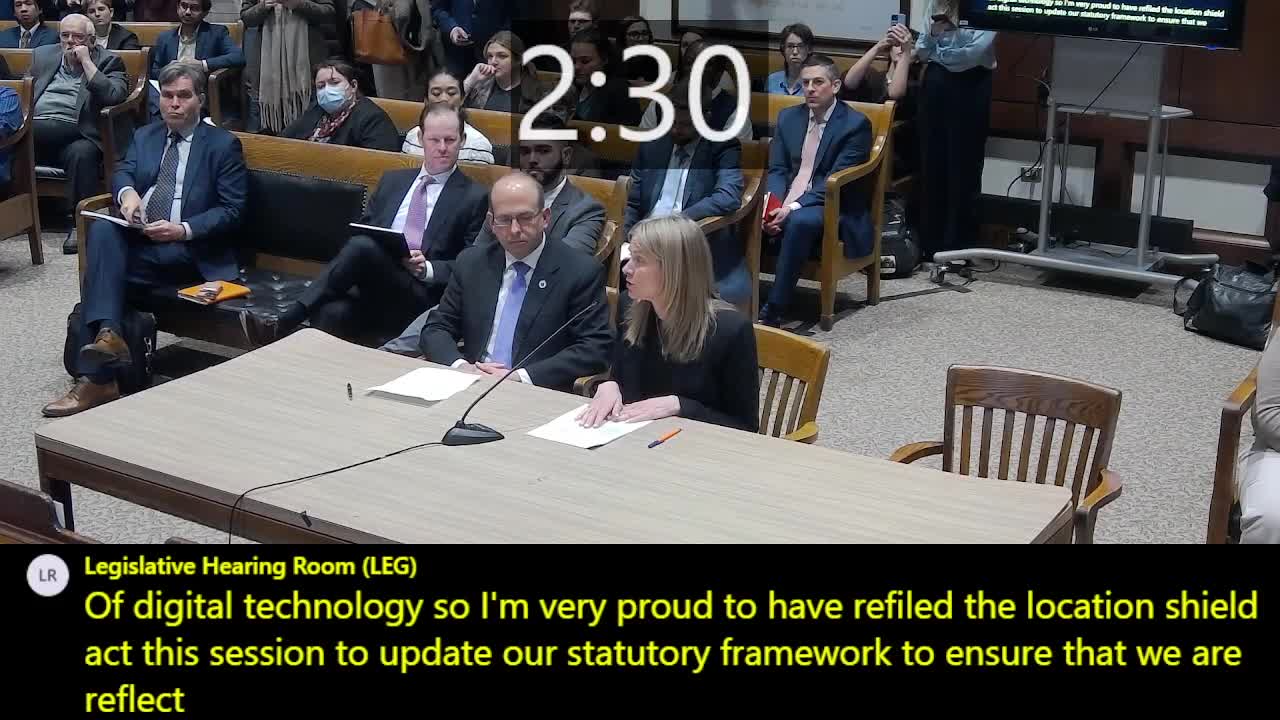
Lawmakers, doctors and privacy advocates told the Joint Committee on Advanced IT that buying and selling precise device location data threatens reproductive care, public safety and civil rights; sponsors urged a Location Shield Act to bar such sales while allowing device functions that rely on location.
Lawmakers, health‑care providers and privacy advocates urged a legislative ban on the sale of smartphone location data during a joint committee hearing on technology and cybersecurity at the State House and online on Oct. 12, 2025. Supporters said data brokers routinely sell detailed device location records and that the information has been used to target people seeking reproductive and gender‑affirming care, worshippers, victims of domestic violence and other vulnerable groups.
Proponents framed the Location Shield Act as a narrow, urgently needed fix to what they described as an unsafe status quo. “I’m here to speak in strong support of H.86 and an act to protect location privacy,” Representative David Viera told the committee, pointing to the bill’s focus on stopping commercial sales of precise device location. Doctors and reproductive‑health providers described real‑world consequences: “The widespread availability of granular cell‑phone location information enables anyone with a credit card to purchase and track the location data of people seeking or providing reproductive health care in our state,” said Dr. Megan Evans, an OB‑GYN who testified on behalf of the American College of Obstetricians and Gynecologists in Massachusetts.
Why it matters: Witnesses said location records can reveal visits to clinics, houses of worship, shelters and other sensitive sites. Several testifiers tied location sales to documented instances in which data brokers traced visits to clinics and sold those traces to political actors. Domestic‑violence advocates, disability groups and LGBTQ organizations said easy commercial access to location profiling increases the risk that harassers or extremist actors will identify and act against individuals.
What supporters want: The Location Shield Act would bar buying and selling of precise device location information while preserving user choice for services that require location (for example, navigation). Backers urged the committee to report the bill favorably and to pair it with broader, omnibus privacy legislation. Several witnesses urged a private right of action and stronger enforcement resources for the attorney general to ensure compliance.
Opposing concerns and industry views: Trade and technology groups urged caution, saying a patchwork of state laws could raise compliance costs for businesses and risk unintended harms to small operators. Some industry witnesses supported a regional interoperable model that aligns with other New England states; others asked for exemptions for regulated sectors and narrowly tailored rules to avoid operational disruptions.
Outlook: Supporters emphasized the bill’s narrow focus on commercial sale of precise location records, arguing that swift state action can limit concrete harms already documented in the market. Committee members requested follow‑up technical briefings and written comments and signaled the need to balance privacy protections with operational questions raised by insurers, retailers and other regulated industries.