Get Full Government Meeting Transcripts, Videos, & Alerts Forever!
Get email alerts on the Maternal Child Health topic
No spam. Unsubscribe anytime.
DPH official warns federal cuts threaten maternal and child health data and services
Summary
Dr. Elaine Fitzgerald Lewis, head of the Bureau of Family Health and Nutrition at the Massachusetts Department of Public Health, told the Joint Committee that time-limited federal grants and cuts to national data systems threaten programs that serve mothers, infants and children, and urged securing state funding to sustain services.
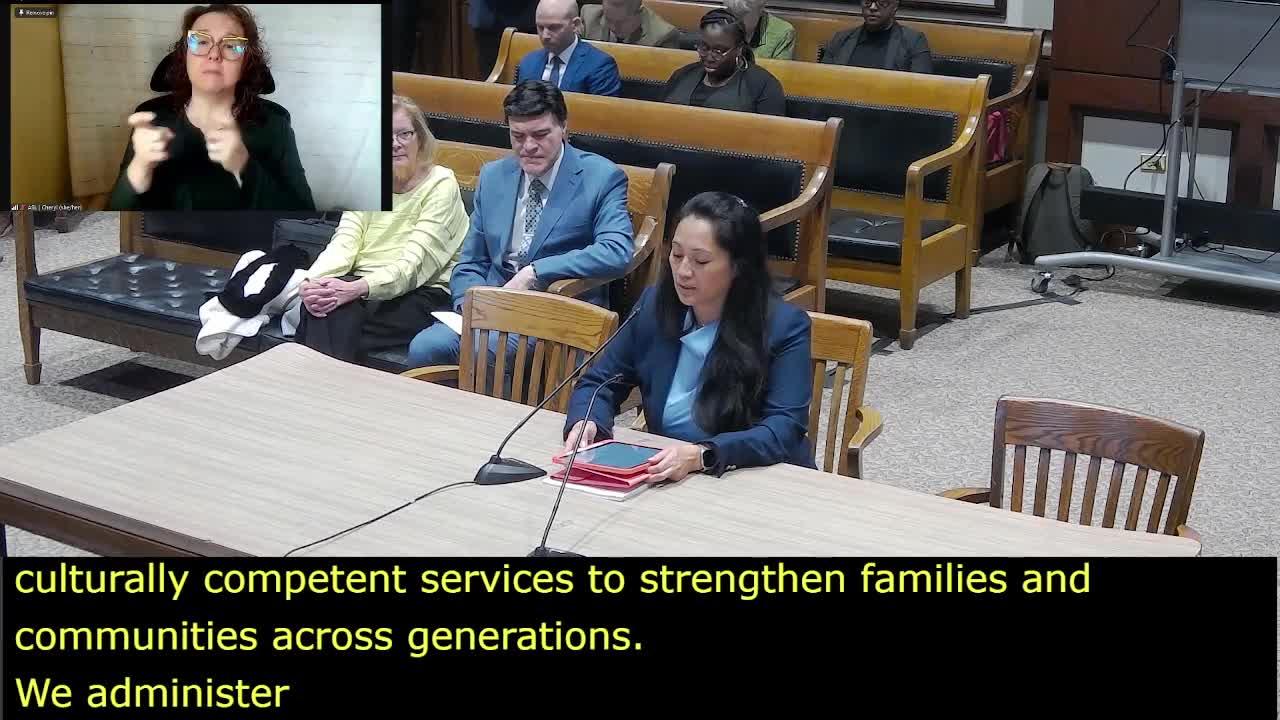
Dr. Elaine Fitzgerald Lewis, director of the Bureau of Family Health and Nutrition at the Massachusetts Department of Public Health, told the Joint Committee on Children, Families and Persons with Disabilities that federal funding uncertainty and the loss of national data resources are jeopardizing core maternal and child public-health programs in Massachusetts.
Lewis said the bureau — known as BFAN — runs about 50 programs that reach more than 1 million families each year, including home visiting, early intervention for roughly 40,000 infants and toddlers, WIC nutrition services for about 120,000 families a month and newborn hearing screening for nearly 70,000 newborns. She described Title V as “a cornerstone of our state's maternal and child health infrastructure” and said the state receives “a little less than $12,000,000” annually in Title V funds.
The nut graph: Lewis said many BFAN programs rely on time-limited federal grants and staff reductions at the federal level threaten datasets and grants that guide policy and research. She urged lawmakers to secure and strategically allocate state resources while BFAN develops its five‑year Title V state action plan.
Among the specific concerns Lewis raised were the federal disruption of PRAMS (Pregnancy Risk Assessment Monitoring System) and reductions in federal staffing that she said would remove “essential insights” about maternal and infant health and weaken prevention and policy work. She also noted the birth defects center in Massachusetts, a national center of excellence, provides long-term surveillance and a dataset going back to 1998 that supports research and prevention work.
Lewis listed BFAN priorities that will be included in the Title V plan: centering care for families experiencing substance use disorder and infants with prenatal substance exposure; expanding respite care for families raising children with medical complexity; launching a statewide children’s vision agenda; and strengthening public-health infrastructure for emergency preparedness and housing stability.
On funding, she told the panel that Title V funding is “level-funded” at under $12 million and that rising staff salaries reduce flexibility to respond to emerging crises. When asked, she said the department has identified federal funds that have been lost and is projecting further losses; staff would provide specifics.
Ending: Lewis asked the committee for continued collaboration as BFAN finalizes its Title V action plan and emphasized that state investment will be necessary to preserve services if federal grants or data sources disappear.