Get Full Government Meeting Transcripts, Videos, & Alerts Forever!
Get email alerts on the Board Governance topic
No spam. Unsubscribe anytime.
Paraprofessional announces resignation; public speakers press board on workplace conduct and indemnification
Summary
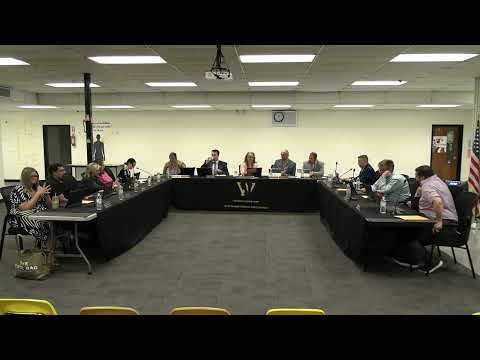
At the West Milford Board of Education meeting multiple public speakers described alleged hostile treatment of staff, one paraprofessional announced her resignation citing a hostile work environment, and several speakers urged the board to indemnify a former board member facing ethics charges.
Multiple public commenters at the West Milford Township Public School District Board of Education meeting raised concerns about staff treatment and board accountability, including a paraprofessional who announced her resignation and a former board member who urged the board to vote to indemnify her in pending ethics proceedings.
Abby Beijun, who identified herself as a West Milford resident and a 19-year paraprofessional and former district employee, told the board she had resigned for reasons of personal safety and well-being. She said she had been repeatedly singled out and treated in a demeaning manner by an unnamed administrator, described the behavior as creating a hostile work environment, and asserted that when she raised concerns she faced disciplinary action instead of remedial steps. Beijun said she had medical leave related to the stress she described and that district responses did not address her concerns; her remarks were timed to the public-comment period and were curtailed by the chair when her allotted time elapsed.
Several other speakers addressed related concerns about workplace climate and board responsibility. Another staff member reiterated calls for accountability and named an individual she described as a bully. Several residents — including Kate Romeo, who identified herself as a former board member — asked the board to grant indemnification to a board member who is facing ethics charges, arguing that indemnification protects volunteers who act within the scope of their duties. Romeo said an independent attorney had advised differently at an earlier stage and pressed the board to act; the superintendent replied that the board had consulted independent legal counsel and that counsel advised the board against indemnification in this matter.
Other community members — including Megan Walsh and Caitlin Babcock — spoke in support of employees and volunteers, urged the board to investigate complaints of mistreatment, and asked the board to provide protections for staff and board members. A community member filling in for an organizer invited the public to a National Day of Prayer event and distributed informational flyers.
No board motion to change district policy or to approve indemnification was recorded on the floor during the public-comment period; the superintendent said the board had followed legal counsel when declining to indemnify earlier. Board members did not take immediate action to open a new investigation at the meeting; the board moved to executive session later in the evening to discuss personnel, litigation and related matters.
Speakers urged the board to pursue accountability and to ensure staff and volunteers can carry out their duties without fear of retaliation; several asked for clearer complaint procedures and for the board to review its handling of personnel matters. The meeting record shows broad community interest: the public-comment period included multiple speakers addressing the same subject matter and several requests for board action.