Get Full Government Meeting Transcripts, Videos, & Alerts Forever!
Get email alerts on the Time Policy Daylight Saving topic
No spam. Unsubscribe anytime.
Witness Urges Committee to Reject Move to Year-Round Daylight Time, Citing Health and Safety
Summary
A Safe Standard Time board member urged the Government Oversight and Reform Committee to oppose Senate Concurrent Resolution 6, warning that year-round daylight time reduces morning light, which he and medical groups link to worse sleep and safety outcomes; the committee held a second hearing and took no vote.
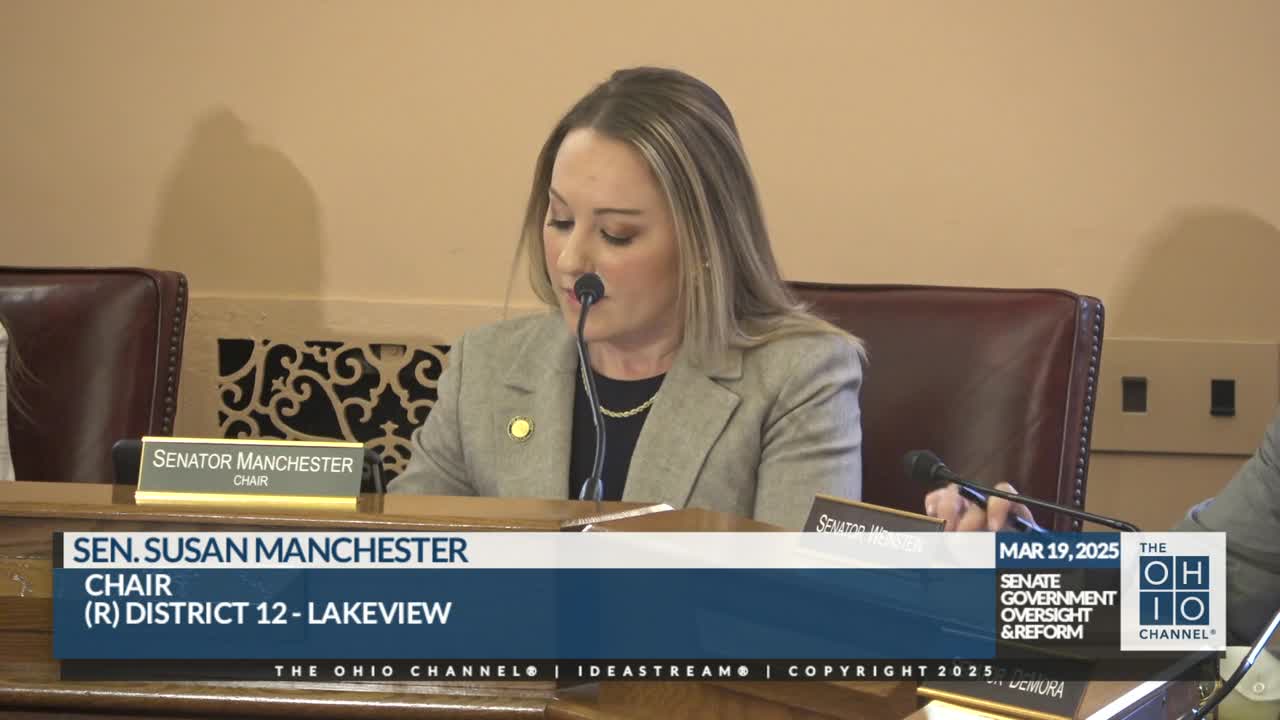
Chair Manchester called up Senate Concurrent Resolution 6 for its second hearing.
Michael Gerahan, a board member of Safe Standard Time, testified in opposition to SCR 6 and urged the committee not to advance the resolution. Gerahan said shifting to permanent daylight saving time reduces morning light that “helps us wake up” and that “working against that, as daylight saving time does at both ends, tends to degrade sleep and increase the risk of certain chronic health conditions such as cancers, diabetes, even fatal accidents.”
Gerahan told the committee that the American Academy of Sleep Medicine and the American Medical Association recommend year-round standard time and argued year-round daylight time would remove a state’s option to adopt standard time in the future if the federal Sunshine Protection Act were enacted. He cited research findings that the western edges of time zones show worse outcomes for circadian-related conditions and said adolescents particularly need morning light for school performance.
Vice Chair Brenner asked Gerahan to supply the studies he referenced; Gerahan agreed to email the committee clerk the sources. Committee members were directed to written testimony available on iPads; no committee vote was taken at the conclusion of the second hearing.
Gerahan also placed the present debate in historical context, noting that before national standardization in 1966 some parts of the state observed standard time year-round and recounting a 1973 experiment with year-round daylight time that reversed after public backlash.
The committee concluded the second hearing after opponent testimony and follow-up questions.