Get Full Government Meeting Transcripts, Videos, & Alerts Forever!
Get email alerts on the Legislative Support Services topic
No spam. Unsubscribe anytime.
Legislative Service Commission urges steady funding, flags staffing needs
Summary
LSC Director Wendy Zhang told the Government Oversight and Reform Committee that most of the Legislative Service Commission’s budget covers personnel, described workload statistics and said the agency will explore AI tools only with safeguards and LIS support.
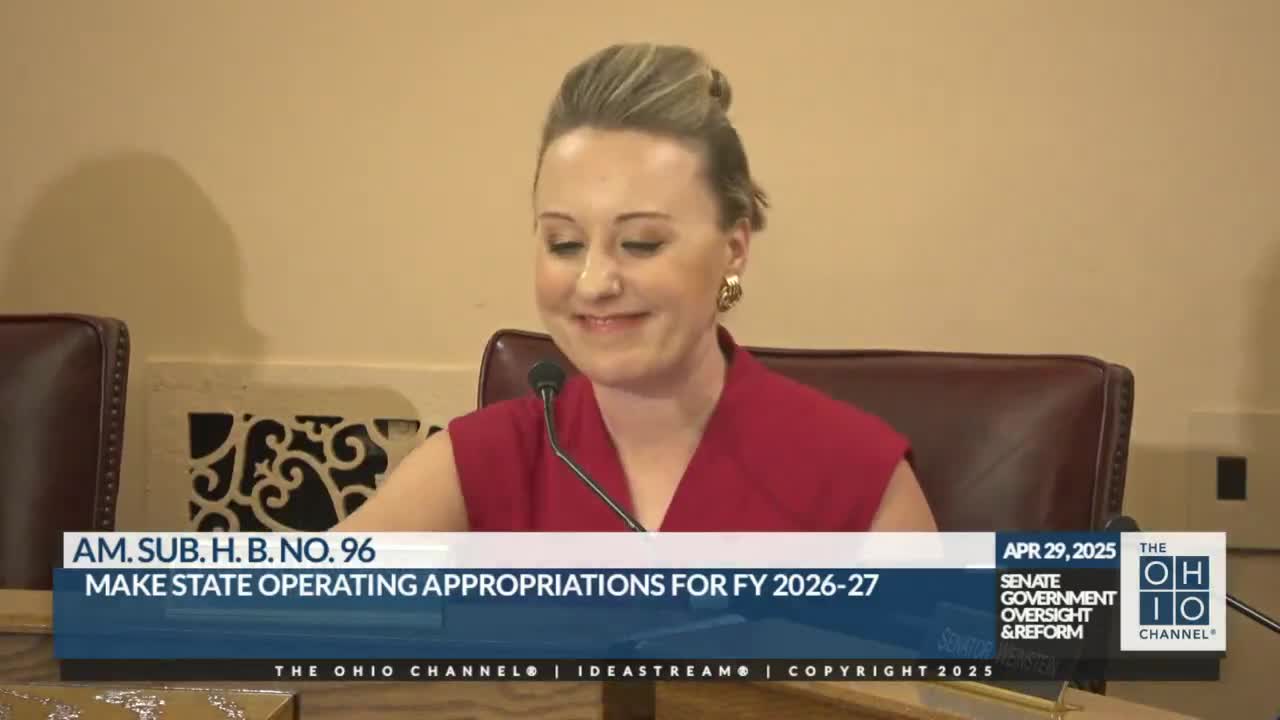
Wendy Zhang, director of the Legislative Service Commission, asked the Government Oversight and Reform Committee to maintain funding levels for LSC, Legislative Information Systems (LIS) and the Correctional Institution Inspection Committee (CIIC) in the 2026–27 biennial budget.
Zhang said the LSC is a nonpartisan central service agency that supports the General Assembly and noted that about 95.5% of the agency’s budget went to personnel in the prior fiscal year. She said LSC employs roughly 145 staff, has drafted thousands of amendments in recent budget cycles and fields tens of thousands of legislative research and drafting requests.
Zhang described specific workload metrics: during the last general assembly LSC drafted tens of thousands of letters of commendation and honorary resolutions, processed thousands of drafting requests and completed many requests within two days. She said the agency has recorded 10 retirements since 2023 totaling 343.5 years of service and will need to fill several vacancies.
Vice Chair Brenner asked whether LSC is using artificial intelligence for drafting or research; Zhang replied the agency is not using AI but will investigate options after the budget, likely requiring LIS technical support and careful safeguards. Senator Johnson urged care to avoid bias if LSC incorporates AI; Zhang agreed and said human oversight would remain central to drafting and amendment work.
Zhang closed by thanking the committee and noting directors from LIS and CIIC had provided written testimony and were available to answer follow‑up questions.