Get Full Government Meeting Transcripts, Videos, & Alerts Forever!
Get email alerts on the Tax Litigation Board Of Tax Appeals topic
No spam. Unsubscribe anytime.
Board of Tax Appeals reports surge in complex property litigation after House Bill 126, seeks staff funding
Summary
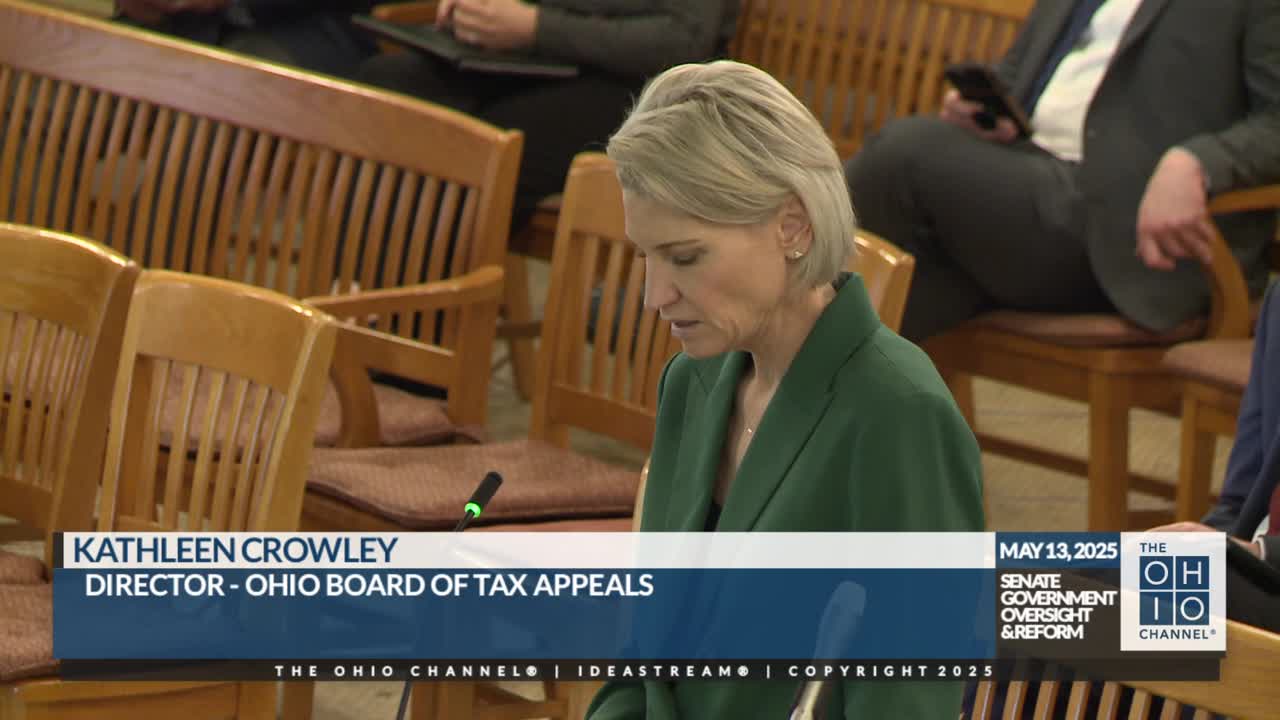
Kathleen Crowley, executive director of the Ohio Board of Tax Appeals, told the Government Oversight and Reform Committee that House Bill 126 narrowed settlement options and has led to more complex, protracted appeals; the board requested funding to refill attorney vacancies and maintain online systems.
Kathleen Crowley, executive director of the Ohio Board of Tax Appeals, told the Senate Government Oversight and Reform Committee that changes under House Bill 126 have shifted the board’s docket toward more complex litigation and increased the number of motions and multi‑day hearings.
Crowley, describing the board as Ohio’s administrative tax court, said the board resolves appeals involving more than 60 different tax types and is funded and structured under state law. She told the committee that a provision of House Bill 126 “strictly limited the right of a Board of Education or any third party to participate in the real property evaluation dispute process” and also restricted separate settlement agreements that previously allowed property owners and school boards to resolve matters by direct payment and dismissal.
The nut graf: Crowley said the elimination of those settlement mechanisms has resulted in “a substantial increase in complex litigation cases,” requiring more staff time to adjudicate motions and issue decisions, and she asked that the board’s executive‑budget request be funded so the agency can backfill vacant attorney positions and maintain its online case management system.
Crowley said most of the board’s caseload involves appeals from county boards of revision over real property valuation and tax liability, and that appeals from the tax commissioner tend to be the most complex. She described the board as a quasi‑judicial body established in state law and said its written decisions are appealable to the courts of appeals and the Ohio Supreme Court.
On staffing and finance, Crowley said the board’s request in the executive budget would allow it to refill attorney vacancies and preserve operations of the online filing and decisions databases that provide public access without fee. She told senators the board has created a guide for pro se litigants and an online decision database to improve access and predictability.
Senator O’Brien, a former county auditor, asked whether the changes left other taxing authorities that receive property tax dollars disadvantaged; Crowley replied that House Bill 126 “didn’t affect the distribution of money” but did eliminate the third‑party settlement mechanism, which she said has led to more contested appeals reaching the board.
Crowley concluded by requesting that the board be funded “at the levels outlined in the executive budget” so it can hire attorneys with the expertise necessary to manage the increased complexity of the docket.