Get Full Government Meeting Transcripts, Videos, & Alerts Forever!
Get email alerts on the Criminal Justice Reentry topic
No spam. Unsubscribe anytime.
Justice‑system witnesses press for reentry, community corrections funding and oppose rapid rollout of tasers in prisons
Summary
Advocates for community corrections, reentry employment and supportive housing pressed the Senate to preserve House‑passed funding for community‑based correctional facilities and vocational reentry programs, while legal advocates raised concerns about a proposed statewide taser policy in Ohio prisons.
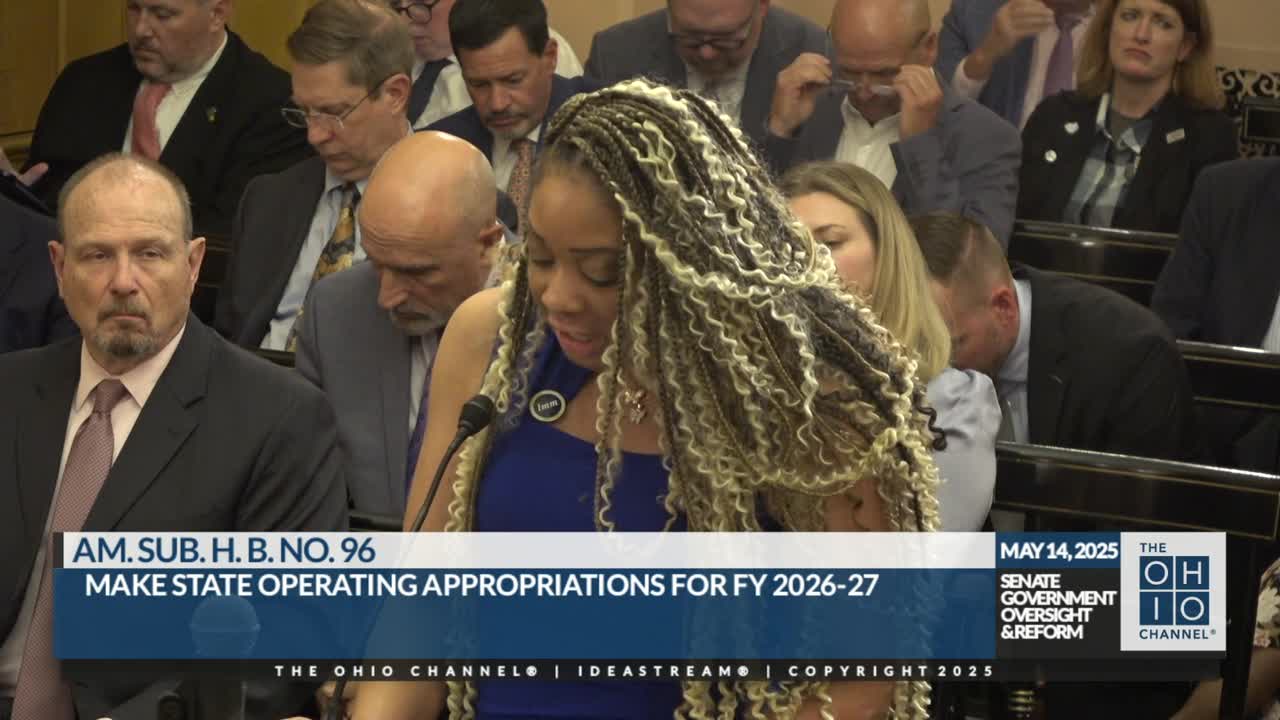
Multiple witnesses at the Senate Government Oversight and Reform Committee hearing urged the Senate to preserve funding for community corrections, reentry employment programs and supportive services in Sub House Bill 96, and a civil‑rights legal organization warned against rolling out taser deployments in state prisons.
Why it matters: Witnesses argued that funding for community‑based correctional facilities (CBCFs), reentry employment programs and in‑prison vocational training reduces recidivism, improves public safety and supports workforce outcomes. Civil‑rights advocates said DRC’s proposed taser policy raises legal and safety concerns that merit a pause or additional oversight.
Key testimony and requests: - Matt McClellan of Starr Community Justice Center and trustee of CORGES, Inc., asked the Senate to hold CBCF funding (line 501) at the House‑passed levels, highlighting recent increases intended for staff retention and noting CBCFs serve over 7,500 offenders annually. - Linda Janes of the Ohio Community Corrections Association opposed a House amendment that would bar licensing halfway houses or reentry centers if they operate within 500 feet of a school or childcare center; she said the change was not vetted and would risk closure of needed facilities and intrude on local zoning authority. - Louis Martins of the Center for Employment Opportunities (CEO) requested $1 million over the biennium to sustain transitional jobs and vocational training for justice‑impacted individuals, noting CEO places participants into jobs and reported wage gains for participants who complete advanced training. - Maria Focia and Ashley Davis of Lutheran Metropolitan Ministry described the “Chopping for Change” culinary vocational program that reports an 80% graduation and job retention rate and low recidivism among participants; LMM requested $250,000 per year to continue the program. - Makayla Burris of the Ohio Justice & Policy Center opposed funding DRC’s statewide taser rollout, arguing the department’s policy is new and that tasers “beget the cycle of violence and trauma that leads to incarceration” and that costs and litigation risks were undercounted.
Panelists emphasized that CBCFs and reentry programs rely on stable state funding to retain specialized staff, provide medication‑assisted treatment and mental‑health services, and sustain aftercare that links residents to jobs and housing. Several witnesses asked the Senate to retain the House increases to the CBCF line item and the expanded behavioral health reimbursement line.
Committee action: No votes taken during the hearing. Witnesses asked for continued funding and recommended additional legislative oversight of DRC policies.
Bottom line: Reentry and community corrections advocates asked senators to protect and extend investments in CBCFs and vocational/employment programs as cost‑effective approaches to public‑safety goals; civil‑liberties groups urged caution and more oversight before deploying tasers statewide in prisons.