Get Full Government Meeting Transcripts, Videos, & Alerts Forever!
Get email alerts on the Veterans And Military Development topic
No spam. Unsubscribe anytime.
Ohio veterans director urges focus on workforce, behavioral health and nursing‑home readiness ahead of federal construction funds
Summary
Director General Ashenhurst told the House Committee on Veterans and Military Development that Ohio is preparing to expand veteran services through workforce outreach, mental‑health partnerships and renovations at Sandusky and Georgetown veterans homes, and asked lawmakers to keep state matching and land options ready for federal funding.
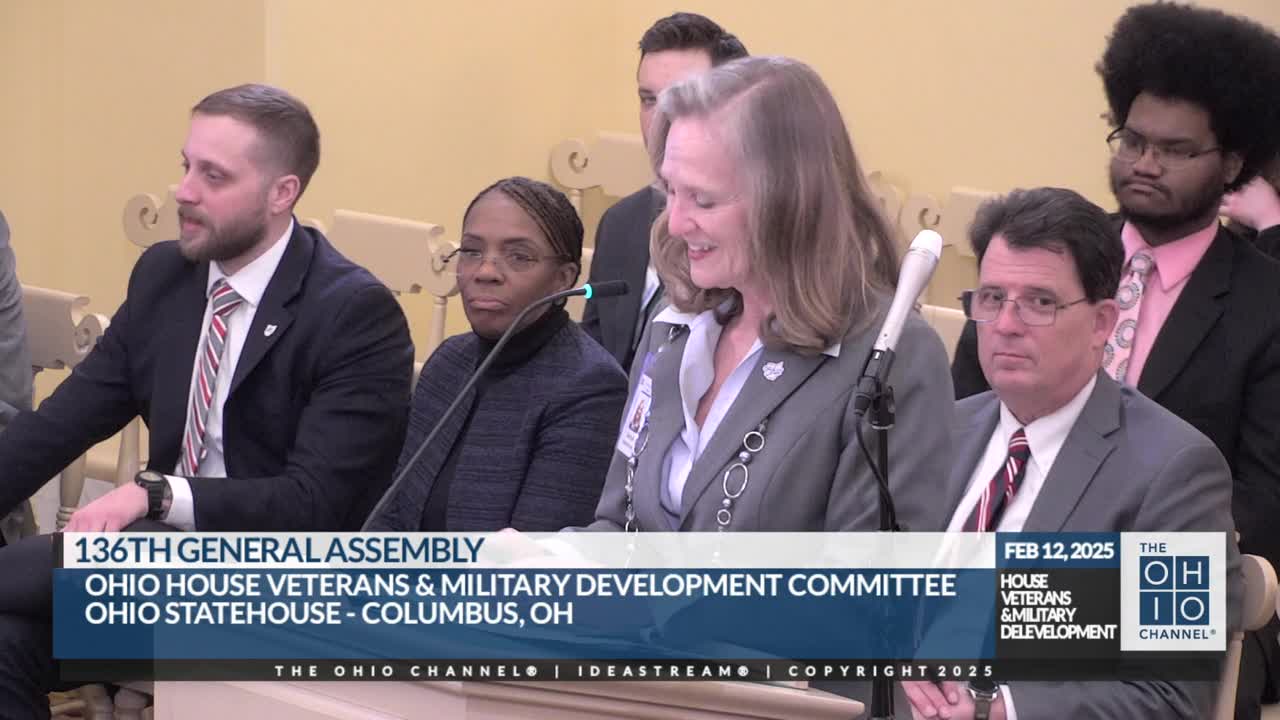
General Ashenhurst, director of the Ohio Department of Veterans Services, told the House Committee on Veterans and Military Development that the agency is prioritizing veteran workforce development, behavioral‑health access and renovation of the state veterans homes as it prepares to receive federal construction matching funds.
The presentation, delivered to the committee during an invited testimony session, laid out recent and planned work across the department, including a workforce outreach program that visits active‑duty installations, behavioral‑health partnerships tied to the 988 veteran crisis line, and capital planning for major renovations at the Sandusky and Georgetown veterans homes. Ashenhurst said the department used a $65,000,000 state appropriation from the last biennium to prepare designs and site work intended to leverage federal VA construction matching funds.
Why it matters: Ohio has a large veteran population but a comparatively small number of veterans‑home beds; the department told lawmakers it needs to align state funding, state land and updated siting studies so federal matching dollars can be used quickly. Committee members pressed for clarity on budget lines, outreach and how the state can reduce barriers for veterans seeking services.
Ashenhurst described workforce outreach as a top priority. The department’s workforce team, supported by JobsOhio resources, is visiting installations with recruiting displays and QR codes to collect resumes and guide transitioning service members into Ohio careers rather than short‑term jobs. “We don’t want them to come here for a job, we want them to come here for a career,” Ashenhurst said.
On education benefits, Ashenhurst described the state approving agency’s role in ensuring programs qualify for GI Bill benefits and said the GI Bill brings roughly $250,000,000 in education‑related dollars into Ohio annually, including housing allowances and book stipends.
Behavioral health, suicide prevention and the 988 crisis line were another focal point. Ashenhurst urged veterans to “push 1” when dialing 988 so a culturally competent responder connects them to veteran‑specific help. She said the department sponsors and promotes programs such as STAR Behavioral Health, and that Ohio participates in the Governor’s Challenge through the VA and in a jointly run Ohio Cares program aimed at National Guard members and their families.
The director also reviewed the status of the two state veterans homes: Sandusky (about 600 beds; she called it Ohio’s largest veterans nursing home and among the nation’s largest) and Georgetown (about 168 beds). Ashenhurst said the department’s census dropped during COVID when admissions were paused and that current work focuses on raising census and replacing agency contract staff with permanent hires. She said the state provided $65,000,000 in the last biennium for renovations; that sum will be combined with federal VA funds when those grants are available and, where possible, the department has begun site prep and portions of renovation work.
Budget figures presented to the committee included an estimated department budget near $170,000,000 for fiscal 2025 and roughly $108–$109 million in the next biennium; Ashenhurst characterized the agency’s year‑to‑year budget request as modest and said the department is not seeking a large new operating increase but does emphasize workforce and behavioral health if additional funding became available.
Committee members asked about outreach and marketing; Representative Santucci and others urged clearer public messaging so veterans know which services are available at no charge instead of paying private providers. Ashenhurst said there is no dedicated new marketing appropriation in the current request and that the department relies on social media and partners — county veteran service offices, veterans service organizations (VSOs), and local groups — to spread information. She urged lawmakers to remind VSOs and counties to highlight state services and to consider modest funding for updated outreach and a refreshed siting study.
Lawmakers raised two further topics: the use of sports‑betting license proceeds and protections against predatory paid services. Ashenhurst said the department receives a small flow of funds from gaming licensure (an early licensing burst followed by smaller ongoing amounts) and that those proceeds have been used for urgent facilities maintenance at the homes. On predatory paid services, several lawmakers described constituent complaints about for‑profit actors charging veterans to help secure benefits; Ashenhurst and members signaled interest in pursuing stronger consumer protections.
Ashenhurst also described the Ohio Veterans Hall of Fame nominating process, which accepts nominations through June 1 and limits the governor’s induction recommendations to 20 recipients a year; she asked lawmakers and community members to nominate veterans who have made post‑service contributions to their communities.
The committee did not take any formal votes during the session. Ashenhurst closed by thanking members for support and said the department will return with cost estimates if lawmakers request an updated siting study or other specific items.
Ending: Committee members signaled broad support for the department’s direction and interest in follow‑up on the siting study, workforce funding, marketing and possible legislation to guard veterans from predatory providers. The hearing record shows lawmakers asking staff to consider next steps; no formal committee actions were recorded in the transcript.