Get Full Government Meeting Transcripts, Videos, & Alerts Forever!
Get email alerts on the Ohio Housing Trust Fund topic
No spam. Unsubscribe anytime.
Local agencies warn budget change would weaken Ohio Housing Trust Fund and curb rural housing and homelessness programs
Summary
Dozens of nonprofit providers, housing advocates and county officials told the Senate committee that House-added language would divert the recordation fee distribution from the statewide Ohio Housing Trust Fund to county control, endangering homelessness prevention, rapid rehousing and affordable housing development in rural counties.
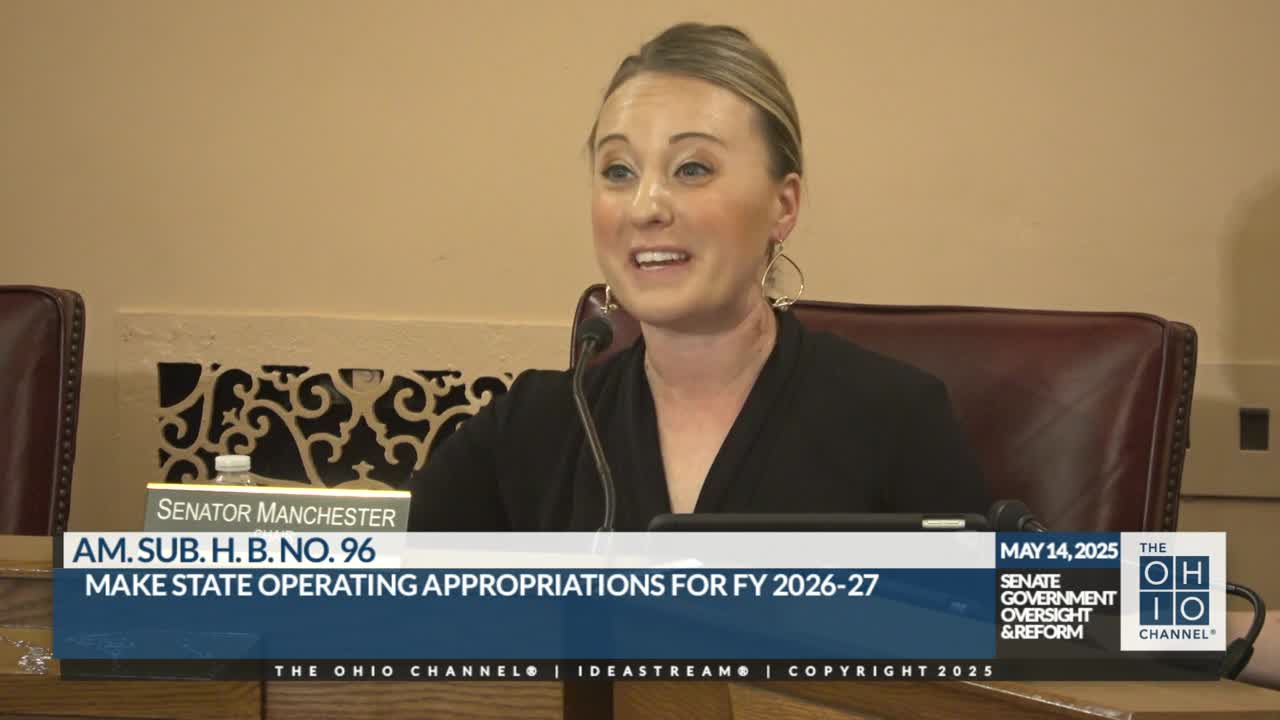
Advocates and local officials from across Ohio urged the Senate Government Oversight and Reform Committee to reject a House amendment that would change how the Ohio Housing Trust Fund is funded and distributed.
Why it matters: The proposal in Sub House Bill 96 would allow counties to retain recordation fees that are currently deposited into the statewide Ohio Housing Trust Fund and instead give county boards of commissioners discretion over those dollars. Speakers said the change would fragment funding, reduce the state’s ability to leverage federal tax-credit and other capital, and jeopardize homeless‑prevention services in smaller counties.
Community action agencies, Habitat for Humanity affiliates, area agencies on aging, local library leaders and housing coalitions presented extensive examples of services supported by the trust fund: emergency shelters, rapid rehousing, home repairs for seniors, supportive housing developments and down‑payment assistance. Thomas Andrews, CEO of the Community Action Agency of Columbiana County, said the fund “is the primary state's funding source for affordable housing and homeless services” and urged the Senate to remove the House language that would allow counties to keep the fees.
Multiple witnesses provided local impact data. Bambi Bonn of the Community Action Commission of Fayette County said Fayette collected $673,977 in recordation fees over five years and received $3,788,600 back from the statewide trust fund in the same period; she said local programs rely on those dollars for shelters, home repairs and rapid rehousing.
Housing developers and supportive‑housing advocates described how state trust‑fund dollars are used to leverage larger federal capital sources. Leah Warner of the Corporation for Supportive Housing said examples include projects where modest trust‑fund investments helped unlock low‑income housing tax credit equity and other financing: Union Square in Allen County used $1.25 million in trust‑fund dollars to leverage $7.1 million in LIHTC equity for 48 units; Hyzell Park in Scioto County used $300,000 to leverage $7.6 million. Warner said the trust fund’s capital leverage ratio (each trust‑fund dollar bringing multiple dollars of other investment) makes statewide pooling more effective than county‑by‑county allocations.
Local practitioners said the existing statewide structure also enabled a coordinated, cross‑county approach to rural housing needs. Jennifer Westfall of Buckeye Hills Regional Council (Area Agency on Aging Region 8) said a single regional housing coordinator uses pooled funds to prepare bids, inspect contractor work, and coordinate projects across eight counties — a role that would be harder to sustain if funds were fragmented into many smaller county pots.
Opponents of the House amendment argued it would create administrative complexity because the Division of Rehabilitation and Correction (DRC) relicenses certain facilities and periodic inspections could be affected, and they stressed that sudden changes would yield “unintended consequences” for already fragile rural programs.
Committee action and next steps: Senators did not vote on the amendment during the hearing. Multiple witnesses asked the Senate to retain the current statewide funding and recommended at minimum a study or further legislative hearings before altering the trust fund’s distribution.
Bottom line: Dozens of nonprofit, county and regional officials told the committee that changing the trust fund’s distribution now — amid an ongoing shortage of affordable housing and rising homelessness — would reduce the pool of matched funds that local developers and service providers use to secure federal capital and operate emergency and prevention programs across rural Ohio.