Get Full Government Meeting Transcripts, Videos, & Alerts Forever!
Get email alerts on the Property Tax Appeals Reform topic
No spam. Unsubscribe anytime.
Sponsors seek to close loopholes in property-tax appeals after House Bill 126 changes
Summary
House Bill 232 would tighten language created after House Bill 126 to prevent government entities from using agents or attorneys to circumvent limits on challenging property tax valuations through the board of revision process.
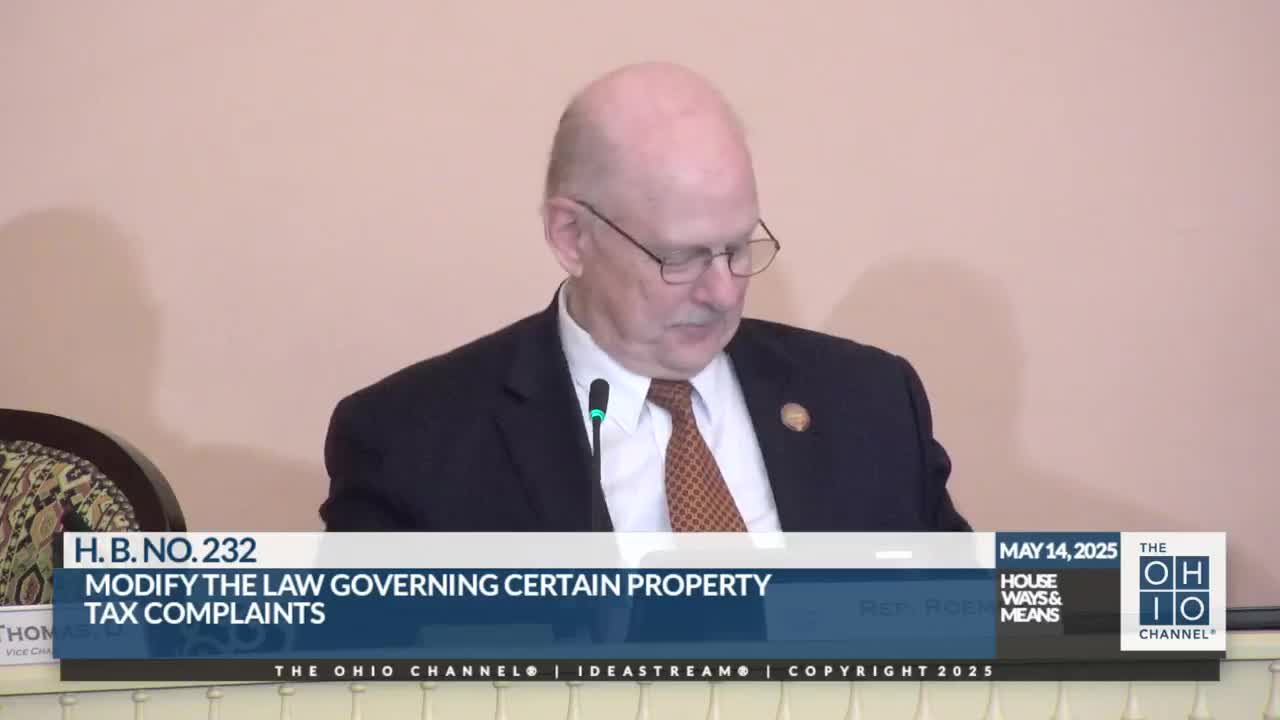
The House Ways and Means Committee held a first hearing on House Bill 232, a bill intended to close what sponsors described as “straw man” workarounds that have emerged since the enactment of House Bill 126.
Vice Chair Thomas and Representative Matthews testified that HB126 reformed the county board of revision process by restricting governmental entities — including school districts — from directly challenging property valuations in many cases and banning certain private payment agreements intended to influence valuation challenges. Sponsors said some counties and parties have responded by using attorneys, treasurers or other individuals to file complaints that effectively reintroduce the government entity into the appeal, undermining the law’s intent.
Representative Matthews said the draft of HB232 would bar an individual from acting as an agent of a governmental entity to profit from valuation increases and would moot complaints that attempt to circumvent statutory limits. “Once a complaint is filed, the school district would file a counter complaint, thereby joining as a party anyway, destroying the intent of House Bill 126,” Matthews told the committee, citing reported cases and press coverage.
Committee members questioned retroactivity (the bill includes language back to 2022) and whether the change would require refunds or other payments by taxing entities. Sponsors said they would confirm the consequences of retroactivity for pending cases and that the intent was to stop future circumvention rather than impose widespread refunds. Members also raised discovery and subpoena concerns and whether the board of revision should have expanded investigatory powers; sponsors cautioned against moving adjudicative powers into a nonjudicial body.
No vote was taken; this was the bill's first hearing.