Get Full Government Meeting Transcripts, Videos, & Alerts Forever!
Get email alerts on the Homestead Exemption Surviving Spouses topic
No spam. Unsubscribe anytime.
Committee accepts amendment to limit surviving-military-spouse homestead exemption to 10 years
Summary
The Ohio House Ways and Means Committee accepted an amendment to House Bill 22 that adds a one-year Ohio residency requirement for surviving spouses, removes a marriage penalty, and limits the homestead exemption to 10 years.
The Ohio House Ways and Means Committee on the first day of its session accepted an amendment to House Bill 22, which would authorize a homestead property tax exemption for surviving spouses of eligible military service members.
The amendment, offered by Vice Chair Thomas, adds a requirement that surviving spouses have lived in Ohio for at least one year before qualifying, removes language that would have penalized remarriage or cohabitation, and limits the exemption to a 10-year period.
Committee members said the change was intended to preserve support for families of fallen service members while placing a time limit on a full exemption for the one-acre home site. “We did not wanna keep that penalty. We wanna, of course, encourage families, encourage marriage in the state of Ohio,” Vice Chair Thomas said when explaining why the marriage penalty was removed and why the 10-year limit was proposed. He described 10 years as “a good, happy medium in terms of giving that need and assistance to the family.”
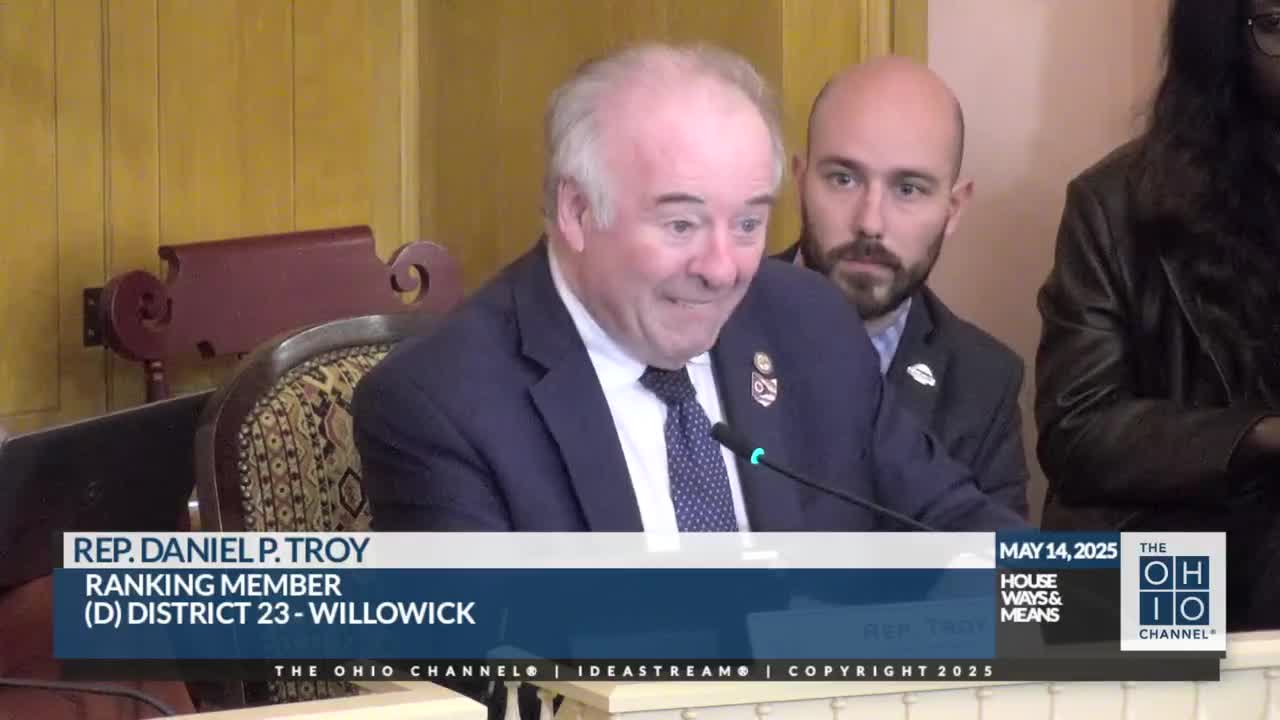
During discussion, Ranking Member Troy questioned whether a 10-year limit produced meaningful savings given the small number of eligible households, and Representative Seegress asked for clarity about whether remarriage would still end eligibility. Thomas explained that removing the marriage penalty means a surviving spouse who remarries can continue to receive the exemption until the 10-year limit expires. “There would be no marriage penalty,” Thomas said. “After that 10 year period, though, that individual could no longer receive the exemption.”
There was no recorded roll-call vote on the amendment; the chair asked if there was any objection to accepting the amendment, and none was raised. The chair then declared the amendment accepted and noted this constituted the fifth hearing on House Bill 22.
The bill, as amended, still must proceed through further committee and floor action before becoming law. No fiscal note or cost estimate for the amended version was offered during this hearing.
The committee did not receive public testimony for the bill at the hearing.