Get Full Government Meeting Transcripts, Videos, & Alerts Forever!
Get email alerts on the Software Procurement topic
No spam. Unsubscribe anytime.
Committee hears bill to limit restrictive software licensing in state contracts
Summary
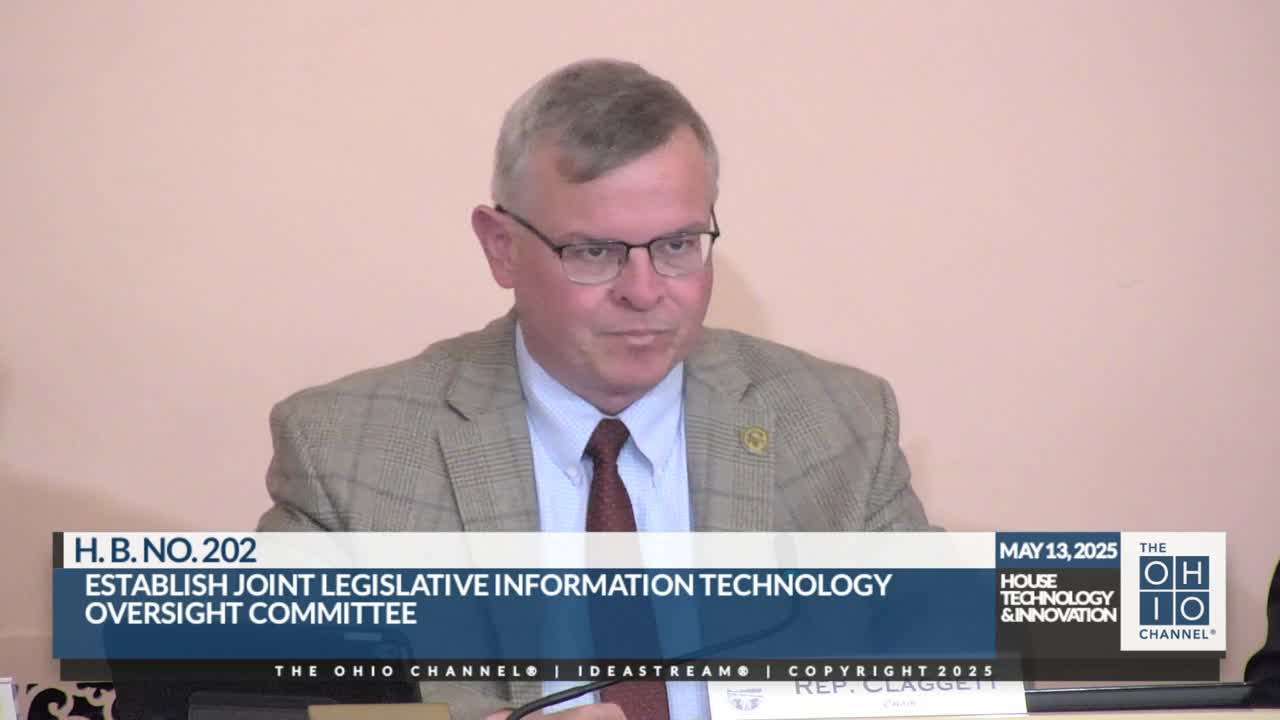
The House Technology and Innovation Committee on May 13 considered House Bill 202, which would limit restrictive software licensing in state contracts by amending Ohio Revised Code section 9.27(b)(10).
The House Technology and Innovation Committee on May 13 held a second hearing on House Bill 202, which proposes modifications to Ohio Revised Code section 9.27(b)(10) aimed at preventing software licensing terms that restrict a state agency’s ability to deploy software on the infrastructure that best fits its needs. Scott Driscoll, testifying for the Coalition for FAIR Software Licensing, said the clause is intended to prevent vendor lock and to “ensure that a contract entered into by a state agency for the purchase of software designed to run on generally available hardware or cloud, does not artificially restrict the state's ability to deploy that software in the infrastructure environment that best fits its particular business needs.”
Driscoll told the committee restrictive licensing practices can produce wasteful spending and cybersecurity risk by discouraging vendor diversification. “These are anti competitive practices that lock competition out and lock customers in,” he said. He cited federal-level attention, including an FTC investigation and Pentagon reviews, and noted that fair‑licensing language has been adopted by other states, listing Missouri, Colorado, New Hampshire, Illinois, and Indiana as jurisdictions that have enacted similar provisions.
Committee members asked about cybersecurity benefits and how the change would affect procurement. In response to a question about cyber risk, Driscoll said vendor concentration increases vulnerability: “When you have agencies that are are artificially forced to silo their their spend with a particular provider, so they're buying software, cloud services, security services, all from 1, particular provider, A vulnerability in 1 becomes a vulnerability for all.” He told members the bill applies only to future contracts, does not prevent agencies from choosing vendors, and is intended to foster competition and lower taxpayer costs.
Witnesses and staff noted the bill is narrowly tailored and would not change existing contracts. Members asked procedural questions about oversight, committee structure, and whether a separate panel or existing committees should handle implementation details. The hearing included written testimony from the Alliance for Digital Innovation and a Google Cloud state and local government relations manager; Scott Driscoll provided in-person testimony on behalf of the Coalition for FAIR Software Licensing.
No vote was taken; the committee closed the second hearing on HB202 and invited witnesses to provide additional written feedback to staff.