Get Full Government Meeting Transcripts, Videos, & Alerts Forever!
Get email alerts on the Renewable Energy Solar Agreement topic
No spam. Unsubscribe anytime.
Selectmen weigh municipal renewable-energy agreement that would net $400,000; board asks for legal safeguards and developer meeting
Summary
Town Manager Paul Harrington presented a municipal renewable-energy agreement that would lock Winchester’s annual kilowatt-hours to a developer’s out-of-state solar projects in exchange for an estimated one-time payment of $400,000; the selectmen requested additional legal safeguards and asked the developer to appear at a future meeting.
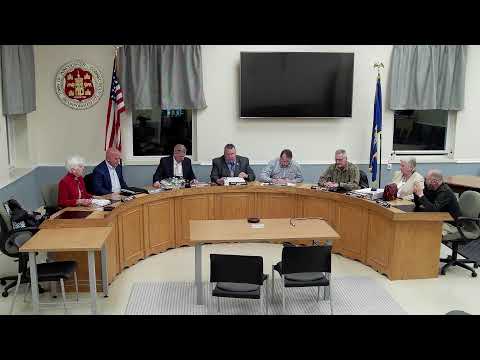
Town Manager Paul Harrington presented a municipal renewable-energy (renewable auction) agreement at the Board of Selectmen’s April 7 meeting that would commit a portion of Winchester’s annual electric usage—roughly a million kilowatt-hours, as described—to a third-party developer who would build out-of-state solar farms and in return provide Winchester a one-time payment (the manager said $400,000 in the current agreement). Harrington said the payment was proposed as a one-time, non-operating revenue to offset capital items in the manager’s proposed FY2025–26 capital plan.
Harrington said the contract is a form agreement used by other Connecticut municipalities; earlier industry estimates he cited had been $450,000 but the executed proposal before the board lists $400,000. Under the draft agreement, the developer must pay Winchester within 240 days after facilitation; the contract term that locks the town’s kilowatt-hours to the developer runs 20 years.
Board concerns and next steps
Selectmen raised multiple concerns about timing, contractual guarantees and the length of the kilowatt commitment. Several members asked whether the town would have any payment obligation under certain default clauses; Harrington said he will follow up with the town attorney on the meaning and practical effect of several contract sections (including default and remedy provisions) and whether the town is exposed to payment obligations. The town attorney had performed an initial review and described the document as a standard form used by other municipalities, but the board asked staff to return with more-targeted legal analysis.
Harrington also told the board he will ask the company to appear at an upcoming meeting; selectmen suggested having the developer available for either the April 10 or April 17 special session so members can ask direct questions about site selection, timing of payment and contingencies if federal tax credits or developer financing change.
Public comment and staff responses
During public comment Wilbert Platt asked whether the agreement would interfere with existing payments Winchester receives from in-town solar installations that benefit the Sewer and Water Department. Harrington responded that the proposed agreement does not affect in-town solar credits or payments to the Sewer and Water Department and does not prevent Winchester from negotiating future local solar projects or payments.
Legal and fiscal context
Harrington said the contract before the board is modeled on agreements used elsewhere in Connecticut; the town attorney noted he reviewed the form and saw no obvious exposure but recommended answering the board’s specific questions about remedies, developer obligations and payment timing. Because the manager’s FY2025–26 capital program as proposed relies on the $400,000 revenue, the board asked Harrington to prepare a backup capital-prioritization list that shows which projects would be delayed if the payment did not materialize.
Outcome
No vote to sign the agreement occurred. The board asked staff to obtain targeted legal responses to the default/remedy language in the contract, to follow up with the developer about timing and an upfront deposit, and to bring the developer to a forthcoming meeting (the manager offered April 10, April 17 or the regular April 21 meeting as possible dates). Harrington said he would contact the developer and report back at the special meetings; selectmen cautioned that delaying action could reduce the town’s chance of receiving the payment, but they insisted on additional legal and contractual assurances before committing town kilowatt-hours for 20 years.
What to watch
If the agreement is executed and payment delivered, the manager indicated roughly $400,000 of one-time funds would be available to offset capital requests in FY2025–26; if the agreement is not executed, staff will present a prioritized list of capital items that would be postponed. The town attorney will return with an opinion on the contract clauses highlighted by the board.