Get Full Government Meeting Transcripts, Videos, & Alerts Forever!
Get email alerts on the Transfer Station topic
No spam. Unsubscribe anytime.
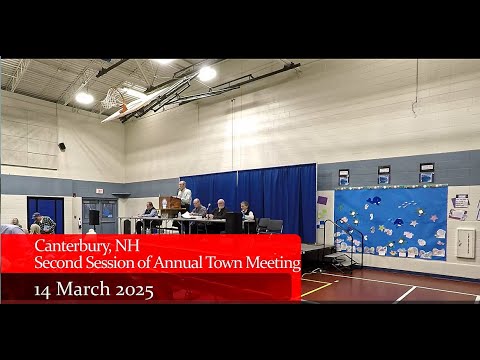
Feasibility study for transfer station wins approval; petition to buy electric compactor fails
Summary
Voters approved a $6,500 feasibility and suitability study for the town transfer station and separately approved funding for a hazardous-waste collection; a petitioner’s warrant to purchase a stationary electric compactor and pad failed after debate over site constraints and air-quality concerns.
Voters approved a $6,500 withdrawal from the transfer station capital-reserve fund to pay for a feasibility and suitability engineering study of the town transfer station and also approved funding for a hazardous-waste collection; a citizen petition to replace the packer truck with a stationary electric compactor (Article 17) failed.
Why it matters: The engineering study will determine whether the current transfer-station site can be renovated and what work would be required. The failed petition highlighted worker and resident concerns about diesel exhaust and site suitability, and residents debated alternative technical approaches and next steps.
Select board members presented Article 15, asking voters to authorize the use of approximately $6,500 from the transfer-station capital reserve fund for a professional engineering study to evaluate renovation and expansion at the current site or determine whether the site is unsuitable. The board recommended the study and voters approved the request.
A petition article seeking $6,000 to replace the existing packer truck with a stationary electric compactor and concrete pad drew extended public comment. Petitioners argued the current packer truck requires idling that exposes staff to diesel exhaust and cited research on health risks from diesel particulate matter. Opponents— including Solid Waste Committee members and some users—said the article was premature while the feasibility study had not been completed, questioned whether space or three-phase power were available at the current site, and raised concerns about truck-towing capacity and logistics. The select board did not recommend the petition and voters rejected it.
The meeting also approved funding for a hazardous-waste collection day; Solid Waste Committee members said they expect a total program cost around $10,500 and noted past events have sometimes reached budget capacity rapidly.
Ending: The select board and Solid Waste Committee will use the engineering study’s findings to determine next steps for transfer-station upgrades and to clarify whether equipment purchases or site work can proceed at the current site or should be planned for an alternate location.